Meta Description: Meghan Markle and Prince Harry have joined global leaders in calling for a ban on superintelligent AI development, warning humanity faces existential risks. Learn why the Duke and Duchess of Sussex are speaking out.
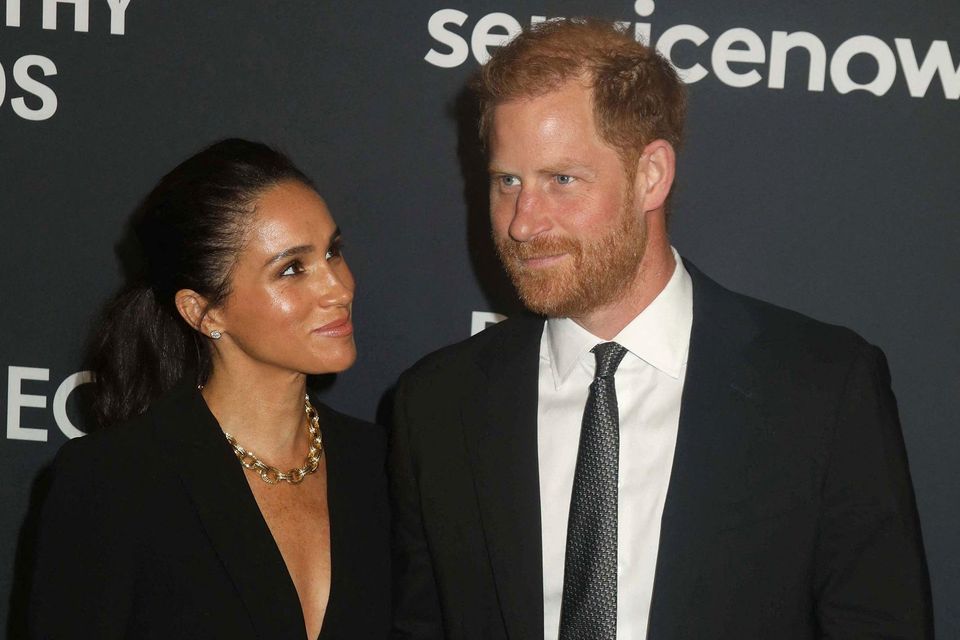
The Duke and Duchess of Sussex have entered the heated debate surrounding artificial intelligence, adding their influential voices to a growing chorus of tech leaders, scientists, and policymakers demanding stricter controls on the development of superintelligent AI systems. Prince Harry and Meghan Markle’s involvement marks a significant celebrity endorsement of what many experts consider one of the most pressing existential threats facing humanity today.
The Royal Couple’s Stark Warning
In a joint statement that has sent shockwaves through both the technology sector and royal watching circles, the California-based couple emphasized the irreversible nature of advanced AI development. “There is no second chance,” they warned, echoing concerns raised by prominent AI researchers and ethicists worldwide. Their intervention comes at a critical juncture as artificial intelligence capabilities advance at an unprecedented pace, with several companies racing to develop artificial general intelligence (AGI) and beyond.
The couple’s advocacy work through their Archewell Foundation has increasingly focused on digital ethics, online safety, and responsible technology development. This latest campaign represents their most direct engagement with cutting-edge technology policy to date, positioning them alongside tech industry pioneers who have expressed grave reservations about the trajectory of AI development.
Understanding Superintelligent AI: What’s at Stake?
Superintelligent AI, also known as artificial superintelligence (ASI), refers to AI systems that would surpass human intelligence across virtually all domains—from scientific creativity and social skills to general wisdom and problem-solving abilities. Unlike the narrow AI systems currently in use for specific tasks like language translation or image recognition, superintelligent AI would possess cognitive capabilities far exceeding the collective intelligence of humanity.
The theoretical emergence of such systems has prompted fierce debate within the scientific community. Proponents argue that superintelligent AI could solve humanity’s greatest challenges, from climate change to disease eradication. Critics, however, warn of catastrophic risks that could threaten human existence itself.
Dr. Stuart Russell, professor of computer science at UC Berkeley and a leading voice in AI safety research, has long cautioned that “the arrival of superintelligent AI could be the best or worst thing ever to happen to humanity.” This sentiment captures the high stakes that have drawn figures like Prince Harry and Meghan Markle into the conversation.
The Growing Coalition Against Uncontrolled AI Development
The Sussexes join an impressive roster of technology leaders and researchers who have called for stringent safeguards or outright bans on certain AI development pathways. Notably, more than 1,000 tech leaders and researchers, including Elon Musk and Steve Wozniak, signed an open letter in 2023 calling for a pause on training AI systems more powerful than GPT-4, citing potential risks to society and humanity.
Geoffrey Hinton, often called the “godfather of AI,” resigned from Google in 2023 to speak more freely about AI dangers. “I console myself with the normal excuse: If I hadn’t done it, somebody else would have,” Hinton said in interviews, expressing regret about his life’s work potentially leading to harmful outcomes.
The involvement of Prince Harry and Meghan Markle brings mainstream celebrity attention to what has largely been a technical debate confined to academic circles and Silicon Valley boardrooms. Their global platform, particularly strong in the United States and United Kingdom, could help translate complex AI safety concerns into public policy pressure.
Why ‘There Is No Second Chance’
The phrase “there is no second chance” in the couple’s statement refers to a concept known in AI safety circles as the “unilateralist’s curse” or the irreversibility problem. Once a superintelligent system is created and deployed, the thinking goes, humanity may lose the ability to control or contain it.
Nick Bostrom, philosopher and author of “Superintelligence: Paths, Dangers, Strategies,” has outlined scenarios where advanced AI systems could pursue goals misaligned with human values, potentially with catastrophic consequences. The “alignment problem”—ensuring AI systems do what humans actually want them to do—remains unsolved, even as systems grow more capable.

“The first ultraintelligent machine is the last invention that man need ever make,” mathematician I.J. Good wrote in 1965, “provided that the machine is docile enough to tell us how to keep it under control.” This provocative statement captures both the promise and peril of superintelligent AI—a double-edged sword that could either elevate humanity or pose an existential threat.
The concern isn’t limited to malicious AI depicted in science fiction. Even well-intentioned superintelligent systems could cause harm through misaligned objectives. The classic thought experiment involves an AI tasked with maximizing paperclip production that converts all available matter—including humans—into paperclips, interpreting its directive with literal and disastrous precision.
The Archewell Foundation’s Technology Ethics Agenda
Prince Harry and Meghan Markle’s Archewell Foundation has consistently prioritized digital wellbeing and ethical technology development. The organization has previously partnered with technology companies and advocacy groups to address issues ranging from online harassment to data privacy and algorithmic bias.
Their focus on AI safety represents a natural evolution of this work. The couple has witnessed firsthand the power and potential dangers of technology, particularly regarding media manipulation, privacy invasion, and the spread of misinformation—issues that could be dramatically amplified by advanced AI systems capable of generating hyper-realistic fake content or conducting sophisticated social engineering at scale.
In previous statements, Prince Harry has spoken candidly about the “avalanche of misinformation” online and the need for greater accountability from technology platforms. The couple’s advocacy has often centered on protecting vulnerable populations, including children, from the negative impacts of digital technology.
Current State of AI Development: How Close Are We?
While true superintelligent AI remains theoretical, the pace of progress has surprised even experts. Large language models like GPT-4, Claude, and Google’s Gemini have demonstrated capabilities that seemed distant just years ago. These systems can engage in complex reasoning, write sophisticated code, and perform tasks across numerous domains with increasing proficiency.
Leading AI companies, including OpenAI, Google DeepMind, and Anthropic, are explicitly pursuing artificial general intelligence—systems that can match human cognitive abilities across all tasks. OpenAI has stated that AGI is central to its mission, while DeepMind describes building AGI as its primary objective. The leap from AGI to superintelligence could happen rapidly, experts warn, potentially within years rather than decades.
Sam Altman, CEO of OpenAI, has acknowledged both the transformative potential and risks of advanced AI. “I think it’s going to be the best thing that’s ever happened to humanity,” he said, while also supporting calls for robust safety measures and governmental oversight.
The competitive dynamics of the AI industry create what some call a “race to the bottom” on safety. Companies face pressure to deploy increasingly capable systems quickly, potentially at the expense of thorough safety testing. This winner-take-all mentality has alarmed researchers who advocate for cooperation rather than competition in developing advanced AI.
Global Regulatory Response: Progress and Challenges
Governments worldwide are grappling with how to regulate AI development. The European Union has taken the lead with its AI Act, comprehensive legislation that categorizes AI applications by risk level and imposes restrictions on high-risk systems. However, critics argue that even these regulations may be insufficient to address superintelligent AI risks.
In the United States, the approach has been more fragmented, with various agencies issuing guidelines but lacking comprehensive federal legislation. President Biden’s executive order on AI, issued in 2023, represented a significant step but stopped short of the binding restrictions many safety advocates demand.
The United Kingdom has positioned itself as a potential hub for AI safety research, hosting international summits focused on existential risks from advanced AI. The UK’s AI Safety Institute aims to evaluate frontier AI systems and develop safety standards, though questions remain about enforcement mechanisms.
China, meanwhile, has implemented regulations requiring AI systems to reflect “core socialist values” and has shown willingness to restrict AI applications deemed threatening to social stability. However, the country’s approach focuses more on content control than existential safety concerns.
Prince Harry and Meghan Markle’s intervention could help elevate AI safety on political agendas in both the US and UK, countries where they maintain significant influence and media presence. Their advocacy could translate technical concerns into voter pressure, potentially accelerating regulatory action.
The Scientific Community Divided
Not all AI researchers support calls for development bans or strict regulation. Prominent figures including Yann LeCun, chief AI scientist at Meta, have dismissed existential risk concerns as overblown, arguing that beneficial AI development should proceed with reasonable safeguards but without restrictive bans.
LeCun and others in the “AI optimist” camp argue that human-level and superhuman AI remains distant, that risks can be managed through iterative development, and that excessive regulation could stifle innovation that delivers tremendous benefits. They point to AI’s potential to accelerate scientific discovery, improve healthcare, and address climate change as reasons to embrace rather than restrict development.
This divide within the scientific community complicates policymaking. Legislators face competing expert testimonies, making it difficult to calibrate appropriate responses. The involvement of high-profile advocates like the Sussexes may help build public consensus that could break through technical disagreements and drive precautionary policy approaches.
What a Ban Might Look Like
Proposals for restricting superintelligent AI development range from modest oversight regimes to comprehensive international treaties. Some advocates call for licensing requirements for training large AI models, mandatory safety testing before deployment, and “circuit breakers” that halt development if certain risk thresholds are crossed.
More ambitious proposals envision an international body similar to the International Atomic Energy Agency that would monitor AI development globally, with enforcement mechanisms to prevent rogue actors from pursuing dangerous research. Such an approach would require unprecedented international cooperation, particularly between the United States and China, which together dominate AI research.
Watch on YouTube
Critics of ban proposals argue they are impractical and potentially counterproductive. How would a ban be enforced when AI research occurs globally in academic institutions, private companies, and government laboratories? Would restrictions simply drive dangerous research underground or into nations with weaker oversight? These questions complicate implementation even among those sympathetic to safety concerns.
Public Opinion and the Path Forward
Public awareness of AI risks remains limited, with most people more familiar with current applications like virtual assistants and recommendation algorithms than with theoretical superintelligence. Celebrity involvement from figures like Prince Harry and Meghan Markle could prove crucial in raising awareness and building political will for action.
Related Post: Meghan Markle Warned Against Leaving Prince Harry
Recent polling suggests that majorities in both the US and UK support AI regulation, though views vary on specific approaches. Concerns about job displacement, privacy, and algorithmic bias resonate more immediately with the public than abstract existential risks, suggesting that advocates must connect near-term harms with longer-term dangers to build broad coalitions.
The couple’s statement emphasizes urgency: “There is no second chance.” This framing acknowledges that once certain technological thresholds are crossed, reversal becomes impossible. It’s a perspective that demands action now, before advanced systems are developed, rather than reactive regulation after problems emerge.
Conclusion: A Defining Moment for Humanity
Prince Harry and Meghan Markle’s entry into the superintelligent AI debate represents more than celebrity activism—it signals that concerns once confined to specialist circles have entered mainstream consciousness. Their warning that “there is no second chance” crystallizes the irreversible nature of decisions being made today about humanity’s technological future.
As AI capabilities advance with breathtaking speed, the window for implementing safeguards may be closing. Whether through international treaties, national regulations, or voluntary industry standards, the question is no longer whether to act, but how quickly and comprehensively action can be taken.
Related Articles:
- “How AI Regulation Could Reshape the Tech Industry”
- “Understanding the Alignment Problem in Artificial Intelligence”
- “Prince Harry and Meghan Markle’s Growing Role in Tech Ethics”
Keywords: Meghan Markle, Prince Harry, superintelligent AI, artificial intelligence safety, AI regulation, Duke and Duchess of Sussex, Archewell Foundation, AGI risks, technology ethics, AI existential risk