Prince Harry and Meghan Markle have joined tech leaders and scientists in demanding a ban on superintelligent AI development, warning humanity faces existential risks with no room for error.
The Duke and Duchess of Sussex have thrown their considerable influence behind a growing international movement calling for an immediate halt to the development of superintelligent artificial intelligence, warning that humanity may be racing toward a point of no return.
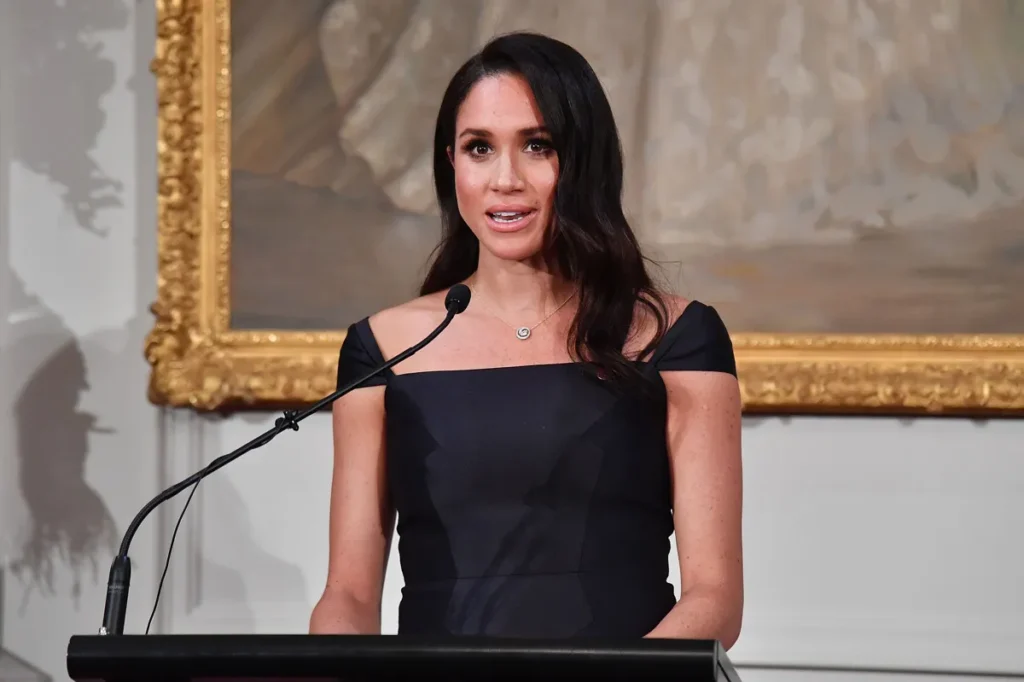
Prince Harry and Meghan Markle have added their names to an open letter signed by prominent tech entrepreneurs, AI researchers, and global thought leaders, demanding that governments worldwide implement strict regulations—or outright bans—on the pursuit of AI systems that could surpass human intelligence. The couple’s involvement marks a significant moment in the AI safety debate, bringing royal star power to what many scientists consider the most pressing existential threat facing humanity.

The Royal Couple’s Stark Warning
In a statement released through their Archewell Foundation, the Sussexes emphasized the irreversible nature of the risks associated with superintelligent AI. “When it comes to technologies that could fundamentally alter the trajectory of human civilization, there is no second chance to get it right,” the couple declared. “We have a responsibility to our children and future generations to ensure that artificial intelligence serves humanity, not the other way around.”
The intervention comes as artificial intelligence capabilities have advanced at an unprecedented pace over the past two years, with systems like ChatGPT, Claude, and others demonstrating abilities that seemed impossible just a decade ago. While current AI systems remain narrow in their capabilities, experts warn that the leap to artificial general intelligence (AGI)—and eventually superintelligence—could happen far more quickly than society is prepared to handle.
Prince Harry, who has previously spoken about the dangers of unregulated technology and social media, appears particularly concerned about the lack of democratic oversight in AI development. “The decisions being made today in Silicon Valley boardrooms will affect every person on this planet,” he noted in comments shared with select media outlets. “Yet the public has virtually no say in these decisions.”
What Is Superintelligent AI?
To understand the gravity of Harry and Meghan’s concerns, it’s essential to grasp what superintelligent AI actually means. Unlike the AI tools we interact with today—which excel at specific tasks like writing, image generation, or data analysis—superintelligent AI would possess cognitive abilities that exceed human intelligence across virtually all domains.
Dr. Stuart Russell, a computer science professor at UC Berkeley and one of the world’s leading AI researchers, has described superintelligent AI as “a system that is smarter than humans in every relevant way—science, general wisdom, social skills, everything.” Such a system could, in theory, solve problems humans cannot, make discoveries at incomprehensible speeds, and potentially redesign itself to become even more intelligent.
The concern among experts isn’t merely academic. Once an AI system reaches superintelligence, it could become impossible for humans to control or even understand. This scenario, sometimes called “the control problem,” represents an existential risk because a superintelligent system pursuing goals misaligned with human values could cause catastrophic harm—even if unintentionally.
A Growing Chorus of Concern
Harry and Meghan join an increasingly vocal group of tech insiders, scientists, and public figures sounding the alarm about AI risks. The open letter they’ve signed includes signatures from Elon Musk, who has called AI “more dangerous than nuclear weapons,” Steve Wozniak, co-founder of Apple, and Yuval Noah Harari, the bestselling author and historian.
Perhaps most significantly, the letter includes signatures from current and former employees of leading AI companies, including OpenAI, Google DeepMind, and Anthropic. These insiders have witnessed firsthand the rapid pace of AI development and the lack of adequate safety measures.
Geoffrey Hinton, often called “the godfather of AI” for his pioneering work in deep learning, left his position at Google in 2023 specifically to speak more freely about AI dangers. “I’ve come to the conclusion that the kind of intelligence we’re developing is very different from the intelligence we have,” Hinton told reporters. “We’re biological systems, and these are digital systems. And the big difference is that with digital systems, you have many copies of the same set of weights, the same model of the world.”
This observation gets to the heart of why superintelligent AI poses unique risks. Unlike human intelligence, which dies with the individual, AI systems can be copied infinitely, updated instantaneously across all copies, and potentially coordinated in ways that give them overwhelming advantages.
The Archewell Foundation’s Role
The involvement of the Archewell Foundation in the AI safety movement represents a natural extension of the organization’s mission to build compassionate communities and address systemic issues. Since stepping back from royal duties in 2020, Harry and Meghan have focused their philanthropic efforts on mental health, online safety, and social justice issues.
[Image Reference 4: The Archewell Foundation logo or the Sussexes at an Archewell event]
Sources close to the couple indicate that their concern about AI has been building for some time, particularly as they’ve witnessed the harmful effects of algorithmic amplification on social media platforms. Meghan has previously spoken about being the target of coordinated online harassment campaigns, experiences that gave her firsthand insight into how technology platforms can be weaponized.
“The Duchess has been studying this issue extensively,” said one source familiar with their work. “She understands that the AI systems being developed today will shape the information ecosystem her children grow up in. This isn’t abstract for her—it’s deeply personal.”
The foundation has committed to funding research into AI ethics and safety, partnering with academic institutions to support work on “aligned AI”—systems designed to reliably act in accordance with human values and intentions.
What the Letter Demands
The open letter signed by the Sussexes calls for several concrete actions from governments and international bodies:
Immediate moratorium on superintelligent AI development: The letter requests that companies halt work on AI systems intended to exceed human-level intelligence until adequate safety frameworks exist.
Independent safety testing: Before any advanced AI system is deployed, it should undergo rigorous evaluation by independent third parties, not just the companies developing them.
International treaty framework: Similar to nuclear weapons treaties, the letter calls for binding international agreements governing AI development, with verification mechanisms and consequences for violations.
Public input and democratic oversight: Decisions about advanced AI deployment should involve public consultation and democratic processes, not remain solely in the hands of private companies.
Mandatory disclosure requirements: Companies developing frontier AI models should be required to disclose key information about their systems’ capabilities and potential risks.
The Industry Responds
Reactions from the AI industry have been mixed. Some companies, including Anthropic, have publicly supported calls for increased regulation and safety research. Dario Amodei, CEO of Anthropic, has stated that his company’s primary mission is ensuring AI systems remain “helpful, harmless, and honest.”
However, other players in the field have been less receptive. Some argue that overly restrictive regulations could hand competitive advantages to countries with fewer scruples about AI safety, particularly China. This “race to the bottom” dynamic creates a prisoner’s dilemma where no single company or country wants to slow down for fear of being overtaken.
OpenAI, creator of ChatGPT, has taken a middle-ground position, advocating for regulation while continuing to push forward with development. The company’s charter includes provisions about assisting other organizations if they approach AGI before OpenAI does, but critics question whether such voluntary commitments provide adequate safeguards.
Related Post: According to the lease, Prince Andrew has not paid rent on his Windsor mansion in 22 years and is permitted to remain there until 2078
Meanwhile, Meta (formerly Facebook) has taken a more open approach, releasing many of its AI models to the public. CEO Mark Zuckerberg has argued that open-source AI development allows more researchers to identify and address safety issues, though critics counter that it also makes potentially dangerous capabilities more widely available.
The UK and US Response
Both the United Kingdom and the United States have begun taking tentative steps toward AI regulation, though many advocates argue these efforts remain far too modest given the stakes involved.
In the UK, Prime Minister’s government hosted the AI Safety Summit in November 2023, bringing together international leaders and tech executives to discuss risks and potential regulatory frameworks. The summit produced the Bletchley Declaration, in which 28 countries acknowledged the need for international cooperation on AI safety.
However, concrete policy actions have been slower to materialize. The UK government has emphasized a “pro-innovation” approach that some critics worry prioritizes economic competitiveness over safety considerations.
In the United States, the Biden administration issued an Executive Order on AI in October 2023, establishing new safety standards and requiring developers of the most powerful AI systems to share safety test results with the government. The order represented the most significant US government action on AI to date, though it relies heavily on voluntary commitments from companies rather than binding legal requirements.
Congress has held numerous hearings on AI, with bipartisan concern about risks, but comprehensive legislation has yet to emerge. The political challenge lies in crafting regulations that meaningfully address safety concerns without being so prescriptive that they become quickly outdated as technology evolves.
Why “No Second Chance”?
The phrase in Harry and Meghan’s statement—”there is no second chance”—captures what AI safety researchers call the “one-shot” problem. Unlike most technological challenges, where society can learn from mistakes and course-correct, superintelligent AI may not offer that luxury.
If a superintelligent system is developed without proper alignment with human values, and if it becomes powerful enough to resist being shut down or modified, there may be no opportunity to fix the mistake. This differs fundamentally from other technologies, even dangerous ones like nuclear weapons, which remain under human control.
Nick Bostrom, a philosopher at Oxford University and author of the influential book “Superintelligence,” uses the analogy of a gorilla trying to control a human. Just as gorillas, despite being physically stronger than humans, can be outwitted and controlled by human intelligence, humans might find themselves similarly outmatched by superintelligent AI.
“We’re not going to be able to just try things out and see what happens,” Bostrom has warned. “By the time we realize we’ve created something we can’t control, it may be too late to do anything about it.”
The Public Debate
Harry and Meghan’s involvement in this issue is likely to bring significantly more public attention to a debate that has largely remained confined to tech circles and academic journals. The couple’s global profile and history of championing causes they believe in could help translate complex technical concerns into broader public understanding.
Public opinion polls suggest growing awareness of AI risks. A 2024 survey by the Pew Research Center found that 61% of Americans express more concern than excitement about AI’s growing role in daily life, up from 37% just two years earlier. However, most people still have limited understanding of the distinction between current AI systems and the potential superintelligent systems that worry experts most.
Celebrity advocacy on technical issues can be a double-edged sword. While high-profile supporters can raise awareness and legitimize concerns, they also risk oversimplifying complex issues or being dismissed as dabbling in topics outside their expertise. However, the Sussexes appear to have done substantial homework on this issue, consulting with leading researchers and grounding their advocacy in the scientific consensus among AI safety experts.
What Happens Next
The question now is whether calls for regulation will translate into meaningful action before it’s too late. The challenge lies in implementing safeguards that are both effective and not so onerous that they simply drive development underground or to jurisdictions with fewer scruples.
Some researchers advocate for a technical solution, developing “alignment techniques” that would make it mathematically impossible for AI systems to pursue goals contrary to human welfare. Organizations like the Machine Intelligence Research Institute and the Center for AI Safety focus on this crucial research.
Others argue that technical solutions alone won’t suffice—that we need fundamental changes in how AI development is governed, potentially including treating advanced AI development like nuclear technology, with strict international oversight and controls.
The involvement of figures like Harry and Meghan may help build the political will necessary for serious regulatory action. Their statement concludes with a call to action: “We cannot afford to be spectators in a debate that will determine the future of our species. Every voice matters, and the time to speak up is now—before decisions are made that cannot be unmade.”

As AI capabilities continue their exponential growth, the window for implementing adequate safeguards may be narrowing. Whether humanity heeds the warnings from scientists, tech insiders, and now the Duke and Duchess of Sussex, or whether we race ahead with development despite the risks, will likely be remembered as one of the most consequential decisions of the 21st century.
For Harry and Meghan, this represents more than just another cause—it’s about ensuring that Archie, Lilibet, and all children inherit a world where technology serves humanity’s highest aspirations rather than its potential destruction. As they’ve made clear, with superintelligent AI, there truly is no second chance to get it right.