General Motors’ Ontario shutdown was meant to devastate Canada’s auto industry. Instead, it sparked an EV revolution that’s now outpacing the US. Discover how Canada turned betrayal into triumph.
When General Motors announced the closure of its Oshawa Assembly Plant in November 2018, it sent shockwaves through Canada’s industrial heartland. The decision, affecting nearly 3,000 direct jobs and thousands more in the supply chain, was framed as an inevitable consequence of shifting market dynamics. But behind the corporate speak lay a calculated move that many Canadians viewed as a betrayal—an attempt to consolidate operations south of the border while abandoning a community that had built GM vehicles for over a century.
Fast forward to 2025, and the narrative has flipped entirely. What was supposed to be Canada’s automotive apocalypse has become one of the most remarkable industrial comebacks in North American history. While General Motors and other U.S. automakers grapple with supply chain disruptions, tariff uncertainties, and political whiplash, Canada has quietly constructed an electric vehicle ecosystem that’s now the envy of the continent.

The Shutdown That Was Meant to Break Canada
The closure of GM’s Oshawa plant wasn’t just an economic blow—it was symbolic. For decades, southern Ontario served as Canada’s automotive manufacturing hub, earning the region the nickname “Canada’s Motor City.” The GM facility alone had been operating since 1953, producing iconic vehicles from Chevrolet Impalas to Cadillac sedans.
Related Post: Sadiq Khan FURIOUS After King Charles INTERVENES — London ERUPTS
GM’s official rationale cited changing consumer preferences, with North American buyers abandoning sedans for SUVs and trucks. The company needed to “transform its global workforce” and align production with market demand. But industry analysts noted something else: the closure coincided with GM’s massive restructuring plan that favored U.S. facilities, particularly those in states offering substantial tax incentives.
“It was clear that GM was prioritizing American operations,” said Dennis DesRosiers, a veteran automotive industry analyst based in Toronto. “The Oshawa closure was about consolidation, politics, and taking advantage of a more favorable business climate south of the border.”
The timing couldn’t have been worse for Canada. The USMCA (United States-Mexico-Canada Agreement) negotiations had just concluded, with the automotive sector facing new rules of origin requirements. The Trump administration had wielded tariff threats like a cudgel throughout the negotiations, and Canada’s auto industry appeared vulnerable.

Canada’s Strategic Pivot: From Crisis to Opportunity
Rather than succumb to despair, Canada’s federal and provincial governments recognized an inflection point. The automotive industry wasn’t dying—it was transforming. Electric vehicles represented the future, and if traditional automakers were retreating, perhaps Canada could position itself as a leader in this emerging sector.
In 2019, the Canadian government launched what would become a comprehensive EV strategy, though it wasn’t initially labeled as such. The approach involved multiple coordinated elements:
Critical Mineral Development: Canada possesses vast reserves of lithium, nickel, cobalt, graphite, and rare earth elements—all essential for EV battery production. The government fast-tracked mining approvals and invested in mineral processing facilities to create a domestic battery supply chain.
Strategic Incentives: Ottawa and provincial governments crafted incentive packages specifically targeting EV manufacturing and battery production. These weren’t generic tax breaks but carefully structured investments requiring job creation, technology transfer, and long-term commitments.
Infrastructure Investment: Recognizing that EV adoption requires robust charging infrastructure, Canada invested heavily in charging networks, particularly along the Trans-Canada Highway and in major urban centers.
Regulatory Framework: The federal government announced that all new passenger vehicles sold in Canada must be zero-emission by 2035, creating guaranteed future demand that made manufacturer investments more attractive.
According to Innovation, Science and Economic Development Canada, these combined initiatives represented over $13 billion in public investment by 2024, leveraging an additional $38 billion in private sector commitments.

The Deals That Changed Everything
While the U.S. automotive sector dealt with political uncertainty and the fallout from inconsistent trade policies, Canada began securing transformational investments:
Stellantis-LG Energy Solution Battery Plant (Windsor, Ontario): In 2022, Stellantis and LG Energy Solution announced a $5 billion joint venture to build Canada’s first large-scale EV battery manufacturing plant. The facility, expected to be fully operational by 2025, will produce over 45 gigawatt-hours of battery capacity annually—enough for approximately 500,000 electric vehicles. The plant will employ over 2,500 people directly and thousands more indirectly.
Volkswagen’s PowerCo Battery Gigafactory (St. Thomas, Ontario): In March 2023, Volkswagen announced its first overseas battery manufacturing facility would be located in St. Thomas, Ontario, representing a $7 billion investment. The PowerCo facility will eventually employ 3,000 people and produce batteries for up to one million vehicles annually. This marked the largest automotive manufacturing investment in Canadian history.
Honda’s EV Manufacturing Complex (Alliston, Ontario): In April 2024, Honda committed $15 billion to build a comprehensive EV manufacturing ecosystem in Ontario, including vehicle assembly, battery production, and a parts supplier network. The investment will create 1,000 direct jobs initially, expanding to several thousand as production scales.
Northvolt’s Battery Plant (Quebec): Swedish battery manufacturer Northvolt selected Quebec for its North American expansion, drawn by the province’s abundant hydroelectric power, favorable business climate, and proximity to critical minerals. The $7 billion facility represents Europe’s first major North American battery investment.
These weren’t random corporate decisions. Each represented a calculated assessment that Canada offered something the United States increasingly couldn’t: stability.
The Tariff Shield: How Trade Chaos Became Canada’s Advantage
As the U.S. political landscape shifted between administrations, automotive manufacturers faced whiplash-inducing policy changes. Tariff threats against Mexico, China, and even Canada created planning nightmares for companies with integrated North American supply chains.
Canada’s approach provided a stark contrast. While not immune to U.S. policy turbulence, Canadian officials emphasized long-term partnership and reliability. The USMCA agreement, despite its challenges, gave Canadian manufacturing preferential access to U.S. markets—a critical factor when companies evaluated where to invest billions in new facilities.
“What we saw was manufacturers making a bet on predictability,” explained Flavio Volpe, president of the Automotive Parts Manufacturers’ Association. “Canada offered stable governance, clear regulatory timelines, and a government that understood the long-term nature of automotive investments.”
The contrast became particularly stark during debates over EV tax credits in the U.S. The Inflation Reduction Act initially excluded vehicles manufactured in Canada from receiving credits, creating diplomatic tension. However, the incident highlighted the arbitrary nature of U.S. policy shifts—something that made Canada’s stability even more attractive for manufacturers planning 20-year facility lifespans.
By 2024, trade data told the story: Canada’s automotive exports to the United States had recovered to pre-pandemic levels, but the composition had shifted dramatically. Traditional internal combustion engine vehicles were declining, while EV components, batteries, and electric vehicles themselves were surging.
The Oshawa Resurrection: GM’s Unexpected Return
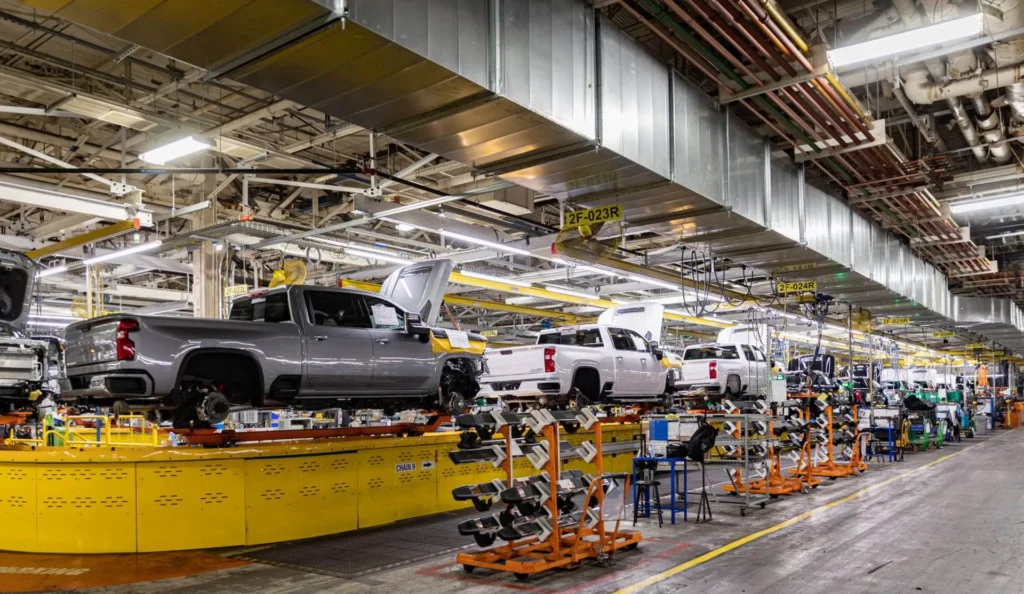
In what many viewed as poetic justice, General Motors partially reversed its Oshawa closure decision in January 2020, bringing back over 1,400 workers to produce pickup trucks. While this initially appeared to be a victory, the real story was more nuanced.
GM’s return wasn’t driven by goodwill—it was economics. The company needed additional pickup truck capacity, and retrofitting Oshawa was faster and cheaper than building new facilities. However, the plant’s future remained uncertain, operating on a “flexible” basis without the long-term commitments that characterized other investments in the region.
Meanwhile, just miles from Oshawa, the massive Stellantis-LG battery plant was rising from farmland. The symbolism was unavoidable: while GM tentatively returned to produce yesterday’s vehicles, Canada’s automotive future was being built around technologies GM had been slower to embrace.
“GM’s return to Oshawa was a Band-Aid,” said Tony Leah, a former president of Unifor Local 222, which represents Oshawa auto workers. “The battery plants and EV investments represent permanent transformation. That’s where the real jobs and future lie.”
Building the Supply Chain: From Raw Materials to Finished Vehicles
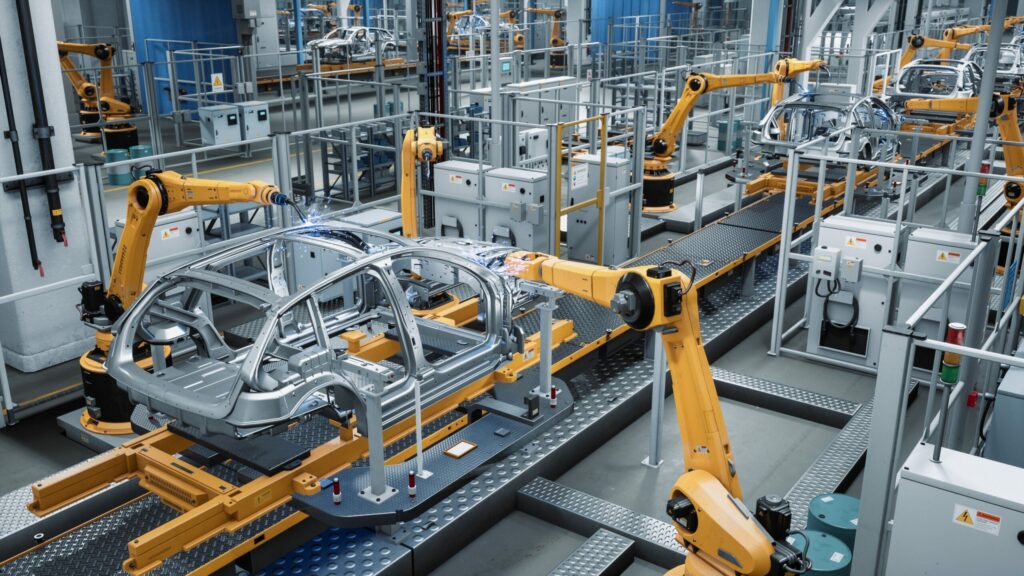
Canada’s EV strategy extended beyond assembly plants. The country recognized that controlling the supply chain—from critical mineral extraction to battery production to vehicle assembly—would provide resilience and economic leverage.
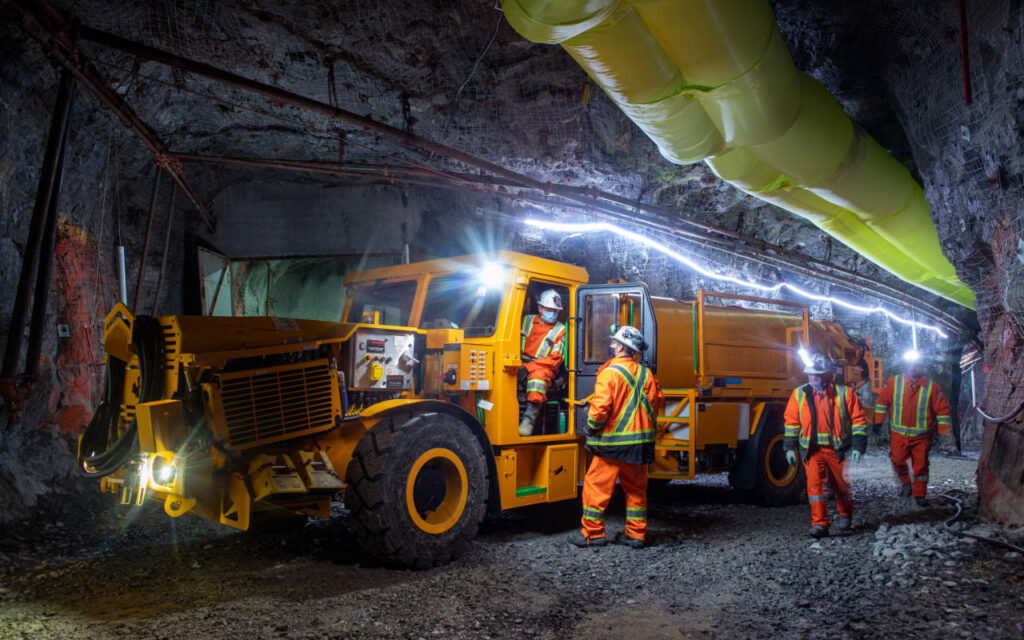
Mining and Mineral Processing: Canada now hosts over 20 active lithium projects, with several entering production between 2024 and 2026. The federal government’s Critical Minerals Strategy allocated $3.8 billion to develop domestic processing capabilities, reducing dependence on Chinese-dominated refining operations.
The James Bay region of Quebec has emerged as particularly promising, with multiple companies developing lithium deposits. In northern Ontario, several nickel mining operations have secured offtake agreements with battery manufacturers.
Battery Component Manufacturing: Beyond the gigafactories, dozens of smaller suppliers have established operations in Ontario and Quebec, producing battery separators, cathode materials, and thermal management systems. This ecosystem approach ensures that disruptions in one part of the supply chain don’t halt production entirely.
Recycling Infrastructure: Recognizing that battery recycling will become critical as first-generation EVs reach end-of-life, Canadian companies have invested in recycling facilities. Li-Cycle, a Toronto-based company, operates North America’s largest lithium-ion battery recycling facility in Ontario, recovering up to 95% of critical materials.
According to a 2024 report from the Canadian Manufacturers & Exporters association, the EV supply chain now supports over 125,000 jobs across Canada—exceeding employment in traditional automotive manufacturing at its peak.

The Policy Framework: How Government Intervention Built an Industry
Critics of industrial policy often cite government’s inability to “pick winners.” Canada’s EV strategy offers a counterargument. Rather than selecting specific companies or technologies, the government created conditions that made Canada attractive to any manufacturer pursuing electrification.
Production Tax Credits: Modeled partially on U.S. incentives but with Canadian modifications, production tax credits provide up to 30% refundable credits for investments in EV manufacturing, battery production, and critical mineral processing. These credits provided certainty that helped close deals.
Strategic Innovation Fund: This federal program provided direct investments and loans to manufacturers, with terms requiring job creation and technology development in Canada. The fund’s flexibility allowed customized packages for individual projects.
Workforce Development: Community colleges across Ontario and Quebec launched specialized programs in battery technology, EV maintenance, and advanced manufacturing. These programs, often co-developed with manufacturers, ensure a skilled workforce as production ramps up.
Regulatory Alignment: Rather than creating unique Canadian standards, regulators aligned requirements with international norms while maintaining safety and environmental standards. This reduced compliance costs for global manufacturers.
The approach wasn’t without controversy. Conservative critics argued the government was subsidizing private corporations, while some progressives contended the incentives were too generous given manufacturers’ profitability. However, the tangible results—tens of billions in investment and tens of thousands of jobs—provided political cover.
The Competitive Advantage: Why Canada Beat the U.S.
By 2025, Canada’s EV manufacturing capacity per capita exceeds that of the United States. How did a country with one-tenth the population outmaneuver its neighbor in this critical industry?
Political Stability: While the U.S. cycling between administrations with vastly different priorities created uncertainty, Canada’s parliamentary system and broad political consensus on climate action provided continuity. Manufacturers planning decade-long projects valued this predictability.
Clean Energy: Over 80% of Canada’s electricity comes from non-emitting sources, primarily hydroelectric, nuclear, and wind. For manufacturers concerned about their carbon footprint and regulatory compliance in markets like Europe, producing batteries and vehicles with clean energy provided a significant advantage.
Trade Access: USMCA ensures Canadian-made vehicles and components access U.S. markets without tariffs. Additionally, Canada has trade agreements with the European Union (CETA) and is part of the CPTPP, providing access to markets accounting for over 1.5 billion consumers.
Labor Relations: While the U.S. automotive sector faced increasing tensions around unionization, particularly with new EV manufacturers, Canada’s established labor relations framework provided clarity. Unifor, Canada’s largest private-sector union, worked collaboratively with manufacturers to ensure competitive operations while protecting workers’ rights.
Critical Minerals: Unlike the U.S., which must import most battery minerals or develop new mining operations facing local opposition, Canada has existing mining infrastructure, regulatory expertise, and social license to expand operations.
The Numbers: Canada’s EV Transformation in Data
The transformation’s scale becomes clear in the statistics:
- Investment: Over $51 billion in EV-related manufacturing investments announced between 2020-2024
- Production Capacity: By 2028, Canada will have battery production capacity exceeding 220 GWh annually—enough for over 2 million vehicles
- Employment: The EV sector directly employs over 42,000 Canadians as of 2025, with projections exceeding 100,000 by 2030
- Export Growth: EV and battery exports grew from virtually nothing in 2020 to over $8 billion in 2024
- Vehicle Assembly: Canadian EV assembly capacity will exceed 500,000 vehicles annually by 2027
These figures don’t include indirect employment in mining, supply chain operations, and services supporting the industry.
[IMAGE REFERENCE 9: “Canadian automotive workers training EV battery technology” – Search for images of workers in training programs for EV and battery manufacturing]
The Future: What Comes Next for Canada’s Auto Industry
Canada’s EV advantage isn’t guaranteed in perpetuity. The country faces challenges that could undermine its position:
U.S. Policy Shifts: A future U.S. administration could implement policies that disadvantage Canadian manufacturers, including tariffs or exclusionary tax credits.
Chinese Competition: Chinese EV manufacturers are expanding globally with lower-cost vehicles and established battery technology. If Chinese companies enter the North American market aggressively, they could disrupt pricing dynamics.
Technology Evolution: If solid-state batteries or other next-generation technologies emerge requiring different supply chains, Canada’s current advantages could diminish.
Infrastructure Demands: As EV adoption accelerates, Canada must continue investing in charging infrastructure, grid capacity, and recycling facilities.
However, Canada appears positioned to maintain its advantage. The federal government’s 2024 budget included additional funding for EV infrastructure and research. Provincial governments in Ontario and Quebec have committed to ensuring adequate electricity generation to support manufacturing growth.
Perhaps most importantly, the industry is developing momentum independent of government support. As the battery plants reach full production and vehicle assembly expands, supplier networks will densify, creating a self-reinforcing ecosystem.
The GM Irony: How Abandonment Forced Evolution
Looking back, GM’s 2018 Oshawa closure decision appears not just shortsighted but actively harmful to the company’s interests. By abandoning Canada when it needed predictability most, GM signaled that it viewed manufacturing location decisions purely through a quarterly earnings lens.
Canada’s response—building an EV ecosystem that now attracts GM’s competitors—has created a situation where GM faces disadvantages in a market it once dominated. While Stellantis, Volkswagen, and Honda secure Canadian production capacity for the EV era, GM remains largely absent from the most significant manufacturing investments.
The company’s minimal Canadian presence in next-generation vehicles means it must import EVs from the U.S. or Mexico, potentially facing future trade complications. Meanwhile, competitors will produce vehicles in Canada with access to locally-produced batteries, critical minerals, and clean energy—advantages in both cost and regulatory compliance.
“GM tried to cut costs by closing Oshawa,” noted automotive analyst Dennis DesRosiers. “Instead, they cut themselves out of Canada’s EV future. That will be studied in business schools as a case of short-term thinking destroying long-term value.”
[IMAGE REFERENCE 10: “Canadian flag and electric vehicles future automotive industry” – Search for images symbolizing Canada’s EV industry leadership]
Conclusion: The Quiet Victory
Canada’s automotive transformation didn’t happen with fanfare or chest-thumping nationalism. It occurred through patient strategy, substantial investment, and recognition that crisis creates opportunity.
While General Motors sought short-term savings through consolidation, Canada built long-term capacity in the technologies defining automotive’s future. While U.S. policy created uncertainty, Canada offered stability. While critics dismissed government intervention as wasteful, Canada demonstrated that strategic industrial policy can succeed when executed competently.
The ultimate irony is that GM’s attempt to “hurt” Canada—if that was ever truly the intention—instead forced the country to evolve beyond dependence on any single manufacturer. The diversified EV ecosystem now emerging in Ontario and Quebec is more resilient than the old model of branch plants assembling foreign-designed vehicles.
As the automotive industry completes its transition to electrification over the next decade, Canada won’t just be a participant—it will be a leader. And somewhere in that story is a lesson about how adversity, when met with vision and determination, can transform into triumph.
GM tried to hurt Canada with its shutdown. Instead, Canada just won big.