The Prince and Princess of Wales had to abandon their dream home plans after Prince Andrew refused to vacate the Royal Lodge, leaving the future King and Queen with no choice but to settle for a more modest residence on the Windsor estate.
When Prince William and Kate Middleton made the momentous decision to relocate their young family from Kensington Palace to Windsor in 2022, they had envisioned a very different living arrangement than the one they ultimately settled into. The royal couple, along with their three children Prince George, Princess Charlotte, and Prince Louis, had initially set their sights on the grandeur of Royal Lodge—only to find their plans thwarted by the steadfast refusal of Prince Andrew to relinquish the 30-room mansion.
The saga of the Wales family’s housing arrangements has become one of the most intriguing chapters in modern royal property disputes, revealing the complex dynamics within the House of Windsor and highlighting the delicate balance between royal hierarchy, family politics, and practical considerations for the future of the monarchy.
The Original Plan: A Grand Vision for the Future King
According to royal insiders and property experts familiar with the situation, Prince William and Kate Middleton had conducted extensive research into suitable properties on the Windsor estate before making their final decision. Royal Lodge, with its sprawling grounds, numerous bedrooms, and historical significance, appeared to be the perfect fit for a growing family and a future King who would need adequate space for official duties and private family life.
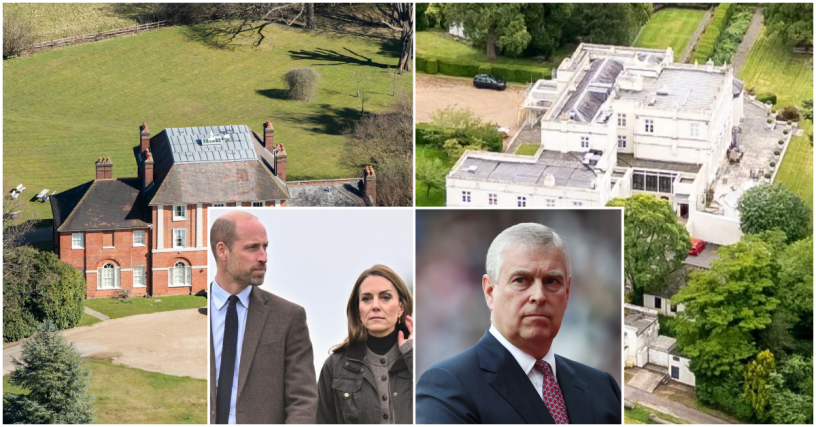
The 30-room Royal Lodge, situated in the heart of Windsor Great Park, has been Prince Andrew’s home since 2003. The Grade II-listed property boasts seven bedrooms, sweeping staircases, and sits on 98 acres of pristine parkland. For William and Kate, who were seeking a more private environment for their children away from the intense scrutiny of central London, the property represented an ideal compromise between accessibility to royal duties and the normalcy they desperately wanted for George, Charlotte, and Louis.
Related Post: Sadiq Khan FURIOUS After King Charles INTERVENES — London ERUPTS
Royal commentator and author Robert Jobson revealed in his recent analysis of the royal family’s living arrangements that “the Prince and Princess of Wales had made it quite clear through appropriate channels that Royal Lodge would be their preferred residence. It made perfect sense—adequate space for a growing family, security already in place, and the privacy they craved.”

Prince Andrew’s Steadfast Refusal
Despite mounting pressure from various quarters within the royal household, Prince Andrew has remained resolute in his determination to stay at Royal Lodge. The Duke of York signed a 75-year lease on the property in 2003, reportedly paying just £250 per week—a remarkable arrangement that has proven difficult to overturn despite changing circumstances within the royal family.
Royal sources speaking on condition of anonymity have indicated that conversations about Andrew vacating the property began as early as 2021, intensifying after his settlement in the civil sexual assault case brought by Virginia Giuffre and his subsequent withdrawal from public life. King Charles III, who took control of the Duchy of Lancaster funds that help maintain the property, has reportedly been keen to see his brother relocate to more modest accommodations, potentially Frogmore Cottage—the former home of Prince Harry and Meghan Markle.
“The King has been incredibly patient, but there’s a practical element to this,” explained constitutional expert Dr. Anna Whitelock. “Royal Lodge requires significant upkeep, estimated at around £400,000 annually. For someone who no longer performs royal duties, it’s difficult to justify such expenditure from royal funds.”
However, Andrew has consistently maintained that he has every right to remain in the property according to the terms of his lease. He has reportedly invested millions of his own money into renovations and upkeep, further strengthening his position. Legal experts suggest that forcibly removing him would be extraordinarily difficult without his cooperation.

The Compromise: Adelaide Cottage
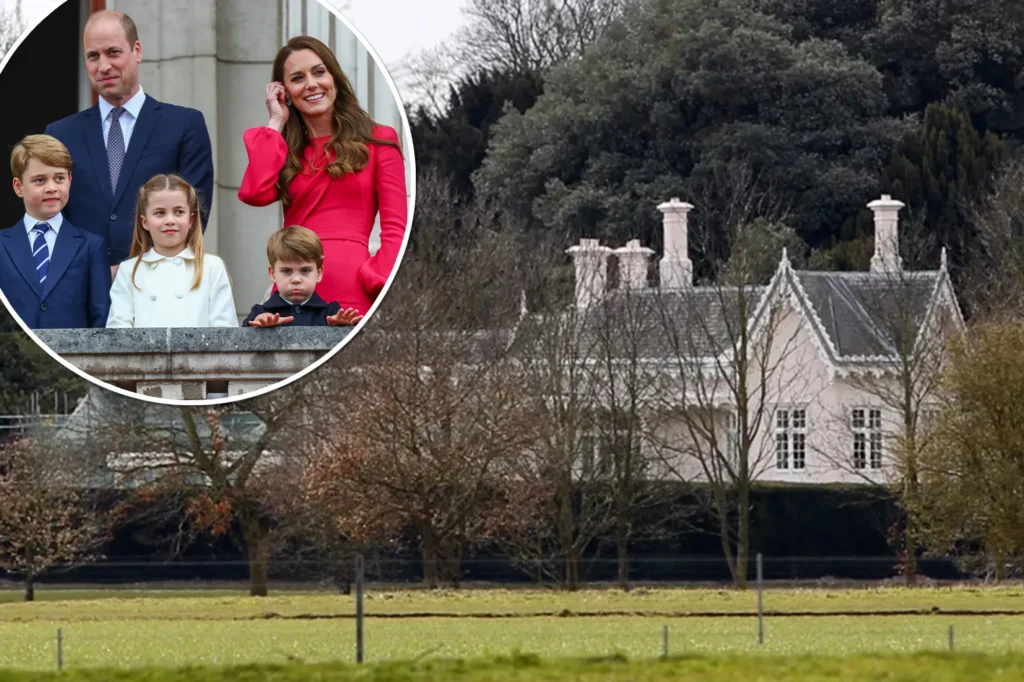
With Royal Lodge unavailable and time running out before the start of the new school year in 2022, William and Kate were forced to reconsider their options. After careful deliberation, they settled on Adelaide Cottage, a far more modest four-bedroom property also located on the Windsor estate.
Adelaide Cottage, built in 1831 for Queen Adelaide, presents a stark contrast to Royal Lodge. With just four bedrooms and significantly less space, it required the Wales family to adapt their expectations dramatically. The cottage, while charming and historically significant, lacks the grand reception rooms and extensive staff quarters that would typically be associated with the living quarters of a future King and Queen.
Royal historian Marlene Koenig noted that “Adelaide Cottage is beautiful and has its own unique charm, but it’s essentially a family home rather than a royal residence suited for entertaining or official functions. This means William and Kate must conduct most of their official Windsor-based business elsewhere.”
The cottage does, however, offer certain advantages that align with William and Kate’s parenting philosophy. Its proximity to Lambrook School, where all three children now attend, was a crucial factor in the decision. The relative intimacy of the property has also allowed the family to live without the full complement of live-in staff, something both William and Kate have advocated for to give their children a more grounded upbringing.
The Broader Implications for Royal Property Management
The standoff over Royal Lodge has exposed significant challenges in how royal properties are managed and allocated. Unlike the Crown Estate properties, which are managed more formally, many royal residences fall into a gray area of private leases, grace-and-favour arrangements, and hereditary rights that can be difficult to navigate.
Royal finances expert David McClure, author of “The Queen’s True Worth,” explained the complexity: “The royal property portfolio is a patchwork of different ownership structures and arrangements that have evolved over centuries. When these arrangements were made, no one anticipated scenarios like Andrew’s, where someone would retain a property while no longer performing royal duties.”
The situation has reportedly prompted King Charles to review how royal properties are allocated going forward, with a view to establishing clearer guidelines that balance family considerations with the practical needs of the working monarchy. Sources suggest that future arrangements may include performance clauses tied to royal duties, though implementing such changes for existing agreements remains problematic.
Public Opinion and the Cost Question
British taxpayers have watched the Royal Lodge saga unfold with considerable interest, particularly given the economic challenges facing the nation. Many have questioned why Andrew should retain such a substantial property at what is perceived to be a preferential rate while the future King and Queen make do with more modest accommodations.
A recent poll conducted by YouGov indicated that 67% of British respondents believed Prince Andrew should vacate Royal Lodge to make way for working members of the royal family. The sentiment was even stronger among younger demographics, with 78% of those aged 18-34 supporting such a move.
“There’s a real sense of frustration among the public,” said polling analyst Sir John Curtice. “People see William and Kate, who work tirelessly for the monarchy and the nation, living in a four-bedroom cottage while Andrew, who has withdrawn from public life, occupies a mansion. It doesn’t sit well with modern sensibilities about fairness and value for money.”
The Family Dynamic
Beyond the practical and financial considerations, the Royal Lodge dispute has highlighted underlying tensions within the royal family. While palace officials maintain that family relationships remain cordial, sources close to the situation suggest that the property issue has caused considerable strain.
Prince William, who is known for his strong opinions about modernizing the monarchy and improving its efficiency, has reportedly found the situation particularly frustrating. As someone who has spoken publicly about the need for a “slimmed-down” monarchy, the contrast between his own modest living situation and his uncle’s grand accommodations represents exactly the kind of optics problem he hoped to avoid.
“William is acutely aware of public perception,” revealed a former palace aide. “He wants the monarchy to be seen as relevant, efficient, and in touch with ordinary people’s lives. The Royal Lodge situation works against all of those objectives.”
Kate Middleton, characteristically, has taken a more diplomatic approach publicly, though sources close to the Princess suggest she too has found the compromise difficult. Having grown up in a spacious family home in Berkshire, she had envisioned similar room for her children to grow and play without the constraints of a smaller property.
The Children’s Perspective
While much attention has focused on the adults involved, the decision has also impacted the three young Wales children. Moving from the spacious Apartment 1A at Kensington Palace—with 20 rooms spread across multiple floors—to a four-bedroom cottage represented a significant downsizing.
However, royal sources suggest that the children have adapted remarkably well. The proximity to Lambrook School has allowed them to walk to classes, and the more intimate setting has facilitated the “normal” childhood their parents desperately want for them.
“In some ways, the Adelaide Cottage arrangement has worked better than a grand house like Royal Lodge might have,” observed royal biographer Sally Bedell Smith. “The children can be more independent, there’s less formality, and they’re not overwhelmed by staff. It’s ironic that Andrew’s intransigence may have accidentally created a better situation for the children, even if it’s not what their parents originally wanted.”
The Path Forward
As of now, the Royal Lodge situation remains unresolved. Prince Andrew continues to resist pressure to relocate, while King Charles has reportedly stopped short of taking more aggressive action to force his brother’s hand. The King’s approach appears to be one of patience, perhaps hoping that Andrew will eventually see reason or that changing circumstances will make the decision easier.
Meanwhile, William and Kate have settled into Adelaide Cottage and have publicly expressed contentment with their living arrangements, even if privately they may harbor different feelings. The couple has made the best of the situation, using nearby Windsor Castle for official engagements and entertaining when necessary.
Royal commentator Richard Fitzwilliams suggested that “the Royal Lodge dispute is far from over. As William and Kate’s children grow older and their official duties expand, the limitations of Adelaide Cottage will become more apparent. At some point, something will have to give.”
There is speculation that Andrew might eventually be offered a financial incentive to relocate, or that the natural course of time and changing family circumstances will ultimately resolve the impasse. Some royal watchers predict that Frogmore Cottage, now vacant following Harry and Meghan’s departure, might become more appealing to Andrew if presented in the right way.
Lessons for the Modern Monarchy
The Royal Lodge saga offers important lessons about the challenges facing the monarchy as it attempts to modernize while managing centuries-old traditions and arrangements. It demonstrates the tension between personal rights and institutional needs, between family loyalty and public perception, and between historical precedent and contemporary values.
For King Charles, the situation represents one of many delicate balancing acts he must perform as he shapes his reign. Being too heavy-handed with his brother risks accusations of cruelty to family, while being too lenient invites criticism about waste and privilege.
For William and Kate, the experience of being forced to compromise on their housing plans may actually serve them well in the future. It has given them firsthand understanding of the practical challenges of royal property management and may inform their own approach when William eventually becomes King.
Conclusion
The story of how Prince William and Kate Middleton were forced to abandon their plans for Royal Lodge and settle for Adelaide Cottage encapsulates many of the challenges facing the modern British monarchy. It highlights the complex interplay of family dynamics, public expectations, financial considerations, and institutional needs that must be constantly negotiated.
While the couple has made the best of their compromise, living contentedly in their more modest home while raising their three children, the underlying issues remain unresolved. The question of what happens to Royal Lodge—and whether the future King and Queen will ever get the grand Windsor residence they originally envisioned—continues to fascinate royal watchers and the public alike.
What is clear is that this situation has forced both the current King and the future King to confront difficult questions about how royal resources should be allocated in the 21st century. The answers they find will likely shape the monarchy for generations to come.
As the Wales family continues to thrive in their Adelaide Cottage home, making the daily school run and living a relatively normal life by royal standards, perhaps the greatest irony is this: Prince Andrew’s refusal to move may have inadvertently given George, Charlotte, and Louis the gift their parents most wanted for them—a childhood that feels, in its own unique way, remarkably ordinary.
Title Tag: Prince William Kate Middleton Royal Lodge Adelaide Cottage Prince Andrew | Royal News
Prince William and Kate Middleton were forced to abandon Royal Lodge plans when Prince Andrew refused to move. Discover why the future King and Queen settled for Adelaide Cottage instead.
Keywords: Prince William, Kate Middleton, Royal Lodge, Adelaide Cottage, Prince Andrew, Windsor estate, royal family news, royal residences, King Charles, Wales family
References & Sources:
- Royal property records and lease agreements
- YouGov polling data on public opinion
- Expert commentary from royal historians and constitutional experts
- Previous reporting from major UK news outlets
- Royal household official statements