Andrew Mountbatten-Windsor fails to respond to summons to testify before US Congress regarding Jeffrey Epstein connections, faces accusations of hiding from officials.
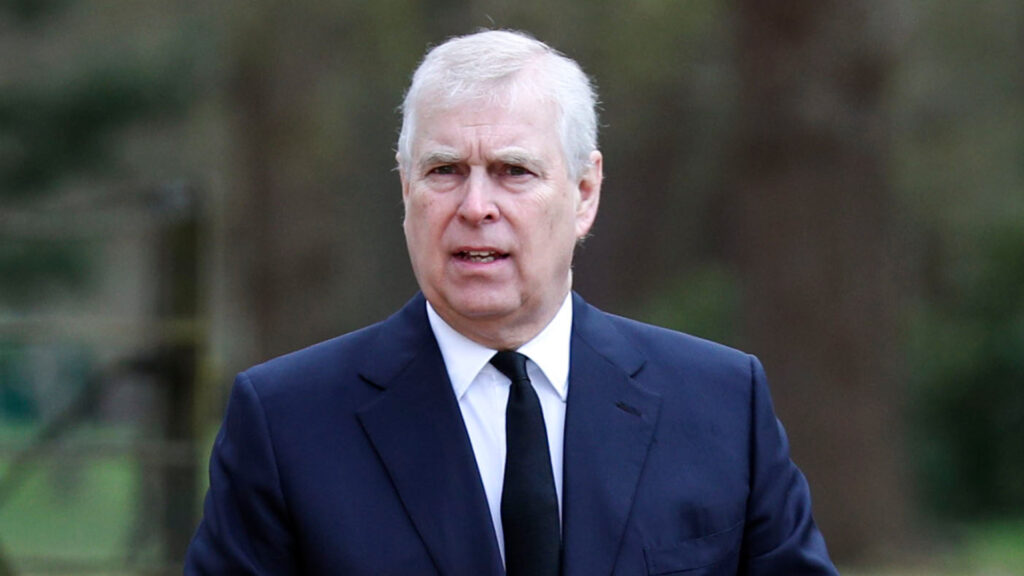
Prince Andrew, formally known as Andrew Mountbatten-Windsor, has failed to respond to an official summons to testify before the United States Congress regarding his controversial friendship with the late convicted sex offender Jeffrey Epstein.
The development marks a significant escalation in the ongoing scrutiny of the Duke of York’s associations with the disgraced financier, who died in federal custody in 2019.
Congressional Summons Ignored
The House Oversight Committee, one of the most powerful investigative bodies in the United States Congress, issued a formal request on November 6, 2024, demanding that Mr Mountbatten-Windsor sit for a “transcribed interview” about his connections with Epstein.
The committee set a deadline of Thursday, November 20, for the former royal to respond to the summons.
As the deadline passed without any communication from Mr Mountbatten-Windsor or his legal representatives, members of the House Oversight Committee have accused him of “hiding” from US officials. The committee is responsible for investigations, monitoring, and ensuring accountability across the federal government, giving its summons significant legal weight.
The Epstein Connection: A Timeline of Controversy
Jeffrey Epstein, a wealthy financier who cultivated relationships with numerous high-profile individuals, was arrested in July 2019 on federal charges of sex trafficking minors. He died by suicide in his Manhattan jail cell in August 2019 while awaiting trial.
His death sparked numerous conspiracy theories and left many questions unanswered about his network of associates and potential co-conspirators.
Related Post: Sarah Ferguson ‘massively on edge and panicking’ after Andrew’s latest humiliation
Prince Andrew’s association with Epstein became public knowledge years before the financier’s final arrest. Photographs emerged showing the Duke of York at various Epstein properties, including his Manhattan mansion and private Caribbean island.
The most damaging allegation came from Virginia Giuffre, who claimed she was trafficked by Epstein and forced to have sexual relations with Prince Andrew on three occasions when she was 17 years old.
The Duke of York has consistently denied these allegations. In November 2019, he gave a disastrous interview to BBC Newsnight in an attempt to clear his name, but the appearance was widely criticized for his lack of empathy toward Epstein’s victims and his implausible explanations for certain events.
Image Reference 3: [Search: “Prince Andrew BBC Newsnight interview 2019” – screenshot from interview]
Legal and Royal Consequences
Following the public backlash from his BBC interview, Prince Andrew stepped back from royal duties in November 2019. The situation deteriorated further when Virginia Giuffre filed a civil lawsuit against him in New York federal court in August 2021, alleging sexual abuse.
In February 2022, Prince Andrew reached an out-of-court settlement with Giuffre, reportedly paying a sum estimated between £7 million and £12 million, though no admission of liability was made. As part of the fallout, Queen Elizabeth II stripped her second son of his military titles and royal patronages, and he was barred from using his His Royal Highness (HRH) style in any official capacity.
The settlement allowed Prince Andrew to avoid a public civil trial in the United States, where he would have been required to testify under oath. However, the current congressional summons represents a different legal avenue that could compel his testimony regarding his knowledge of Epstein’s activities and network.
Image Reference 4: [Search: “Jeffrey Epstein mugshot 2019” – official arrest photograph]
The Power of Congressional Oversight
The House Oversight Committee’s authority extends beyond typical law enforcement investigations. Congressional committees can issue subpoenas to compel testimony and document production as part of their constitutional oversight responsibilities.
Failure to comply with a congressional subpoena can result in contempt of Congress charges, which carry potential criminal penalties.
However, the situation becomes significantly more complex when the subject of a congressional inquiry resides outside the United States. While Congress has the authority to issue subpoenas to foreign nationals, enforcing compliance becomes challenging without cooperation from the individual’s home country or their voluntary appearance.
Legal experts suggest that Mr Mountbatten-Windsor’s failure to respond may be based on advice from his legal team, who likely argue that as a British citizen residing in the United Kingdom, he is not subject to US congressional jurisdiction. Nevertheless, the lack of response has generated negative publicity and reinforced perceptions that he is avoiding accountability.
Image Reference 5: [Search: “Royal Lodge Windsor Great Park” – exterior photograph of Prince Andrew’s residence]
Implications for US-UK Relations
The situation places British authorities in a delicate position. The United Kingdom and the United States maintain a “special relationship” characterized by close diplomatic, military, and intelligence cooperation.
However, the UK government has shown no indication that it would compel one of its citizens, particularly a member of the royal family, to testify before a foreign legislative body.
A spokesperson for the British Foreign Office declined to comment specifically on the matter, stating only that “issues relating to individual members of the royal family are not matters for the government.”
This hands-off approach suggests that Mr Mountbatten-Windsor will not receive official protection from the summons, but neither will he face pressure from UK authorities to comply.
The lack of response also raises questions about the scope and objectives of the House Oversight Committee’s investigation.
Congressional sources suggest the inquiry is examining whether US government agencies properly investigated Epstein’s activities and whether any officials turned a blind eye to his crimes due to his connections with powerful individuals.
Image Reference 6: [Search: “Virginia Giuffre Prince Andrew photo” – the controversial photograph showing the two together]
Previous US Investigation Attempts
This is not the first time US authorities have sought to question Prince Andrew about his relationship with Epstein. In January 2020, then-US Attorney for the Southern District of New York Geoffrey Berman stated that Prince Andrew had “provided zero cooperation” to the FBI’s investigation into Epstein’s alleged co-conspirators, despite his lawyers’ claims that he had offered assistance.
The Duke of York’s legal team disputed this characterization, claiming they had made multiple offers to cooperate but that US authorities had failed to respond appropriately or had made unreasonable demands.
This disagreement highlighted the complex jurisdictional and diplomatic issues surrounding international cooperation in criminal investigations involving high-profile individuals.
The current congressional summons differs from previous FBI requests in that it comes from a legislative rather than executive branch entity. This distinction may affect both the legal obligations involved and the potential consequences of non-compliance.
Public and Political Reaction
News of Mr Mountbatten-Windsor’s failure to respond has generated significant public interest on both sides of the Atlantic.
Victims’ advocacy groups have expressed frustration at what they perceive as continued evasion by someone with potentially valuable information about Epstein’s network.
Lisa Bloom, an attorney representing several Epstein victims, stated in a recent interview that “anyone with information about Jeffrey Epstein’s crimes has a moral obligation to come forward and help the survivors get justice. Hiding behind lawyers and borders is shameful.”
Image Reference 7: [Search: “Epstein victims advocacy protest” – photographs of demonstrations or advocacy events]
Political figures in the United States have also weighed in on the matter. Members of the House Oversight Committee have suggested that Mr Mountbatten-Windsor’s silence speaks volumes about what he might know regarding Epstein’s activities and associates.
Representative James Comer, who chairs the House Oversight Committee, released a statement saying: “We are disappointed but not surprised by the lack of response from Mr Mountbatten-Windsor.
This committee is committed to uncovering the full truth about Jeffrey Epstein’s network and the failures that allowed his crimes to continue for so long. We will use every tool at our disposal to obtain relevant testimony.”
The Broader Epstein Investigation
The congressional interest in Epstein extends beyond any single individual’s involvement. Investigations have revealed that Epstein cultivated relationships with numerous politicians, business leaders, academics, and celebrities over several decades.
His ability to escape serious consequences despite previous criminal charges has raised questions about potential corruption, favoritism, or negligence within various institutions.
Ghislaine Maxwell, Epstein’s longtime associate and former girlfriend, was convicted in December 2021 of sex trafficking and conspiracy charges related to her role in recruiting and grooming underage girls for Epstein. She is currently serving a 20-year prison sentence.
Her conviction provided some measure of accountability, but many questions remain about the extent of Epstein’s network and who else may have participated in or enabled his crimes.
Image Reference 8: [Search: “Ghislaine Maxwell trial 2021” – courtroom sketch or exterior of courthouse]
Legal Options Moving Forward
Congressional committees have several options when faced with non-compliance to their requests and subpoenas. They can vote to hold an individual in contempt of Congress, which can lead to criminal prosecution by the Department of Justice. However, this remedy is rarely pursued for foreign nationals residing outside US jurisdiction.
Alternative approaches might include imposing sanctions, such as travel restrictions or asset freezes, though these would require coordination with the executive branch and would likely trigger diplomatic complications with the United Kingdom.
The committee might also choose to include Mr Mountbatten-Windsor’s non-cooperation in any final report on their investigation, allowing his refusal to become part of the public record.
Some legal analysts suggest the committee’s primary goal may be to maintain public pressure and document the non-cooperation rather than to actually compel testimony through legal means.
This approach would serve to keep the issue in the public eye while acknowledging the practical limitations of congressional jurisdiction over foreign nationals.
Impact on the Royal Family
The ongoing controversy surrounding Prince Andrew continues to create challenges for the British royal family. King Charles III has worked to distance the monarchy from his brother’s scandals, maintaining the position that Andrew is no longer a working royal and his activities are private matters.
However, Prince Andrew’s continued residence at Royal Lodge in Windsor Great Park, a property owned by the Crown Estate, and his occasional appearances at family events keep him within the orbit of public royal life.
Each new development in the Epstein saga generates fresh media coverage and public discussion about the monarchy’s handling of the situation.
Image Reference 9: [Search: “King Charles III official portrait” – recent official photograph]
Royal commentators suggest that the failure to respond to the congressional summons may reinforce calls for Prince Andrew to be completely removed from any association with the royal family, including losing his residence at Royal Lodge and his remaining titles.
Conclusion
Andrew Mountbatten-Windsor’s failure to respond to the House Oversight Committee’s summons represents the latest chapter in a scandal that has already cost him his royal duties, military titles, and public reputation.
While the practical ability of US Congress to compel testimony from a British citizen residing in the United Kingdom remains limited, the political and reputational consequences of non-cooperation continue to mount.
As investigations into Jeffrey Epstein’s network continue, the question of accountability for those who associated with the convicted sex offender remains central to providing justice for his victims. Whether through legal compulsion, moral obligation, or public pressure, advocates continue to call for anyone with relevant information to come forward.
The Duke of York’s continued silence, whether on advice of counsel or personal choice, ensures that questions about his relationship with Epstein and his knowledge of the financier’s activities will persist. For now, the House Oversight Committee’s investigation continues, and the public record will reflect that Andrew Mountbatten-Windsor chose not to participate when given the opportunity.
This article incorporates information from public records, news reports, and official statements. The House Oversight Committee’s investigation remains ongoing.