Trump BREAKS DOWN after MAJOR MARKET COLLAPSE
The American economy is facing unprecedented turbulence as President Trump’s controversial tariff policies come under intense scrutiny from the Supreme Court, while critical economic indicators paint a grim picture of manufacturing decline and industrial collapse.
The once-celebrated trade policies, which Trump championed as a masterstroke for American workers, are now being exposed as potentially unconstitutional measures that have triggered devastating consequences across multiple sectors of the U.S. economy.
Supreme Court Challenges Trump’s Authority on Tariffs
In a dramatic turn of events that has sent shockwaves through Washington and Wall Street, the Supreme Court has raised serious questions about the legality of President Trump’s sweeping tariff regime.
The justices’ skepticism centers on a fundamental constitutional question: Does the president have the authority to unilaterally impose what are essentially taxes on American businesses and consumers?
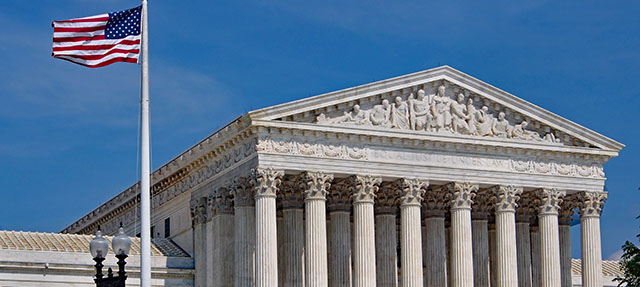
The Supreme Court hearing has brought to light a crucial constitutional principle that many Americans may have overlooked during the heated trade war rhetoric. Tariffs are not simply trade tools or negotiating tactics—they are taxes.
Under the United States Constitution, the power to levy taxes rests exclusively with Congress, not the executive branch.
This separation of powers, a cornerstone of American democracy, is now at the center of what could become one of the most significant Supreme Court decisions in recent history regarding presidential authority.
Legal experts watching the proceedings have noted the justices’ pointed questions about executive overreach.
The court appears poised to potentially restrict future presidents from using emergency powers to bypass congressional approval for tariffs, reinforcing the constitutional checks and balances that have governed American democracy for over two centuries.
The Freight Industry Reveals Economic Devastation
Beyond the marble halls of the Supreme Court, real-world economic data tells a story of an economy in serious distress.
Trucking volumes, long considered one of the most reliable real-time indicators of economic health, have experienced a catastrophic decline that experts say rivals some of the worst economic downturns in recent American history.

The numbers are startling and unmistakable. General freight volumes have plummeted by 17 percent, while industrial freight—the backbone of American manufacturing—has suffered an even more devastating 30 percent collapse.
These are not mere statistical blips; they represent the contraction of entire sectors of the American economy that employ millions of workers and form the foundation of the middle class.
Manufacturing, automotive production, housing construction, and energy sectors have all been hit hard by this freight volume collapse. When trucks aren’t moving goods, it means factories aren’t producing, construction sites aren’t building, and the economic engine that powers American prosperity is sputtering dangerously close to stalling completely.
Related Post: 5MINS AGO: Carney’s Asia Press Conference Shows He’s HAD ENOUGH of Trump
Transportation industry analysts have described the current situation as unprecedented in its severity and scope. The decline affects not just large corporations but small businesses, independent truckers, and the entire supply chain ecosystem that keeps America running.
From the ports of Los Angeles to the manufacturing heartland of the Midwest, the impact is being felt across every region of the country.
The Tariff Trap: How Trump’s Trade War Backfired
When President Trump first announced his tariff policies, they were sold to the American people as a bold stroke of economic nationalism that would revive American manufacturing, bring jobs back from overseas, and punish countries that had supposedly taken advantage of the United States for decades. The reality, however, has proven to be far different from the promise.
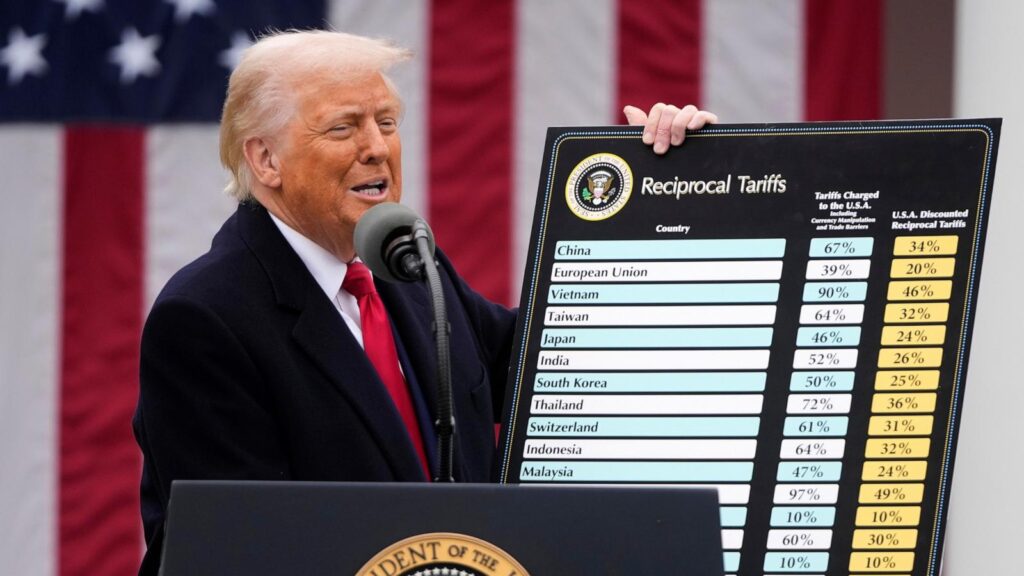
Rather than spurring a manufacturing renaissance, the tariffs have instead created a perfect storm of economic headwinds that have suppressed demand, increased costs across supply chains, and created uncertainty that has caused businesses to delay investments and expansion plans.
The tariffs raised wholesale costs and raw material prices significantly, making American manufacturers less competitive both at home and abroad.
The disconnect between wholesale and retail prices has obscured the true inflationary impact of these policies from many consumers. While shoppers may not have immediately seen dramatic price increases at checkout, businesses have absorbed crushing cost increases that have forced them to cut production, delay hiring, and in some cases, lay off workers or close facilities entirely.
Manufacturing demand has been severely suppressed as companies struggle with the higher input costs created by tariffs on imported materials and components. Many American manufacturers rely on global supply chains that have been optimized over decades to provide the best combination of quality, cost, and reliability.
The tariffs disrupted these carefully balanced systems, creating inefficiencies and cost increases that ripple through entire industries.
The De Minimis Disaster: Small Businesses Pay the Price
Among the less publicized but equally damaging aspects of Trump’s trade policies has been the closure of the “de minimis” loophole, a provision that previously allowed small, tariff-free imports below certain weight and value thresholds to enter the country without duties or extensive customs procedures.

This seemingly technical policy change has had profound consequences for parcel carriers, small businesses, and individual entrepreneurs who depend on international trade.
Companies like FedEx and UPS have seen their international small-package volumes decline significantly, affecting their revenue and forcing operational adjustments.
The closure of this loophole has particularly hurt small businesses and e-commerce entrepreneurs who built their business models around sourcing products internationally or selling to customers abroad.
What was once a straightforward process of sending or receiving small shipments has become a bureaucratic nightmare involving customs declarations, duty payments, and processing delays.
Individual consumers have also felt the impact. Americans who order items from overseas or send packages to friends and family abroad now face additional costs and complications that didn’t exist before.
This has effectively created a hidden tax on small-scale international commerce that disproportionately affects ordinary Americans rather than large corporations with resources to navigate complex trade regulations.
Housing Market Stagnation Deepens the Crisis
The economic troubles caused by Trump’s tariffs are compounded by a stalled housing market that threatens to prolong the industrial downturn indefinitely.
Approximately 20 percent of freight demand in the United States is directly tied to housing activity, including new construction, renovations, and the associated purchases of appliances, furniture, and building materials.
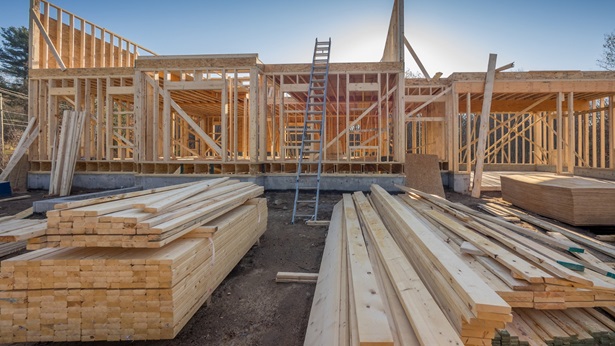
High interest rates, implemented by the Federal Reserve to combat inflation—inflation that was itself partially fueled by tariff-induced price increases—have frozen the housing market. Potential homebuyers are priced out by mortgage rates that have more than doubled from their pandemic-era lows.
Builders are hesitant to start new projects when demand is uncertain and construction costs remain elevated.
This housing market paralysis creates a vicious cycle for the broader economy. Without residential construction activity, demand for lumber, steel, concrete, copper wiring, appliances, and countless other materials and products remains depressed.
The workers who would be employed in construction, manufacturing these materials, and transporting them remain unemployed or underemployed. The truckers who would haul these materials have empty trailers.
The connection between housing and industrial freight is so strong that many economists believe any meaningful recovery in manufacturing and transportation sectors is impossible without first addressing the housing crisis.
Yet solutions remain elusive as long as interest rates stay high and economic uncertainty persists—uncertainty that Trump’s erratic trade policies have only intensified.
The K-Shaped Economy: Winners and Losers Under Trump’s Policies
Perhaps no aspect of the current economic situation is more troubling than the stark divergence between different segments of the American economy and society. While manufacturing workers, truckers, construction workers, and small business owners struggle with the consequences of Trump’s tariffs, other sectors continue to thrive.
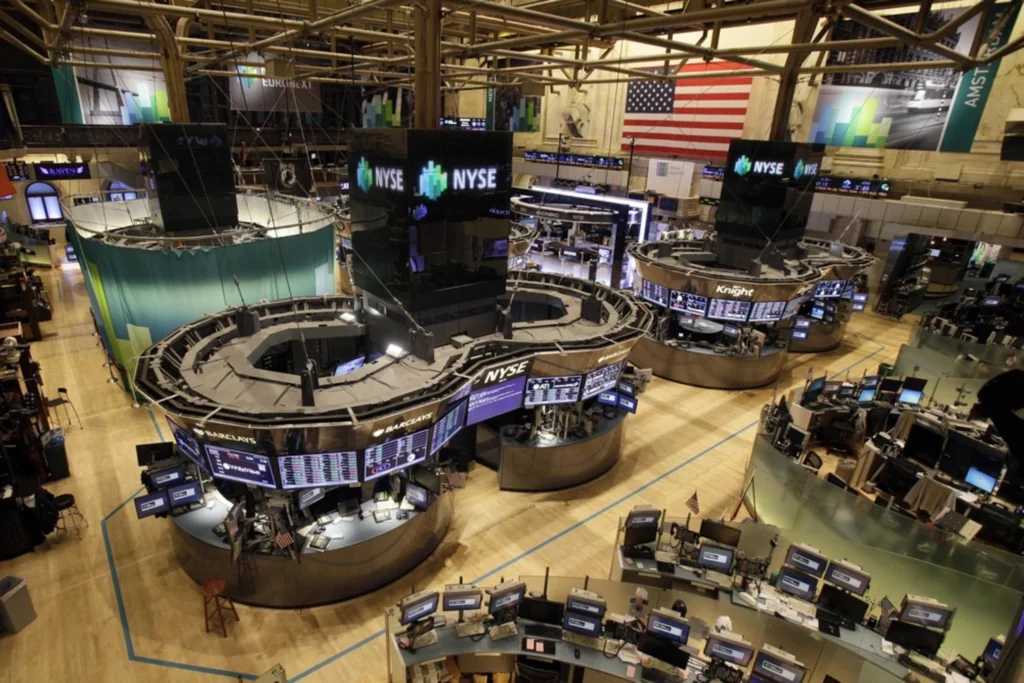
Technology companies, financial services firms, and large corporations with diversified global operations have largely weathered the tariff storm. Some have even benefited from the chaos, using their resources and market power to absorb costs that crush smaller competitors.
Wealthy individuals with diversified investment portfolios have seen their net worth continue to grow even as Main Street suffers.
This phenomenon, known as a K-shaped recovery or economy, shows diverging fortunes where the trajectory splits like the letter K—some going up while others go down. The divide falls largely along class lines, with wealthy Americans and large corporations moving upward while working-class and middle-class Americans trend downward.
The irony is particularly bitter for Trump’s supporters, many of whom were blue-collar workers who believed his promises that tariffs would protect their jobs and revive American manufacturing.
Instead, these are precisely the workers who have been hit hardest by the economic consequences of these policies.
Factory workers have been laid off as plants reduce production or close entirely. Truckers sit idle as freight volumes collapse. Construction workers face an uncertain future as the housing market stagnates.
Constitutional Crisis and Executive Overreach
The Supreme Court case examining Trump’s tariff authority represents more than just an economic policy dispute—it cuts to the heart of constitutional governance and the limits of presidential power.
The justices’ questions during oral arguments revealed deep concern about the precedent that would be set by allowing a president to unilaterally impose what amounts to significant taxation without congressional approval.
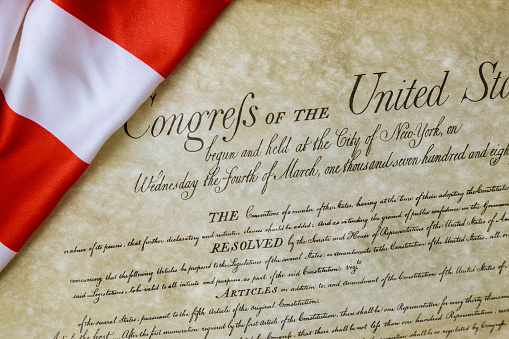
Throughout American history, the power of the purse has been jealously guarded by Congress as one of its most fundamental responsibilities. The Founding Fathers explicitly placed this power in the legislative branch precisely to prevent the kind of executive overreach that Trump’s tariff regime represents.
Taxes require debate, consideration of consequences, and ultimately the consent of the people’s elected representatives in Congress.
Trump’s use of emergency powers and national security justifications to bypass Congress and impose tariffs has alarmed constitutional scholars across the political spectrum.
While presidents have historically had some latitude in trade policy, the scope and economic impact of Trump’s tariffs exceed anything contemplated by previous presidents or the laws delegating limited trade authority to the executive branch.
If the Supreme Court rules against Trump’s tariff authority, it would represent a significant check on presidential power and could fundamentally reshape how future presidents approach trade policy.
Such a ruling would require presidents to work with Congress, building consensus and ensuring that trade policies reflect broader democratic input rather than unilateral executive decisions.
Global Trade Relationships in Tatters
Beyond the domestic economic damage, Trump’s tariff policies have severely strained America’s relationships with its closest trading partners and allies.
Canada, Mexico, the European Union, Japan, South Korea, and other longtime partners have been subjected to tariffs justified by dubious national security claims that have insulted these democratic allies and damaged diplomatic relationships built over decades.
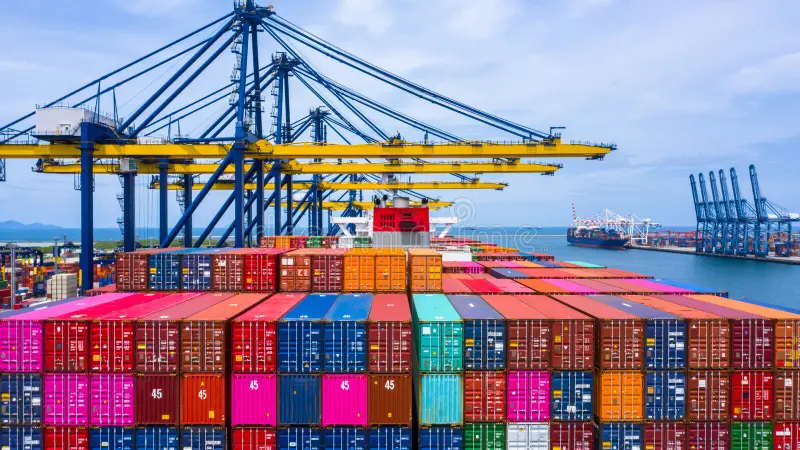
These countries have responded with retaliatory tariffs of their own, targeting American agricultural products, manufactured goods, and services.
American farmers have been particularly hard hit, losing access to markets they had spent years developing. Manufacturers that export products have seen their competitiveness eroded by foreign tariffs imposed in response to Trump’s actions.
The uncertainty created by Trump’s erratic trade policy has caused businesses worldwide to reconsider investments and supply chain decisions.
Companies that might have expanded operations in the United States or increased purchases of American goods have instead looked elsewhere, seeking stability and predictability that American policy no longer provides.
The Path Forward: Recovery and Reform
As the Supreme Court prepares to issue its ruling on Trump’s tariff authority, the American economy faces a critical juncture.
The freight data, manufacturing indicators, and employment statistics all point to an economy under severe stress, particularly in the industrial and manufacturing sectors that employ millions of Americans and form the backbone of the middle class.

Recovery will require more than simply removing the tariffs, though that would be an important first step. The damage done to supply chains, business relationships, and economic confidence will take years to repair.
Companies that moved operations or found alternative suppliers won’t immediately shift back. Trading partners that were insulted and economically attacked won’t quickly forget or forgive.
The housing market must also be addressed, as its revival is essential for broader industrial recovery. This may require coordination between fiscal and monetary policy, something that has been notably lacking in recent years. Lower interest rates alone won’t solve the problem if underlying economic uncertainty persists.
Small businesses that have been devastated by the closure of the de minimis loophole and increased trade bureaucracy need relief and support.
The parcel carriers and logistics companies that facilitate small-scale international trade need regulatory certainty and reasonable policies that recognize the important role they play in the modern economy.
Political Reckoning and Accountability
The Supreme Court case and the mounting economic evidence of tariff damage have created a political problem for Trump that extends beyond his immediate legal troubles.
The workers who supported him based on promises of manufacturing revival are experiencing the opposite—job losses, plant closures, and economic hardship.
Political analysts note that economic pain has a way of cutting through partisan rhetoric. When paychecks stop, savings run out, and families struggle, voters begin questioning the policies and politicians responsible.
The K-shaped economy that benefits Trump’s wealthy supporters while harming his working-class base creates a political vulnerability that opponents are already beginning to exploit.
The contrast between Trump’s continued claims of economic success and the lived reality of millions of Americans creates a credibility gap that grows wider with each new report of factory closures or freight volume declines.
The Supreme Court’s questioning of his tariff authority adds legal weight to what many Americans already suspect—that these policies were more about political theater than sound economic strategy.
Conclusion: Constitutional Order and Economic Reality
The convergence of the Supreme Court case challenging Trump’s tariff authority and the mounting economic evidence of widespread damage represents a pivotal moment for American democracy and economic policy.
The justices’ emphasis on constitutional limits and the separation of powers reminds Americans that even presidents must operate within legal constraints, particularly when their actions function as taxation—a power explicitly reserved for Congress.
The freight market collapse, manufacturing decline, housing market stagnation, and K-shaped economic divergence all illustrate the real-world consequences of politically motivated trade policies that ignored economic complexity and constitutional constraints.
Trump’s tariffs, sold as patriotic protection of American workers, have instead contributed to precisely the kind of economic hardship and job losses they were supposed to prevent.
As the nation awaits the Supreme Court’s decision, the economic data continues to accumulate, painting an increasingly clear picture of policies that failed to achieve their stated objectives while causing significant collateral damage.
The path to recovery will require not only potential policy reversals but also a fundamental rethinking of how America approaches trade policy, respects constitutional governance, and ensures that economic policies serve all Americans rather than enriching the few at the expense of the many.
The Trump tariff saga serves as a cautionary tale about the dangers of executive overreach, the complexity of global trade, and the importance of evidence-based policymaking that respects both constitutional limits and economic reality.
Whatever the Supreme Court ultimately decides, the economic consequences of these policies will resonate for years to come, affecting American workers, businesses, and the nation’s standing in the global economy.
NOTE: This article incorporates analysis of Supreme Court proceedings, freight industry data, economic indicators, and expert commentary on trade policy and constitutional law. Readers should consult multiple sources and seek professional advice regarding economic and legal matters affecting their individual circumstances.