King Charles leads Royal Family at poignant Remembrance Sunday service at the Cenotaph
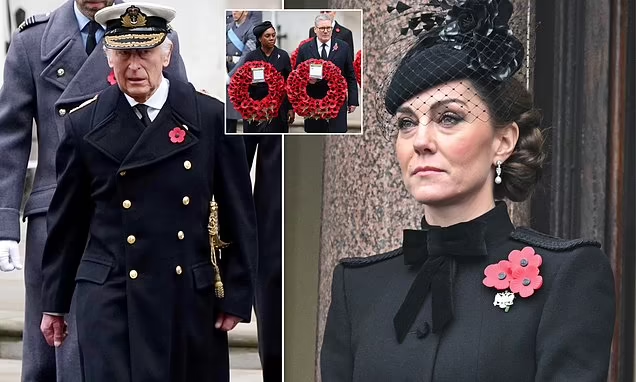
King Charles III led the nation in a deeply moving Remembrance Sunday service at the Cenotaph in Whitehall, London, paying tribute to the fallen heroes who made the ultimate sacrifice for their country.
The solemn ceremony, which took place on November 10, 2024, saw the monarch joined by senior members of the Royal Family, political leaders, and veterans in a powerful display of national remembrance and gratitude.
The annual commemoration, one of the most significant events in the British calendar, began with the traditional two minutes of silence at 11am, marking the exact moment when the armistice was signed in 1918, ending the First World War. As Big Ben’s chimes echoed across the capital, the nation fell silent in a profound act of collective memory and respect.

The King’s Solemn Wreath-Laying Ceremony
King Charles, dressed in the uniform of the Admiral of the Fleet, approached the Portland stone memorial with measured dignity to lay the first wreath of crimson poppies.
The wreath, featuring 41 open poppies mounted on black leaves with a ribbon in the colours of his racing silk, bore a handwritten card from the monarch reading: “In grateful remembrance of your service and sacrifice.”
Related Post: 120,000 Protesters ERUPT After Train Stabbings — King Charles DESTROYS Khan | News UK
This marks another significant moment in King Charles’s reign as he continues to uphold the traditions established by his late mother, Queen Elizabeth II, who faithfully attended the ceremony for decades before her passing in September 2022.
The King’s participation underscores the continuity of royal duty and the enduring importance of remembrance in British national life.
The ceremony holds particular poignancy for the Royal Family, many of whom have served in the armed forces. King Charles himself served in the Royal Navy and Royal Air Force, following in the footsteps of his father, the late Duke of Edinburgh, and his grandfather, King George VI.
Royal Family United in Remembrance
The Prince of Wales, William, who holds the rank of Wing Commander in the Royal Air Force, laid the second wreath on behalf of his household. Wearing his RAF uniform adorned with medals, the heir to the throne stood solemnly as he honored those who served.
Prince William’s military service includes tours with the Royal Air Force Search and Rescue Force, where he served as a helicopter pilot, giving him a personal connection to the armed forces community being remembered.
The Princess of Wales, Catherine, observed the ceremony from the balcony of the Foreign, Commonwealth and Development Office building, alongside the Duchess of Edinburgh, Sophie. Both women wore elegant black outfits adorned with multiple poppy brooches, their solemn expressions reflecting the gravity of the occasion.
The Princess of Wales has become increasingly prominent at such state occasions, her presence symbolizing the continuity of royal service and dedication to honoring military sacrifice.
The Duke of Edinburgh, Prince Edward, also participated in the wreath-laying ceremony, representing his own household. Edward, who holds the title of Earl of Wessex and Forfar, served in the Royal Marines before pursuing other commitments, maintaining the Royal Family’s strong ties to the armed services.
A Nation’s Gratitude on Display
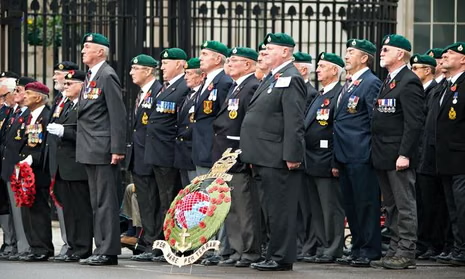
The ceremony brought together thousands of veterans from conflicts spanning nearly a century, from the Second World War to more recent operations in Afghanistan and Iraq.
These men and women, many now in their advanced years, marched past the Cenotaph with pride and dignity, their medals glinting in the autumn sunlight. Their presence served as a living bridge between past and present, connecting younger generations with the realities of military service and sacrifice.
Among those present were Chelsea Pensioners in their distinctive scarlet coats, representatives from the Royal British Legion, and members of various regimental associations. The diversity of uniforms and cap badges on display testified to the breadth of Britain’s military history and the many theaters of conflict in which British forces have served.
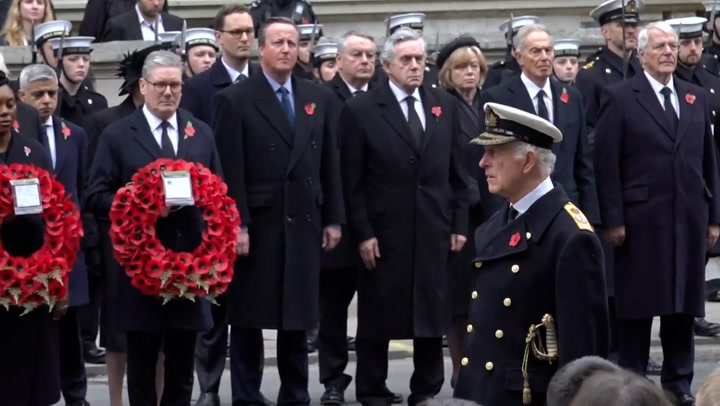
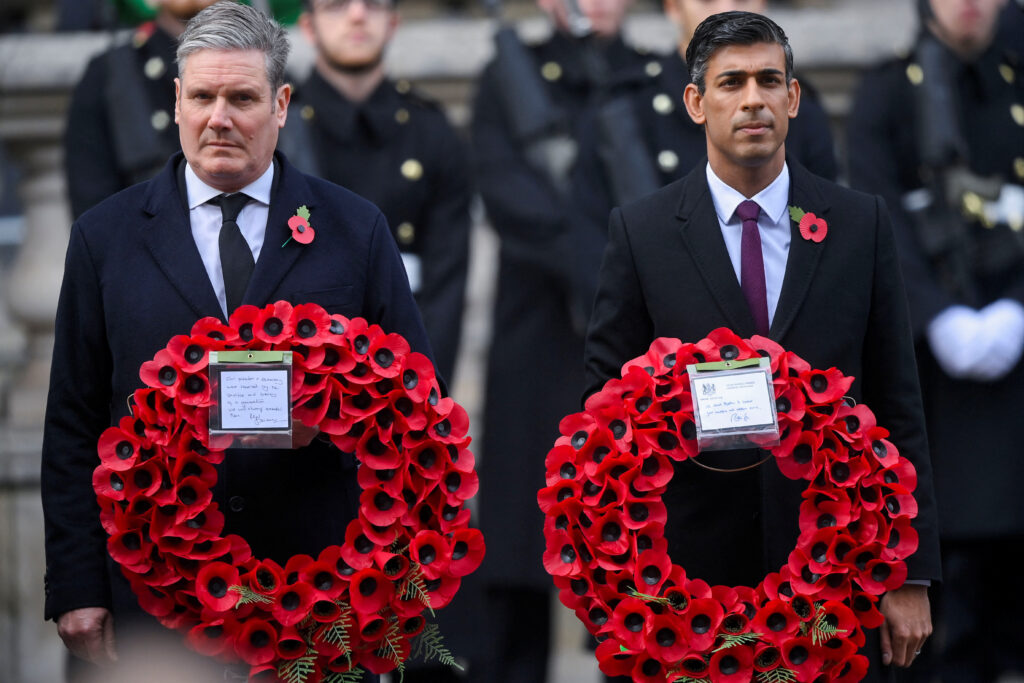
Prime Minister Rishi Sunak laid a wreath on behalf of the government, followed by opposition leaders and representatives from Commonwealth nations.
The participation of political leaders from across the spectrum demonstrated that remembrance transcends party politics, uniting the nation in recognition of sacrifice that protects democratic freedoms.
The Historical Significance of the Cenotaph
The Cenotaph, designed by Sir Edwin Lutyens and unveiled in 1920, stands as Britain’s primary national war memorial. The word “cenotaph” comes from the Greek words for “empty tomb,” as it commemorates those whose remains were never recovered or identified.
The simple yet powerful Portland stone monument bears the inscription “The Glorious Dead” and has become the focal point for national mourning and remembrance.
Originally intended as a temporary structure for the Peace Day parade in 1919, the public response was so overwhelming that a permanent monument was commissioned. Today, it remains one of the most recognizable symbols of remembrance in the world, representing not just British sacrifice but serving as inspiration for similar memorials across Commonwealth nations.
The annual Remembrance Sunday service has evolved since its inception, adapting to honor veterans of subsequent conflicts while maintaining its core purpose of remembering the fallen of the First and Second World Wars. Each year, the ceremony incorporates representatives from more recent operations, ensuring that contemporary service and sacrifice receive equal recognition.
The Poppy: Symbol of Remembrance
The red poppy has become the universal symbol of remembrance in Britain and Commonwealth countries, inspired by the famous war poem “In Flanders Fields” by Lieutenant Colonel John McCrae. The poem, written in 1915, describes poppies growing among the graves of fallen soldiers in Belgium, transforming the flower into an enduring emblem of sacrifice and hope.
The Royal British Legion’s Poppy Appeal, which runs annually in the weeks leading up to Remembrance Sunday, raises millions of pounds to support veterans and their families. The sight of the entire nation, from schoolchildren to the monarch himself, wearing poppies in November has become one of Britain’s most visible expressions of collective memory and gratitude.
This year’s service saw an estimated 10,000 veterans march past the Cenotaph after the official ceremony, each wearing their medals with pride and their poppies with honor. The sea of red flowers against dark suits and military uniforms created a powerful visual reminder of the human cost of conflict and the nation’s commitment to never forget.
Military Precision and Ceremonial Excellence
The Remembrance Sunday ceremony is executed with military precision, involving all three services of the British Armed Forces. Representatives from the Royal Navy, British Army, and Royal Air Force participate in the carefully choreographed proceedings, which have been refined over more than a century of tradition.
The service began with the arrival of the Royal Family and dignitaries, followed by a religious service led by the Bishop of London and the Archbishop of Canterbury. Hymns including “O God, Our Help in Ages Past” were sung by the massed bands of the Guards Division, their voices carrying across Whitehall in a moment of collective worship and reflection.
At precisely 11am, a single gun fired from Horse Guards Parade signaled the start of the two minutes of silence. During this time, the bustling heart of London came to a complete standstill.
Traffic ceased, pedestrians paused, and even the usually constant hum of the capital faded to nothing as millions across the country observed the silence in homes, workplaces, and public spaces.
The silence was broken by a second gun firing and the sounding of the Last Post, the haunting bugle call traditionally played at military funerals. This was followed by the lament “Flowers of the Forest,” played by pipers, before Reveille signaled the return to life and the beginning of the wreath-laying ceremony.
Commonwealth and International Representation
The service emphasized Britain’s historical ties to Commonwealth nations, with representatives from Canada, Australia, New Zealand, India, and numerous other countries participating in the wreath-laying.
High Commissioners and diplomats stood alongside British officials, reflecting the shared sacrifice of the Commonwealth during both World Wars and subsequent conflicts.
This international dimension adds depth to the ceremony, acknowledging that the defense of freedom and democracy has always been a collective effort. Millions of soldiers from across the British Empire and Commonwealth served and died in the great conflicts of the 20th century, and their contribution is formally recognized at the Cenotaph each year.
The presence of allied nations’ representatives, including ambassadors from France, the United States, and other NATO countries, further reinforced the theme of international cooperation in the face of tyranny and aggression. Their participation serves as a reminder that the values defended by the fallen remain relevant in today’s complex global security environment.
Modern Relevance and Contemporary Challenges
While Remembrance Sunday primarily honors those who fell in the two World Wars, the ceremony has evolved to recognize service in more recent conflicts. Veterans of the Falklands War, the Gulf War, Bosnia, Kosovo, Iraq, and Afghanistan have all been incorporated into the commemoration, ensuring that contemporary sacrifice receives equal recognition.
This year’s service held particular significance given ongoing global conflicts and security challenges facing the United Kingdom and its allies. The presence of younger veterans, some still dealing with physical and psychological wounds from recent deployments, provided a stark reminder that the need for remembrance continues into the present day.
The Royal British Legion and other veterans’ organizations have worked tirelessly to ensure that support for those who serve extends beyond annual ceremonies.
The funds raised through the Poppy Appeal provide practical assistance with housing, employment, mental health support, and other essential services for veterans and their families throughout the year.
Public Participation and National Unity
Beyond the official ceremony at the Cenotaph, Remembrance Sunday was marked by services at war memorials in towns and villages across the United Kingdom.
From the smallest rural hamlet to major cities, communities gathered to honor their local heroes, reading names from memorial plaques and laying wreaths at monuments that stand as permanent testaments to sacrifice.
Schools, churches, and community organizations held their own commemorations, ensuring that younger generations understand the importance of remembrance and the cost of the freedoms they enjoy. Educational programs coordinated by the Royal British Legion and other organizations help children grasp the realities of war and the importance of working for peace.
The massive television audience for the Cenotaph ceremony, broadcast live by the BBC and other networks, demonstrated the enduring public interest in remembrance. Social media platforms were filled with messages of respect and gratitude, with the hashtags #RemembranceSunday and #LestWeForget trending throughout the day.
The Royal Family’s Ongoing Commitment
King Charles’s leadership of the Remembrance Sunday service reinforces the monarchy’s role as a symbol of national unity and continuity.
Throughout his life, first as Prince of Wales and now as King, Charles has demonstrated unwavering support for the armed forces community, serving as patron of numerous military charities and regularly visiting service personnel and veterans.
The Princess of Wales has also shown deep commitment to supporting military families, particularly through her work with organizations addressing mental health challenges faced by veterans. Her presence at the ceremony, alongside other senior royals, signals the next generation’s dedication to maintaining these important traditions.
The Royal Family’s military connections run deep, with Prince William, Prince Harry, Prince Andrew, and Prince Edward all having served in various capacities. This personal experience of military life gives royal participation in Remembrance ceremonies added authenticity and emotional resonance.
Conclusion: Lest We Forget
As the ceremony concluded and the assembled veterans began their march past the Cenotaph, the powerful message of Remembrance Sunday resonated across the nation.
King Charles’s dignified leadership, the Royal Family’s united presence, and the participation of thousands of veterans created a deeply moving spectacle that honored the past while recognizing present-day service and sacrifice.
The simple yet profound act of pausing for two minutes of silence, repeated in communities across the United Kingdom and Commonwealth, demonstrated the enduring power of collective remembrance.
In an age of rapid change and digital distraction, the Cenotaph ceremony serves as an anchor point, connecting citizens to their history and to the fundamental values of duty, service, and sacrifice.
As the crowds dispersed and London returned to its usual bustle, the wreaths of poppies lying at the foot of the Cenotaph remained as silent testimony to the debt owed to those who gave their lives for freedom.
The commitment to remembrance, exemplified by King Charles and the entire Royal Family, ensures that the sacrifice of the fallen will never be forgotten and that their legacy will continue to inspire future generations.
Sources and References:
- Royal British Legion official commemorations
- The Royal Family official website
- Historic England (Cenotaph monument information)
- Ministry of Defence press releases
- Commonwealth War Graves Commission records