Prince Harry and Andrew Mountbatten’s huge royal embarrassment with Remembrance wreath row
The annual Remembrance Sunday service at the Cenotaph in London has long been one of the most solemn and significant events in the Royal Family’s calendar. However, in recent years, this poignant occasion has become a source of considerable controversy and embarrassment for two prominent royals: Prince Harry, the Duke of Sussex, and Prince Andrew, Duke of York.
Both men, despite their distinguished military service, now find themselves on the outside looking in when it comes to participating in the nation’s most important commemoration of fallen servicemen and women.
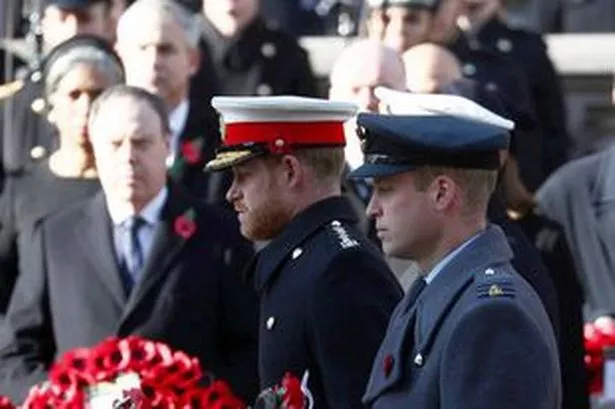
The Military Credentials That Make Their Absence More Striking
What makes the situation particularly poignant is that both Prince Harry and Prince Andrew have genuine military credentials that would typically guarantee them a prominent role in Remembrance ceremonies. Prince Andrew served with distinction as a Royal Navy helicopter pilot during the Falklands War in 1982, flying dangerous missions in combat zones.
Prince Harry, meanwhile, completed two tours of duty in Afghanistan, serving on the front lines as a forward air controller and later as an Apache helicopter pilot.
Their military service was real, dangerous, and meaningful. Prince Harry has spoken extensively about his time in Afghanistan, describing the experience as one that shaped his understanding of duty and sacrifice.
Prince Andrew’s service during the Falklands conflict saw him participate in active combat operations, including acting as a decoy for Exocet missiles – a role that put him directly in harm’s way.
Yet despite these impressive military backgrounds, both men are now excluded from the central Remembrance Sunday ceremony at the Cenotaph in Whitehall, a situation that has generated considerable debate and criticism from various quarters.
The Reasons Behind Their Exclusion
The circumstances that led to Prince Harry and Prince Andrew’s removal from active royal duties – and consequently from Remembrance Day ceremonies – are vastly different, though the outcome is the same.
Related Post: 120,000 Protesters ERUPT After Train Stabbings — King Charles DESTROYS Khan | News UK
Prince Andrew’s withdrawal from public life followed the catastrophic BBC Newsnight interview in November 2019, where he attempted to explain his friendship with convicted sex offender Jeffrey Epstein. The interview was widely regarded as a public relations disaster, and shortly afterward, Prince Andrew stepped back from royal duties.
His situation was further complicated by the civil lawsuit filed by Virginia Giuffre, which was eventually settled out of court in 2022. While Prince Andrew admitted no wrongdoing, the settlement and the circumstances surrounding it effectively ended his role as a working royal.
[IMAGE REFERENCE 2: The Cenotaph in Whitehall during Remembrance Sunday ceremony – Search: “Cenotaph Remembrance Sunday 2024 royal family”]
Prince Harry’s situation stems from entirely different circumstances. His decision to step back from royal duties in January 2020, along with his wife Meghan Markle, was initially framed as a desire to become financially independent while still supporting the Queen.
However, the arrangement quickly evolved into a complete break from working royal life, particularly after the couple’s explosive interview with Oprah Winfrey in March 2021 and Harry’s subsequent memoir, “Spare,” published in January 2023.
The consequences for both men include the loss of military appointments, honorary titles, and the right to participate in official royal ceremonies – including Remembrance Sunday at the Cenotaph.
The 2020 Wreath Controversy That Sparked Outrage
One of the most controversial moments in this ongoing saga occurred in November 2020, when Prince Harry requested that a wreath be laid on his behalf at the Cenotaph. According to reports that emerged later, Harry’s request was denied by royal officials and the Palace.
The Duke of Sussex was said to be “deeply saddened” by the decision, particularly given his military service and his commitment to veterans’ causes through his Invictus Games foundation. Sources close to Harry suggested that he felt the refusal was petty and hurtful, especially as Remembrance Day holds such personal significance for him.
Instead of being present in London, Harry and Meghan were photographed laying flowers at the graves of Commonwealth soldiers at the Los Angeles National Cemetery. While the gesture was meant to be respectful and heartfelt, some critics accused the couple of staging a “rival” Remembrance event and accused them of using the solemn occasion for publicity purposes.
[IMAGE REFERENCE 3: Prince Harry and Meghan Markle at Los Angeles National Cemetery in 2020 – Search: “Prince Harry Meghan Markle Los Angeles cemetery Remembrance 2020”]
The photographs from Los Angeles showed Harry in a dark suit, and while the moment was clearly emotional for him, the images sparked a fierce debate in the British press about whether it was appropriate for the couple to create what some saw as an alternative commemorative event.
Prince Andrew’s Silent Absence
While Prince Harry’s exclusion generated significant media coverage and public sympathy in some quarters, Prince Andrew’s absence from Remembrance ceremonies has been more absolute and less discussed – though no less significant.
Despite his military service and his former role as a senior royal, Prince Andrew has been effectively sidelined from public royal life since 2019. During recent Remembrance Sunday services, he has not been permitted to lay a wreath at the Cenotaph or appear in military uniform, despite his rank as Vice Admiral in the Royal Navy.
In 2021 and subsequent years, Prince Andrew was reportedly present at some Remembrance-related events but in a strictly private capacity, without the regalia or public recognition that would normally accompany his attendance.
This represents a stark fall from grace for someone who once held a prominent position in the royal hierarchy and who served his country in combat.
The silence around Prince Andrew’s absence is itself telling. While Prince Harry’s situation generates ongoing media attention and public debate, Prince Andrew has largely disappeared from public consciousness regarding these important national commemorations.
Royal commentators suggest this reflects the Palace’s determination to distance the institution from the controversies surrounding him.
The Broader Implications for Military Veterans
Both Prince Harry and Prince Andrew’s exclusion from official Remembrance ceremonies raises complex questions about how we honour military service and whether royal status should supersede genuine military credentials.
Veterans’ groups have been notably divided on the issue. Some argue that military service should be respected regardless of personal circumstances or royal status, and that both men earned the right to participate in Remembrance ceremonies through their actual service in conflict zones.
Others contend that representing the Royal Family at such solemn national occasions is a privilege that comes with responsibilities, and that both men forfeited that privilege through their actions.
[IMAGE REFERENCE 4: Veterans marching past the Cenotaph on Remembrance Sunday – Search: “Remembrance Sunday veterans march Cenotaph”]
Colonel Richard Kemp, a former British Army commander, has previously commented that Prince Harry’s military service was exemplary and that it seems “harsh” to exclude him from official commemorations. However, he also acknowledged that Harry’s decision to step back from royal duties inevitably had consequences, including the loss of military appointments and the right to represent the military in an official royal capacity.
The Emotional Toll on Prince Harry
Prince Harry has been notably vocal about his feelings regarding Remembrance Day and his commitment to supporting veterans. Through his Invictus Games foundation, established in 2014, he has demonstrated a genuine and sustained commitment to wounded servicemen and women.
Sources close to the Duke of Sussex have consistently reported that being excluded from official Remembrance ceremonies has been one of the most painful aspects of his separation from royal life.
Friends of Harry have suggested that he feels his military service and his ongoing work with veterans should transcend the family disputes and institutional politics that led to his departure from working royal life.
In his memoir “Spare,” Harry wrote movingly about his time in Afghanistan and the profound impact that his military service had on his sense of identity and purpose. He described the camaraderie with fellow soldiers and the clarity that came from serving alongside people who treated him simply as “Captain Wales” rather than as a prince.
The loss of his formal connection to the military establishment, including his exclusion from the Cenotaph ceremony, represents a significant personal loss.
Public Opinion Remains Divided
Public opinion in both the United Kingdom and the United States remains sharply divided on whether Prince Harry and Prince Andrew should be allowed to participate in Remembrance ceremonies.
[IMAGE REFERENCE 5: Split image showing public reactions and newspaper headlines about the controversy – Search: “Prince Harry Andrew Remembrance controversy headlines”]
Supporters of Prince Harry argue that his voluntary military service, including two combat tours in Afghanistan, gives him an inherent right to honor fallen comrades regardless of his current relationship with the Royal Family. They point out that he continues to support veterans through charitable work and that excluding him from official ceremonies seems vindictive.
Critics counter that Harry made a choice to step away from royal duties and to publicly criticize the institution in interviews and his memoir. They argue that representing the Royal Family at the Cenotaph is a privilege, not a right, and that Harry cannot expect to maintain that privilege while living in California and publicly challenging the monarchy.
Regarding Prince Andrew, public opinion is less sympathetic. Polls consistently show that the majority of Britons support his removal from public royal life, and few voices have advocated for his return to Remembrance ceremonies. His military service, while genuine, has been overshadowed by the controversies surrounding his personal conduct and his association with Jeffrey Epstein.
The Palace’s Difficult Position
For royal officials and the Palace, the situation presents a delicate balancing act. On one hand, the institution must maintain standards and demonstrate that there are consequences for actions that damage the monarchy’s reputation. On the other hand, completely excluding two military veterans from commemorations appears harsh and potentially disrespectful to their service.
The Palace has largely declined to comment publicly on the specific arrangements for Prince Harry and Prince Andrew during Remembrance events, maintaining that these are private family matters.
However, the decisions about who appears at the Cenotaph and in what capacity are carefully choreographed and approved at the highest levels, almost certainly with input from King Charles himself.
Royal commentators suggest that the current arrangement – with both men excluded from the official ceremony – reflects a judgment that the potential controversy and media attention surrounding their presence would overshadow the solemnity of the occasion and distract from its true purpose: honouring those who died in service to their country.
Alternative Commemorations and Private Tributes
Both Prince Harry and Prince Andrew have found ways to mark Remembrance Day privately, though these alternative arrangements lack the official recognition and public platform of the Cenotaph ceremony.
Prince Harry has continued to honor Remembrance Day in California, often visiting military cemeteries or participating in veterans’ events through his Invictus Games network. These private commemorations allow him to maintain his connection to the military community, even if he cannot do so in an official royal capacity.
[IMAGE REFERENCE 6: The Invictus Games, founded by Prince Harry for wounded veterans – Search: “Invictus Games Prince Harry veterans”]
Prince Andrew’s Remembrance Day activities have been even more low-key, typically consisting of private visits to military sites or quiet personal tributes away from media attention. The difference in public interest between Harry and Andrew’s alternative commemorations reflects the difference in public sympathy for their respective situations.
The Future of Their Participation
Looking ahead, it seems unlikely that either Prince Harry or Prince Andrew will return to official Remembrance ceremonies at the Cenotaph in the near future, barring significant changes in their circumstances.
For Prince Andrew, a return to public royal life appears virtually impossible given the enduring controversy surrounding his associations and conduct. Even his military titles have been returned to the Queen (now King Charles), and there appears to be no pathway back to public royal duties.
Prince Harry’s situation is more nuanced. While he remains estranged from much of his family and continues to live in California, some royal watchers believe that a reconciliation could eventually open the door to some form of participation in Remembrance events, even if not in a central role. However, this would likely require significant healing of family relationships and possibly a reduction in public criticism of the Royal Family.
Conclusion: A Continuing Royal Dilemma
The exclusion of Prince Harry and Prince Andrew from Remembrance Sunday ceremonies at the Cenotaph represents one of the most visible and emotionally charged consequences of their departures from working royal life.
Both men served their country in uniform, experienced combat, and earned the respect that comes with military service. Yet both now find themselves on the outside of one of the nation’s most important annual commemorations.
The situation highlights the complex intersection of personal conduct, institutional responsibility, and the recognition of military service. It raises questions about whether royal status should enhance or overshadow genuine military credentials, and whether the monarchy’s need to protect its reputation should take precedence over acknowledging authentic service.
As the Royal Family continues to evolve under King Charles III’s reign, the cases of Prince Harry and Prince Andrew serve as powerful reminders that royal privilege comes with expectations and responsibilities, and that actions have consequences – even for those who have served their country with distinction.
[IMAGE REFERENCE 7: The Royal Family at the Cenotaph for Remembrance Sunday 2024 – Search: “Royal Family Remembrance Sunday 2024 King Charles”]
The Remembrance wreath row may seem like a matter of protocol and ceremony, but for those involved, it represents something far more profound: the painful intersection of personal identity, family loyalty, military service, and public duty.
For Prince Harry and Prince Andrew, two men who once stood proudly in uniform at the heart of Britain’s most solemn national commemoration, their current absence speaks volumes about how dramatically their lives and roles have changed.
As Remembrance Day continues to be observed each November, their exclusion remains a source of controversy, sadness, and ongoing debate about what we owe to those who serve, and what expectations come with the privilege of royal status.
SEO Keywords: Prince Harry, Prince Andrew, Remembrance Sunday, Cenotaph, Royal Family, military service, Afghanistan, Falklands War, veterans, Invictus Games, King Charles, royal controversy
Related Topics: Royal Family news, UK veterans, military ceremonies, Prince Harry latest news, Prince Andrew updates