44,000 teachers quit UK schools as violence surges 60% amid migrant integration crisis. Staff report intimidation, gag orders, and classroom chaos as government stays silent. Full investigation into Britain’s education system collapse.
Breaking: “We’re Not Teaching Anymore, We’re Containing Violence” – Mass Teacher Exodus Exposes Classroom Crisis Government Won’t Acknowledge
In a devastating indictment of Britain’s education system, a staggering 44,000 teachers have left their positions over the past year, marking the highest quit rate since 2017. But the most alarming exodus occurred in just the past five weeks, as 4,200 teachers walked out amid what multiple educators describe as an unprecedented collapse of classroom order linked directly to rapid migrant integration without adequate support systems.
The statistics paint a picture of crisis: more than 1,800 staff-directed incidents in recent weeks, violence in England’s secondary schools up over 60%, and entire departments reporting they can no longer guarantee basic classroom control. This isn’t a labor dispute about pay or working hours—it’s what departing teachers are calling “the loudest, clearest alarm the British education system has sounded in decades.”

Across dozens of campuses, teachers describe an identical pattern: classrooms slipping out of their control, behavior erupting with no warning, and clusters of recently arrived migrant teens forming what staff characterize as “tight, aggressive micro-groups” that dominate corridors, intimidate both staff and students, and operate with apparent immunity from meaningful consequences.
But perhaps more disturbing than the violence itself is what multiple senior teachers describe as a systematic suppression of truth. In interviews with departing educators across England, a consistent message emerges: they have been strongly advised not to frame behavioral issues in ways that “create negative perceptions of migrant-background students.” Off the record, they call it what it feels like—a gag order.
“We’re told to keep classrooms calm with no power, no backup, and no honesty,” one departing teacher explained. “Schools aren’t learning environments anymore. They’re containment centers.”
The Five-Week Exodus: When the System Broke
No one in the UK education establishment expected the number to be this high. Not parents, not local councils, not even the teaching unions that have spent years warning about unsustainable pressures. But 4,200 teachers walking out in just five weeks wasn’t a conventional labor dispute or a coordinated strike action—it was an organic, bottom-up warning that something fundamental has broken in Britain’s schools.
What teachers are describing inside secondary schools is not mere misbehavior or the typical challenges of managing adolescents. It’s what they characterize as complete systemic collapse. Teachers say violence didn’t gradually increase—it detonated.

Classrooms where 13-year-olds “square up to staff like adults,” challenging teachers physically rather than just verbally. Lunch halls transforming into “turf zones” claimed by tight-knit migrant groups newly placed into mainstream classes without language support or cultural orientation. Corridors where pupils are shoved, cornered, and threatened in languages staff don’t understand and can’t intervene in effectively.
Lessons interrupted not by typical teenage chatter or minor disruptions, but by what multiple teachers describe as “organized intimidation that feels less like teenagers acting out, and more like micro-gangs testing who really runs the school.”
This isn’t media exaggeration or tabloid sensationalism. This is what teachers themselves are reporting—the ones who just quit because they couldn’t endure another day in environments they describe as fundamentally unsafe.
Related Post: £40 Billion Tax Shock: Britain’s Economy Under Unprecedented Pressure as Starmer Government Faces Mounting Crisis
A science teacher in Manchester said she hasn’t taught a full, uninterrupted lesson without a confrontation in months. A history teacher in Croydon described “packs of boys who dominate corridors, daring staff to intervene” and knowing that meaningful consequences are unlikely to follow. One senior leader in Birmingham told reporters plainly: “We’re not teaching anymore. We’re containing violence.”
The Pattern Schools Won’t Name
Parents are hearing only carefully curated scraps of what’s actually happening. The polished statements from school leadership. The vague references to “behavior challenges” in newsletter updates. The careful emails that never mention the phrase everyone in the staff room is whispering: “This is linked to recent migrant placements.”

Off the record, teachers say the truth is unavoidable. Many of the new arrivals placed directly into Year 9 and Year 10 classes—critical exam preparation years—come with little or no English language ability, no integration support structure, and backgrounds often shaped by conflict, displacement, and profound instability.
When placed into already stretched schools operating at or above capacity, these students naturally form defensive, insular groups for protection and familiarity. These are groups that older pupils gravitate toward for various reasons, groups that younger pupils increasingly fear, and groups that teachers report having “no tools or authority to control effectively.”
And critically, when violence breaks out involving these groups, teachers say leadership now reacts faster to avoiding controversy than to protecting staff or honestly documenting what occurred.
A teacher in Leeds reported a violent incident that left a pupil hospitalized with visible injuries. The first instruction she received from senior management wasn’t about supporting the victim or ensuring staff safety—it was: “Do not refer to the background of the students involved. Keep the report neutral.”
Neutral. Even when the parents of the injured child demanded clear answers about what happened to their son.
Another teacher in South London said she was explicitly warned not to use the phrase “new arrivals” in any written documentation, even when the same identifiable group of recently placed students had been involved in three separate violent altercations within a single week.
And slowly, teachers report, the fear shifted from “what’s happening to this school?” to “what happens when the system refuses to admit what’s happening?”
Dr. Helen Morrison, an education policy researcher at the University of London, explains the impossible position this creates: “When teachers are instructed to document incidents in ways that obscure obvious patterns, you’re not just creating a reporting problem—you’re destroying the diagnostic capacity of the safeguarding system itself. You can’t fix what you’re forbidden from accurately describing.”
The Silence That Breaks Morale
The violence itself, as frightening as it is, is not what’s breaking staff morale across Britain’s schools. The louder alarm—the one driving thousands of experienced educators out of the profession permanently—is the silence from above.
Multiple senior teachers, department heads, and safeguarding officers describe being placed in an impossible position: responsible for student and staff safety, but forbidden from honestly characterizing the threats they face or identifying the patterns everyone can see.
“It’s the silence that’s unbearable,” explained a deputy head teacher with 25 years of experience who resigned last month. “We’re dealing with organized intimidation, we’re documenting threats against staff, we’re watching certain corridors become no-go zones during lunch periods, and when we try to report it accurately, we’re told we’re being ‘unhelpful’ or ‘creating unnecessary alarm.'”
Parents sense it too, even if they’re not being told the full story. The worried glances exchanged at pickup time. The rumors spreading rapidly through WhatsApp parent groups. The sudden decisions by some families to move their children to different schools or even relocate entirely “just to be safe.”
Because mothers and fathers across Britain are now asking questions no parent should ever have to confront: Is my child actually safe at school? Are teachers still in control of the classroom environment? Why isn’t anyone—not the school, not the local authority, not the government—telling us the full story about what’s happening?
One mother in Manchester said her 14-year-old daughter now refuses to eat in the school cafeteria “because it feels like trouble is waiting to happen every lunchtime.” Another parent in London reported that her son stopped attending after-school clubs because “the groups roaming the halls don’t care about rules, and teachers can’t or won’t stop them.”
Inside the Containment Zone: What Teachers Actually Face
Inside England’s secondary schools, the situation unfolding is far more serious than anything parents have been officially told. Teachers insist the crisis isn’t hidden—it’s simply being deliberately ignored by those with the authority to address it.
Behind the closed doors of staff rooms and safeguarding offices, the truth is far darker than the polished statements sent home to families. The school day no longer starts with lesson plans and educational objectives.
It starts with warnings quietly traded between teachers about which corridors turned volatile that morning, which groups have been circling the canteen looking for confrontation, which new arrivals were added to the register with absolutely no background information provided to staff.
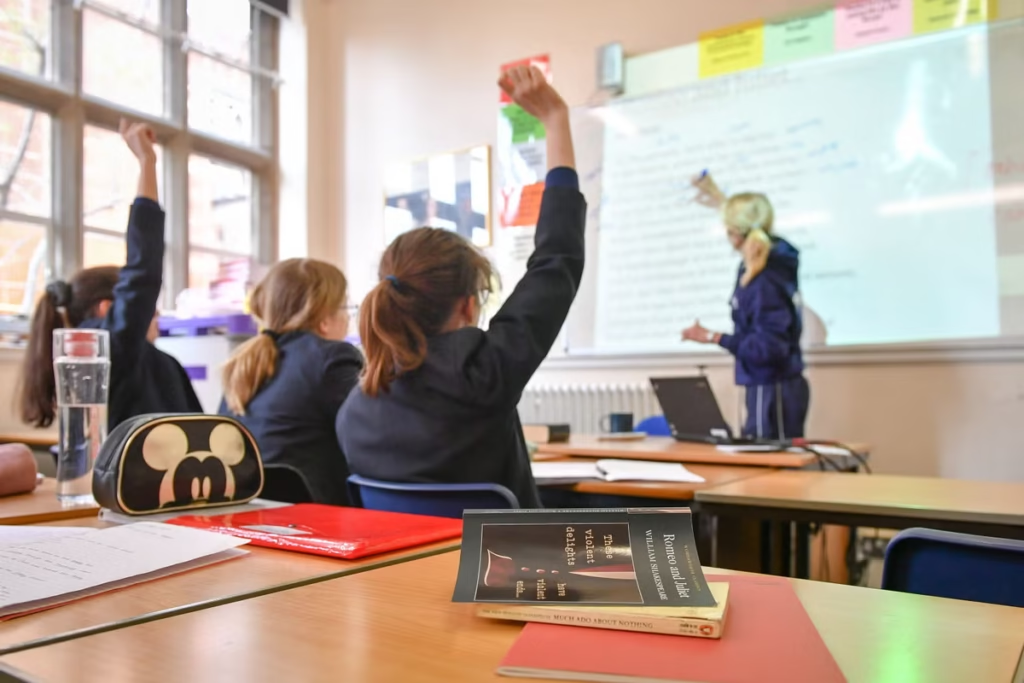
By the first morning break, entire departments report being already emotionally and physically drained—not from the actual work of teaching, but from trying to prevent chaos from becoming completely unmanageable.
A Birmingham teacher described stepping into a corridor during period change where several boys, all new to the school that very week, had surrounded a younger pupil against the lockers. She intervened to protect the younger student, only to be told later by senior management to write the incident report “in neutral terms so it wouldn’t lead to misunderstandings.”
She said the message was unmistakable: “Tell the truth, but not too clearly. Document what happened, but obscure who did it and why.”
In Liverpool, a staff member explained how her school now restricts who can review CCTV footage of violent incidents. Only select senior leaders are permitted to see the full video recordings. Teachers directly involved in the incidents receive only “a heavily softened verbal summary” of what the cameras captured.
She called it “a blackout by design, created to protect the school’s image and avoid uncomfortable conversations, rather than to protect the staff and students inside it.”
The Editing of Truth: How Incidents Are Rewritten
Across multiple regions, teachers report an identical pattern in how violent incidents are handled and documented. Reports edited before being officially logged. Context systematically removed. Descriptions deliberately rewritten in the vaguest possible language to obscure identifiable patterns.
One safeguarding officer shared that she had been directly instructed to “minimize detail” when speaking to parents about an altercation that left a pupil with visible bruising and a suspected concussion. She said: “The silence is not accidental. It is policy. We are being told to manage parental expectations and community confidence rather than provide transparent accounts of what’s happening to children in our care.”
A Leeds teacher recounted receiving two new students mid-week with zero briefing about their backgrounds, educational history, or even basic language ability. Within an hour of their arrival, she said, “the entire class dynamic shifted. Louder, sharper, more hostile, like someone had changed the atmospheric pressure in the room.”
When she requested support or guidance from senior leadership, she was told to “prioritize inclusion and avoid drawing unhelpful conclusions.” She said it felt like “being handed complete responsibility for a situation no one in authority would even acknowledge existed.”
The pressure teachers describe is not merely emotional—it’s increasingly physical as well. Multiple educators describe classrooms where “one spark can turn 15 seconds into a full-scale fight requiring multiple adults to intervene physically.”
Chairs thrown across rooms. Doors forced open or blocked. Fire alarms pulled deliberately to disrupt exams. Staff members backed into corners by aggressive students. Phones shoved into teachers’ faces to film confrontations for social media.
And through it all, leadership reportedly repeats the same instructions: “Remain calm, avoid escalation, de-escalate verbally, and above all, do not connect any of this to the wider migration issue or integration challenges.”
One history teacher with nearly 30 years of classroom experience said he made the decision to resign permanently “the moment I was told to ‘consider the political climate’ before filing an honest report about a direct threat made against me by a student.” It was the first time in his three-decade career, he said, that safeguarding guidelines “felt like political instructions rather than child protection protocols.”
Westminster’s Dangerous Denial
What’s happening inside Britain’s secondary schools is not a mystery to officials in Westminster. It’s an inconvenience. And that distinction is exactly why the crisis has been allowed to spiral so dangerously out of control.
For months, Downing Street and the Department for Education have received direct warnings from education advisers, regional safeguarding leads, and behavioral specialists. Not vague predictions or theoretical concerns—explicit reports describing rising aggression tied directly to rapid migrant intake schemes, emergency resettlement placements, and newly arrived pupils being moved into mainstream classrooms with absolutely no support structure, language assistance, or cultural orientation.
One internal memo, leaked to education sector sources, described the situation as “accelerating beyond the capacity of existing staff to stabilize without significant additional resources and policy changes.”
Yet the government’s official public line remains stubbornly, almost robotically identical: No national safety issue. No behavioral link to migration patterns. No cause for public concern.
Teachers say those statements feel less like reassurance and more like gaslighting—being told that what they experience daily in their classrooms simply isn’t happening.
Inside the Department for Education, sources suggest the priority is not fixing the underlying problem—it’s controlling the optics and managing the political narrative. Officials reportedly fear that acknowledging the scale of classroom violence could inflame already heated debates around migration policy or undermine Prime Minister Starmer’s broader narrative about restoring order and public confidence in institutions.
And so, teachers report, the government has chosen silence over support.
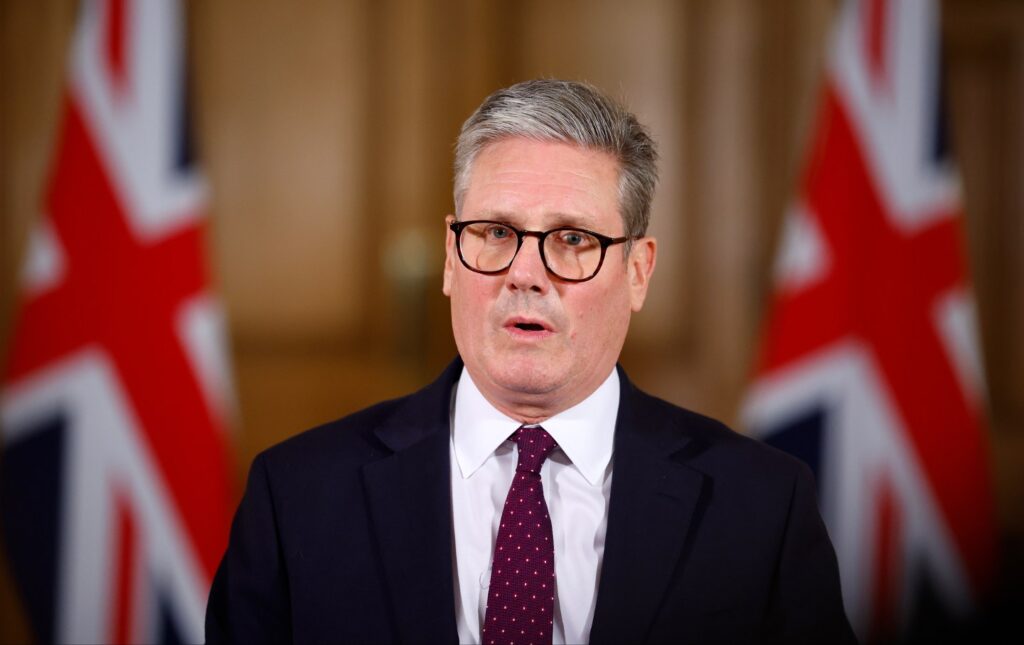
Teachers across multiple regions report receiving the same pattern of instructions from senior leadership, who are themselves receiving guidance from local authorities and ultimately from national government:
- Leadership instructed to avoid language that “may stigmatize specific groups”
- Safeguarding teams told to “use discretion when recording motive or group dynamics”
- Local authorities quietly urging schools to “protect community confidence and cohesion”
One head teacher in London said she was directly pressured to remove a single sentence from a safeguarding report because it “risked generating unnecessary tensions.” The sentence simply described a recently arrived group of male students surrounding a female teacher after school hours and making threats that caused her to fear for her safety.
The issue wasn’t the documented threat to staff safety. The issue was the potential political implications of honestly documenting it.
The Sanitized Reality Parents Receive
Parents, meanwhile, receive a carefully sanitized version of events that bears little resemblance to what teachers are actually experiencing. Teachers trying desperately to keep children safe are told to maintain calm and project confidence, but are given no additional tools, no meaningful reinforcements, and no actual authority to enforce consequences that might deter future incidents.
And each time violence escalates to a level that can’t be completely hidden, government spokespeople repeat the same dismissive line: “Schools face challenges in every generation. This is no different.”
A senior minister, according to sources within the education sector, privately dismissed the mass resignations as “union exaggeration and politically motivated scaremongering.” That comment traveled quickly through staff rooms across the country and landed, teachers say, “like a slap in the face.”
Because here’s what teachers hear in dismissive statements like that: Your safety is negotiable. Your professional experience is politically inconvenient. Your fear is a problem to be managed rather than addressed.
Prime Minister Starmer’s repeated promise to restore trust in British institutions collapses the moment the institution in crisis—the education system—is told to soften its language and obscure obvious patterns instead of being given the resources and authority to strengthen protection for staff and students.
A leaked briefing document from last week suggested the government is actively considering new guidance instructing schools to “highlight positive integration outcomes and avoid patterns of attribution that create fear or division.”
In plain English: manage the narrative, not the danger.
The Fear That Changed Everything
The exodus of 4,200 teachers in five weeks wasn’t triggered by workload, though workload in British schools is genuinely excessive. It wasn’t triggered by pay disputes, though teacher salaries have stagnated for years. It was triggered by something more primal and immediate: fear.
Fear for their own physical safety. Fear for their students’ safety in environments they can no longer control. And perhaps most corrosively, fear of a government that seems more committed to preserving a political narrative than confronting the actual danger inside British schools.
“I loved teaching,” explained a former English teacher in Manchester who resigned after 18 years in the profession. “I believed in it. But I can’t protect children in an environment where I’m not allowed to honestly describe the threats they face. And I can’t risk my own safety in a job where my employer won’t even acknowledge that the risks exist.”
Parents believe schools are places of safety—structured environments where trained professionals maintain order and protect children. Teachers are now quietly admitting they’re no longer certain they can guarantee that fundamental promise.
As one deputy head in Manchester put it with devastating simplicity: “We’re not asking for miracles. We’re not even asking for additional funding at this point. We’re simply asking the government to admit what’s happening before someone gets seriously hurt—or worse.”
The Questions That Demand Answers
Today, Britain’s education crisis isn’t in the hands of those who understand it best—the teachers, parents, and students living through it daily. It’s in the hands of those who refuse to acknowledge it exists in the form that frontline educators describe.
Britain faces a school system hemorrhaging experienced teachers, classrooms becoming genuinely uncontrollable, and a government that appears to have lost the courage to speak uncomfortable truths.
The questions demanding answers are straightforward:
Why are teachers being instructed to obscure patterns in incident reporting? If safeguarding is genuinely the priority, why are staff being told to document incidents in ways that make pattern recognition impossible?
What is the government’s plan for schools that can no longer maintain basic order? Telling teachers to “remain calm” is not a plan. What actual resources, authority, and support will be provided?
How many more teachers must quit before the crisis is acknowledged? At what point does the exodus of experienced educators constitute an emergency worthy of honest governmental engagement?
What happens to the children left behind? When 44,000 teachers leave and aren’t replaced, who is actually educating Britain’s young people?
Is the government protecting communities or protecting its own political narrative? When policy decisions prioritize avoiding difficult conversations over ensuring classroom safety, whose interests are actually being served?
Conclusion: A System on the Brink
Parents are not imagining the danger their instincts are warning them about. Teachers are not exaggerating their fears for political advantage. The cracks in Britain’s education system are real, measurable, and widening with each passing week.
The 44,000 teachers who have left aren’t failures or quitters. They’re professionals who reached a breaking point in a system that asked them to maintain order without authority, protect children without support, and stay silent about threats everyone can see.
The 4,200 who walked out in just five weeks didn’t abandon their calling lightly. They sent a message that should terrify every parent and policymaker in Britain: “If we can’t keep control of the classroom, your children are not safe.”
The question now is whether anyone with the power to change course is actually listening, or whether the government will continue managing the narrative while the system collapses around them.
Do you believe ministers are concealing the truth to protect genuine social stability, or to protect themselves from political accountability? Your answer may determine whether Britain’s education system can be saved or whether this is the beginning of an irreversible breakdown.
Tonight, as another school day ends across Britain, thousands of classrooms stand a little emptier than they did last month. And thousands of teachers who remain are asking themselves the same question that drove their colleagues to resign: How much longer can I stay in a job where honesty is forbidden and safety cannot be guaranteed?
The answer to that question will shape Britain’s future far more than any government press release ever will.
Sources and References:
- Department for Education workforce statistics and retention data
- National Education Union reports and member surveys
- Ofsted inspection reports and safeguarding assessments
- Individual testimony from departing teachers across England (anonymized for protection)
- School incident reports and internal communications (leaked)
- Local authority education department briefings
- Home Office migration and integration policy documents
- Government statements from Number 10 and Department for Education
- Academic experts on education policy and integration
- Parent advocacy groups and school governing bodies
- Multiple UK news outlets including BBC, The Guardian, The Telegraph, The Times
- Safeguarding officer professional associations
- Regional education leadership forums
- Social cohesion and community integration research