Kemi Badenoch presses Keir Starmer on income tax plans in Budget
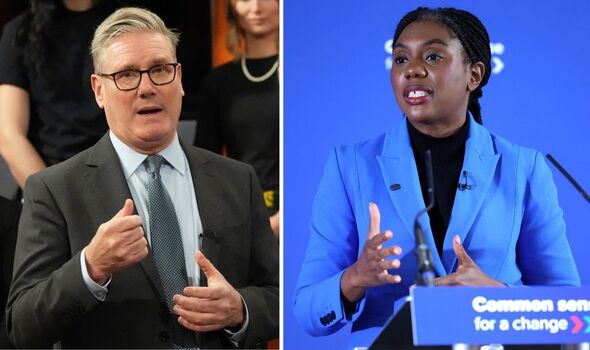
With just one week remaining until Chancellor Rachel Reeves delivers the government’s autumn Budget, political tensions have escalated dramatically in Westminster as Conservative leader Kemi Badenoch challenged Prime Minister Keir Starmer over Labour’s commitment to its pre-election tax pledges.
The heated exchange at Prime Minister’s Questions saw Badenoch pressing Starmer to confirm whether the government would honor Labour’s manifesto promise not to raise income tax, National Insurance, and VAT rates.
The confrontation has intensified scrutiny on the Labour government’s fiscal plans, with speculation mounting that millions of workers may see their tax bills rise over the coming years despite the government reportedly abandoning plans to increase income tax rates directly.
The Prime Minister’s Evasive Response
At Prime Minister’s Questions, Starmer declined to make a firm commitment ahead of the November 26 Budget, stating that governments do not set out fiscal plans in advance of such events.
His response marked a notable departure from his stance just four months earlier when, according to Badenoch, he had provided a simple affirmative answer to the same question.

When pressed by the Conservative leader, Starmer instead highlighted positive economic indicators, noting that retail sales were higher than expected, inflation lower than anticipated, growth upgraded for the year, and the UK stock market at an all-time high.
He used the opportunity to pivot toward criticizing the previous Conservative government’s economic record rather than addressing the tax question directly.
The Prime Minister’s refusal to repeat his earlier commitments has triggered alarm bells across the political spectrum and within his own party. Some senior Labour figures are privately suggesting to Chancellor Rachel Reeves that now is the time to make the case for putting up income tax, arguing it could raise substantial revenue without creating a single noisy lobby group in opposition.
Labour’s Manifesto Promises Under Scrutiny
The controversy centers on a key pledge in Labour’s 2024 election manifesto. The manifesto contained a tax lock for working people, specifically pledging not to raise rates of income tax, National Insurance, or VAT. This commitment formed a cornerstone of Labour’s campaign platform and was instrumental in securing voter trust ahead of their July 2024 election victory.
Related Post: Andrew Showed True Colours When He ‘Left Pregnant Sarah Ferguson on the Floor’ After Fall
Labour’s manifesto explicitly confirmed that the party would not increase taxes on working people, pledging not to increase National Insurance or the basic, higher, or additional rates of income tax, or VAT—the three biggest revenue-generating taxes.
However, the definition of “working people” has become a source of considerable confusion. Various senior Labour politicians have offered different definitions, with Chancellor Rachel Reeves stating during the election campaign that working people are those who get their income from going out to work every day, as well as pensioners drawing down on their pensions.
Prime Minister Starmer later refined this definition, suggesting it applied to those who earn their living through monthly paychecks and cannot simply write a check to get out of financial difficulties.
The Stealth Tax Alternative
While the government appears to have stepped back from directly increasing income tax rates, reports suggest an alternative approach that critics have labeled a “stealth tax.”
Chancellor Reeves is expected to extend the freeze on income tax thresholds until 2030, a measure that increases the amount people pay as wages rise, even though the rates themselves remain unchanged.
This mechanism, known as “fiscal drag,” works by keeping the income levels at which people start paying different tax rates fixed, even as wages increase with inflation. As the tax bands do not rise with inflation, more workers gradually move into higher tax brackets, and a greater proportion of their income becomes taxable.
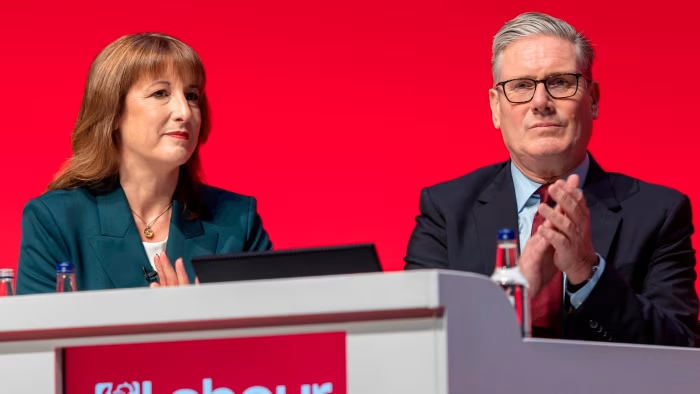
The threshold freeze was originally introduced by the previous Conservative government and was scheduled to end in April 2028. However, according to reports first published by the Financial Times, Reeves will now extend this freeze for another two years as part of her strategy to address a fiscal gap currently estimated at £20 billion.
The Chancellor’s Budget Dilemma
Chancellor Rachel Reeves faces an enormously difficult balancing act as she prepares to deliver her Budget on November 26. The fiscal pressures on the government have been mounting, with initial estimates suggesting a gap of £30 to £35 billion that needed to be filled through either tax increases or spending cuts.
The chancellor’s U-turn on direct income tax increases was triggered by improved data on current and expected wage growth, which increased forecasts of future tax revenues and narrowed the fiscal gap to £20 billion rather than the expected £30 to £35 billion.
Beyond extending the threshold freeze, the government is understood to be considering abolishing the salary sacrifice scheme for pension contributions and introducing a new tax on electric vehicles to help bridge the remaining fiscal gap.
The decision to abandon plans for a direct income tax hike reportedly drew support from within the Cabinet. Health Secretary Wes Streeting welcomed the decision, stating he was not in favor of breaking manifesto pledges.
Political Fallout and Opposition Response
The exchange at Prime Minister’s Questions has provided ammunition for the Conservative opposition, who have seized on the government’s apparent wavering on its manifesto commitments. Badenoch framed her attack in stark terms, accusing the government of having no plan for growth beyond higher taxes.
The Conservative leader accused Starmer of a pattern of increased taxation: “When you work, he taxes you more. When you save, he taxes you more. When you buy a home, he taxes you more.” She urged the Prime Minister to follow Conservative proposals to abolish stamp duty altogether, arguing this would help young people onto the property ladder.
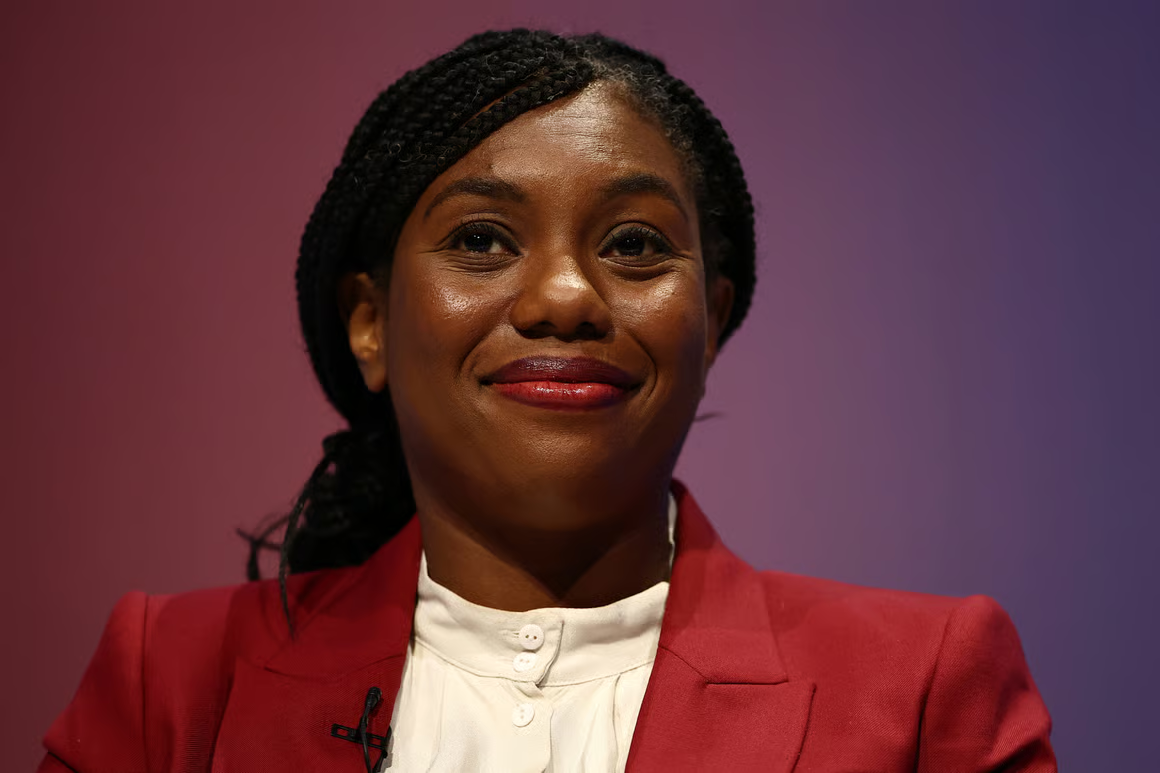
Following reports that the government would not proceed with direct income tax rate increases, Badenoch acknowledged this as “good (if true)” but maintained that one retreat doesn’t fix a Budget built on broken promises. She called on Reeves to guarantee no new taxes on work, businesses, homes, or pensions, and reiterated her call to abolish stamp duty.
Starmer countered these attacks by repeatedly referencing what he described as the Conservative Party’s economic failures. The Prime Minister accused the Conservatives of “a decade and a half of economic failure,” insisting that austerity, Brexit, and the Truss mini-Budget did more to damage growth than any tax measure his government had introduced.
Economic Context and Expert Analysis
The debate over tax policy is unfolding against a backdrop of cautiously improving economic indicators, though significant challenges remain. The government has pointed to upgraded growth forecasts, declining inflation, and recent interest rate cuts as evidence that its economic approach is working.
However, economic experts have expressed concerns about the government’s approach to fiscal planning.
Helen Miller, director of the Institute for Fiscal Studies, noted it was not unusual for chancellors to make last-minute changes to Budget plans, but warned that news of Reeves backing away from income tax rate increases will lead investors to worry that the Chancellor will instead increase a range of smaller taxes that can be more damaging to economic growth.
Miller further cautioned that such changes may signal to investors that the government is reluctant to do politically difficult things, concerns that can lead investors to demand higher returns when lending to the government.
The Institute for Fiscal Studies has consistently argued that if the government chooses to raise a set of smaller taxes, they should be reformed to minimize damage to economic growth. The tension between fiscal responsibility and economic growth remains at the heart of the government’s policy challenges.
The Broader Political Implications
The controversy over tax policy extends beyond the immediate fiscal challenges to touch on fundamental questions of political trust and mandate. Labour won the 2024 general election partly on the strength of its clear commitments on taxation, and any perceived breach of those promises carries significant political risk.
Labour’s manifesto failed to offer a clear definition of what it meant by “working people,” which has made it difficult to assess whether pledges have been upheld as various tax changes have been implemented or proposed.
The government has attempted to navigate this definitional ambiguity by arguing that certain tax changes—particularly increases to employer National Insurance contributions announced in an earlier Budget—do not directly affect “working people” because they are not seen in workers’ payslips.
Critics, however, argue that employer tax increases are typically passed on to workers through lower wage growth or reduced employment opportunities.
What’s at Stake for British Taxpayers
For millions of British workers, the outcome of these political debates will have direct financial consequences. The extension of the threshold freeze, if implemented, will mean that many workers who receive pay raises will find themselves pushed into higher tax brackets or paying tax on income that would previously have been tax-free.
Under the current system, the personal allowance—the amount you can earn before paying any income tax—stands at £12,570. The basic rate of income tax (20%) applies to earnings between £12,571 and £50,270, while the higher rate (40%) applies to income between £50,271 and £125,140. Any income above £125,140 is taxed at the additional rate of 45%.
If these thresholds remain frozen while wages rise with inflation, more workers will cross into higher tax bands. For example, someone currently earning £48,000 who receives a 3% raise to £49,440 would see more of their income taxed at the basic rate. Similarly, someone earning just below £50,270 who gets a raise could find themselves paying the 40% higher rate on part of their income.
The Treasury has calculated that threshold freezes are a highly effective way of raising revenue. Unlike direct rate increases, which are politically contentious and highly visible, threshold freezes operate quietly in the background, gradually increasing the tax take as nominal wages rise.
The Road to Budget Day
As November 26 approaches, political attention will intensify on what Chancellor Reeves ultimately announces. The government faces a delicate balancing act between honoring its manifesto commitments, addressing genuine fiscal challenges inherited from the previous administration, and maintaining the confidence of both voters and financial markets.
The Prime Minister has indicated that the Budget will set out a long-term plan for stability and growth, promising to build a stronger economy, cut NHS waiting lists, and deliver a better future for the country.
The Office for Budget Responsibility, the government’s independent fiscal watchdog, will publish its forecasts alongside the Budget. These projections will be crucial in determining whether the government has sufficient fiscal headroom to avoid additional tax increases beyond those already being contemplated.
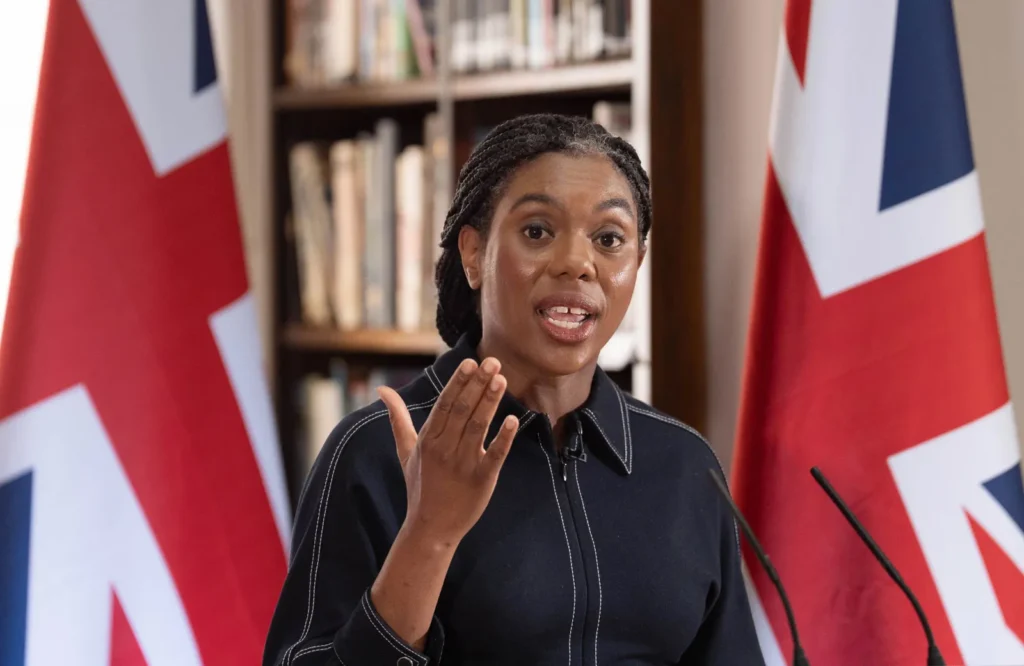
Beyond the immediate question of income tax, the Budget is expected to address a range of other fiscal matters, including public spending allocations, welfare reform, and infrastructure investment.
The government has repeatedly emphasized its commitment to avoid the austerity measures that characterized much of the previous decade, but this commitment must be squared with fiscal sustainability.
Looking Ahead
The clash between Badenoch and Starmer at Prime Minister’s Questions represents more than just routine political theater. It encapsulates a fundamental debate about the social contract between government and citizens, the appropriate level of taxation in a modern economy, and the trustworthiness of political promises.
For the Conservative opposition, the government’s apparent retreat from clear manifesto commitments provides a potent line of attack that can be deployed not just over the coming weeks but potentially throughout this Parliament.
The charge that Labour has broken its promises on taxation—even if through technically indirect means like threshold freezes rather than rate increases—could resonate strongly with voters who feel they were misled during the election campaign.
For Labour, the challenge is to explain that governing involves difficult choices and that the fiscal situation they inherited from the Conservatives necessitates measures that may push the boundaries of their manifesto commitments.
The government’s messaging has consistently emphasized that it is “fixing the mess” left by 14 years of Conservative government, but this argument becomes harder to sustain as time passes and Labour’s decisions become their own responsibility.
The Institute for Fiscal Studies and other independent economic think tanks have warned that regardless of which party is in power, the UK faces structural fiscal challenges that will require either higher taxes, lower spending, or some combination of both.
The IFS noted in its analysis of Labour’s manifesto that tough trade-offs on tax and spending are highly unlikely to simply disappear, even with faster economic growth.
Conclusion
As Britain counts down to Budget day, the political temperature in Westminster continues to rise. The question of income tax has become a flashpoint not just for the immediate fiscal challenges facing the government but for broader questions about political trust, economic competence, and the sustainability of public finances.
Kemi Badenoch’s persistent questioning of the Prime Minister has succeeded in keeping pressure on the government and ensuring that tax policy remains at the center of political debate. Whether this pressure translates into policy changes or merely provides Opposition fodder remains to be seen.
For millions of British taxpayers, the answer to the question Badenoch posed—will income tax rates rise, or will the freeze on thresholds continue—will have real consequences for household budgets already stretched by years of high inflation and stagnant real wage growth.
The government’s choices in the coming week will set the fiscal trajectory not just for the remainder of this financial year but potentially for the rest of this Parliament.
What remains clear is that whatever Chancellor Reeves announces on November 26, the political debate over taxation, government spending, and fiscal responsibility will continue to dominate British politics for months and years to come.
The challenge for any government is to balance the legitimate need for revenue to fund public services with the equally legitimate desire of citizens to keep more of what they earn—a tension that lies at the heart of democratic governance itself.
SEO KEYWORDS: Kemi Badenoch, Keir Starmer, income tax, Budget 2025, Rachel Reeves, Prime Minister’s Questions, Labour manifesto, tax thresholds, fiscal drag, Conservative Party, UK taxation, November Budget, National Insurance, VAT, working people
RELATED TOPICS: UK Budget 2025, Labour Party tax policy, Conservative opposition, fiscal responsibility, economic growth, public finances