Keir Starmer ‘sending British people to the back of the queue’ with Labour’s asylum plan
Conservative critics have launched a scathing attack on the Labour government’s new asylum proposals, warning that British citizens will be “pushed to the back of the queue” as ministers unveil plans to expand safe and legal migration routes into the UK.
Robert Jenrick, the former Immigration Minister, has branded Home Secretary Shabana Mahmood’s strategy as “reckless,” claiming it will place unprecedented strain on Britain’s already overstretched public services and housing supply.
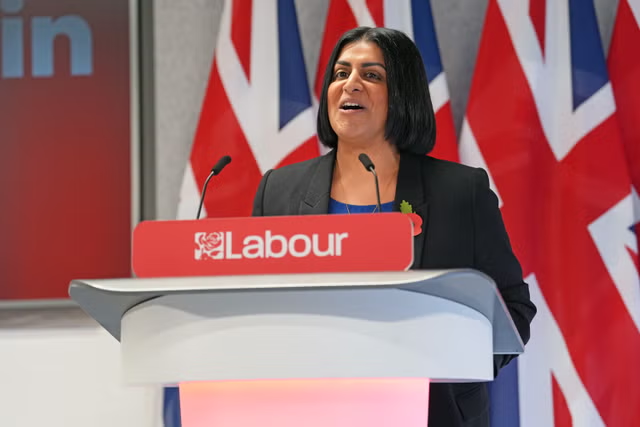
The controversy erupted as Ms Mahmood outlined Labour’s vision for immigration reform, which includes establishing caps on student numbers and creating designated quotas for “skilled” refugees seeking entry to the United Kingdom.
The proposals have ignited fierce debate across Westminster, with opposition politicians arguing that prioritising international asylum seekers over domestic needs represents a fundamental betrayal of British voters who are struggling with cost-of-living pressures, healthcare waiting lists, and a housing crisis.
Labour’s Vision for Safe and Legal Routes
Home Secretary Shabana Mahmood has defended the government’s approach, insisting that creating structured pathways for asylum seekers represents a more humane and controlled alternative to the dangerous small boat crossings that have dominated headlines in recent years.
Speaking at a policy briefing this week, Ms Mahmood emphasised that Labour’s strategy aims to “restore order” to Britain’s immigration system while upholding the country’s international humanitarian obligations.
The Home Office proposals include establishing annual quotas for refugees with specific skills that align with UK labour market needs, alongside caps on international student visas to prevent abuse of the education system as a backdoor immigration route.
Officials argue this balanced approach will ensure Britain continues to attract global talent while maintaining public confidence in border controls.
However, critics contend that any expansion of legal migration routes, regardless of how they are structured, will exacerbate existing pressures on schools, hospitals, and social housing—resources that British citizens already struggle to access in many communities across the nation.
Jenrick Warns of “Reckless” Impact on British Communities
Robert Jenrick, who served as Immigration Minister under the previous Conservative government, has emerged as one of the most vocal opponents of Labour’s proposals.
The MP for Newark warned that creating additional safe and legal routes would inevitably lead to increased immigration numbers, placing British families at a disadvantage when competing for essential services and housing.
Related Post: £40 Billion Tax Shock: Britain’s Economy Under Unprecedented Pressure as Starmer Government Faces Mounting Crisis
“This government is sending a clear message that British people will be pushed to the back of the queue,” Jenrick declared in a statement released to media outlets.
“While our constituents cannot get GP appointments, while young families cannot afford homes, and while our schools are overcrowded, Labour wants to roll out the red carpet for even more people to come to Britain.”
Jenrick’s criticism reflects broader Conservative Party concerns that Labour has abandoned the immigration reduction pledges that both major parties have made in recent election cycles. He pointed to specific constituencies across the Midlands and North of England where local services are already under severe pressure, arguing that increased immigration—even through controlled channels—would prove unsustainable.

The former minister also questioned the practical implementation of skill-based refugee quotas, suggesting that enforcement would prove nearly impossible and that the system would be vulnerable to exploitation.
“We’ve heard these promises before about controlling numbers,” Jenrick stated. “The reality is that once you open these pathways, the numbers spiral beyond any government’s control.”
The Housing Crisis Connection
Housing campaigners and local government leaders have expressed alarm at the potential impact of expanded immigration routes on Britain’s acute housing shortage. Recent figures from the Office for National Statistics reveal that England alone requires approximately 300,000 new homes annually to meet demand, yet construction has consistently fallen short of this target for over a decade.
Council leaders from areas already experiencing high levels of immigration have written to the Home Secretary expressing concern that their communities lack the infrastructure to accommodate additional residents.
In regions such as Kent, which has borne the brunt of asylum seeker accommodation, local authorities warn they are reaching breaking point.
Critics argue that prioritising asylum seekers for social housing creates a perception of unfairness among British families who have spent years on waiting lists. The average wait time for social housing in England currently stands at approximately 18 months, though in high-demand areas such as London and the South East, families may wait five years or longer.
Labour ministers counter that refugees represent a small fraction of overall housing demand and that the real solution lies in dramatically increasing house-building across all tenures.
They point out that the previous Conservative government failed to meet housing targets for 13 consecutive years, contributing far more significantly to the current crisis than immigration policy.
NHS and Public Services Under Pressure
The debate over safe and legal asylum routes cannot be separated from the broader conversation about NHS capacity and public service provision. With the health service facing record waiting lists exceeding 7.5 million people, critics of Labour’s immigration plans argue that any population increase will compound existing problems.
Dr Emma Whitfield, a GP practicing in a Yorkshire constituency with significant immigrant populations, told local media that her practice is already unable to accept new patients. “We’re simply overwhelmed,” she explained.
“Every additional person in our community, regardless of how they arrived, needs healthcare. The infrastructure hasn’t kept pace with population growth for years.”
However, supporters of expanded immigration routes note the crucial role that migrants play in staffing the NHS itself. Approximately 28% of NHS doctors and 21% of nurses were born outside the UK, according to recent Health Foundation analysis.
Skilled refugees with medical qualifications could potentially help address staffing shortages if their credentials are properly recognised and they receive necessary training to meet UK standards.
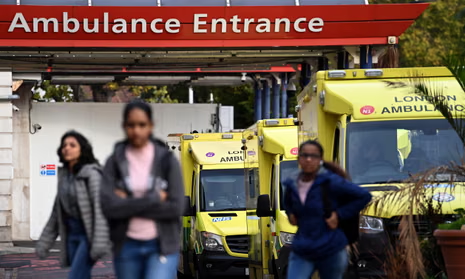
The Home Office has suggested that skilled refugee quotas could be specifically targeted toward sectors experiencing acute labour shortages, including healthcare, social care, and certain engineering disciplines. Officials argue this approach benefits both refugees seeking safety and British society requiring skilled workers.
Education System Concerns
The proposed caps on student visas have generated particular controversy within the higher education sector. British universities have become increasingly dependent on international student fees, which typically cost two to three times more than domestic student tuition.
Sector leaders warn that significant reductions could threaten the financial viability of some institutions, particularly post-1992 universities that rely heavily on international recruitment.
However, immigration restrictionists have long argued that the student visa route has been exploited as a backdoor immigration pathway, with many international students remaining in the UK after their studies conclude or bringing dependents who place additional pressure on public services.

The government’s proposals would establish clearer distinctions between students at different types of institutions and courses, with tighter restrictions on dependents and post-study work rights for certain categories.
Critics within the education sector argue this risks damaging Britain’s reputation as a global education destination and could push talented students toward competitors such as Australia, Canada, and the United States.
The Political Landscape
Labour’s immigration proposals arrive at a politically sensitive moment, with opinion polls suggesting immigration remains among the top concerns for British voters across the political spectrum.
The party won the last general election partly on promises to “take back control” of Britain’s borders and reduce irregular migration, particularly the small boat crossings in the English Channel.
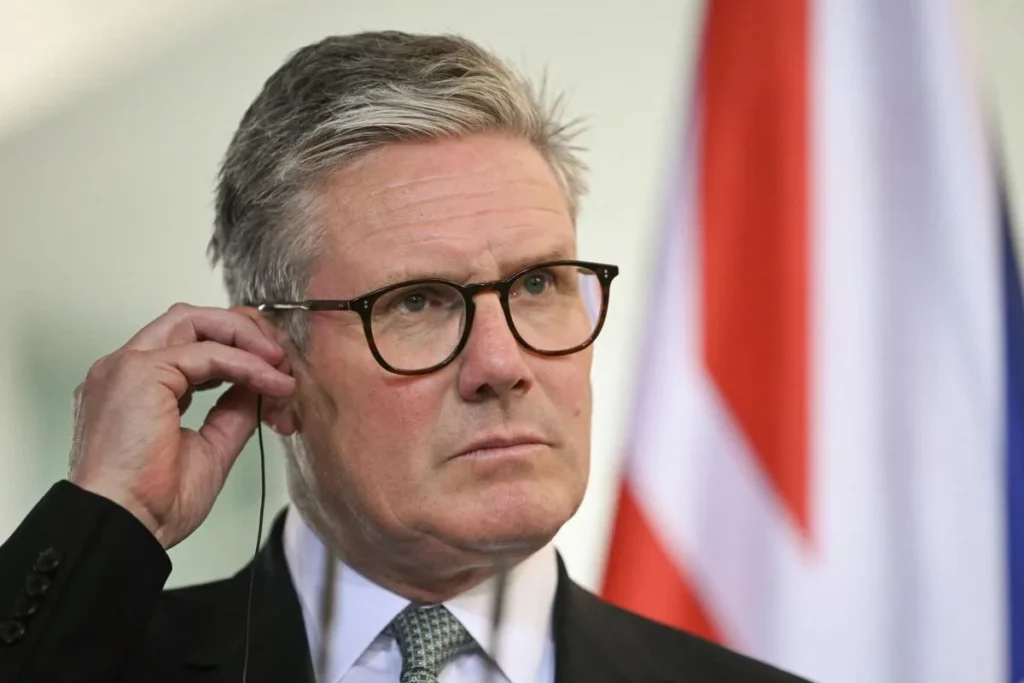
Prime Minister Keir Starmer has attempted to navigate between humanitarian obligations and public anxiety about immigration numbers, arguing that safe and legal routes actually represent a tougher approach than the chaos of uncontrolled irregular migration.
Speaking at Prime Minister’s Questions, Starmer defended his Home Secretary’s proposals: “We inherited a broken system from the Conservatives where people smugglers controlled our borders. Safe and legal routes with proper controls are how we take back that control.”
However, the Conservative opposition has seized on the proposals as evidence that Labour cannot be trusted on immigration control.
Party strategists believe immigration will be a key battleground at the next election, particularly in the so-called “Red Wall” constituencies that switched from Labour to Conservative in 2019 partly due to concerns about immigration and national identity.
International Comparisons and Obligations
Supporters of Labour’s approach point to international comparisons, noting that Britain accepts fewer refugees per capita than many comparable European nations.
According to UNHCR data, countries such as Germany, Sweden, and even smaller nations like Austria have accepted substantially higher numbers of asylum seekers relative to their populations.
The UK is also bound by international treaties, including the 1951 Refugee Convention, which establishes legal obligations to provide protection to those fleeing persecution.
Creating safe and legal routes, proponents argue, allows Britain to fulfill these obligations while maintaining greater control over who arrives and when, rather than leaving these decisions to criminal smuggling networks.
However, Brexit supporters counter that leaving the European Union was supposed to give Britain greater freedom to set its own immigration policies without constraints from international agreements negotiated decades ago under very different circumstances.
They argue that Britain should prioritise its own citizens’ needs before extending help to others, particularly when domestic resources are so stretched.
Economic Arguments
The economic dimension of the immigration debate remains hotly contested, with different studies reaching contradictory conclusions about immigration’s fiscal impact.
The Office for Budget Responsibility has previously estimated that immigration provides a net positive contribution to the public finances, as migrants are typically of working age and contribute through taxes while using fewer age-related services like pensions and social care.
However, critics point out that these calculations often fail to account for the infrastructure investments required to accommodate population growth, including schools, hospitals, roads, and housing.
They also argue that while high-skilled immigration may be fiscally positive, lower-skilled immigration can place net costs on public services, particularly in areas with high concentrations of recent arrivals.
Business groups have generally welcomed aspects of Labour’s proposals, particularly the skilled worker quotas, arguing that labour shortages in sectors from hospitality to construction are constraining economic growth. The British Chambers of Commerce has estimated that workforce shortages are costing the UK economy billions of pounds annually in lost productivity.
Local Authority Perspectives
Local councils at the frontline of asylum accommodation have expressed mixed views on the government’s proposals. Some authorities that have experienced sudden influxes of asylum seekers housed in hotels and temporary accommodation welcome the prospect of a more planned, quota-based system that would allow for better resource allocation and community integration planning.
However, council leaders stress that any expansion of safe and legal routes must be accompanied by adequate central government funding to cover additional costs for schools, social services, housing, and healthcare provision.
Past experience has shown that funding often fails to keep pace with actual costs, leaving local taxpayers to make up the shortfall.
Conclusion: A Nation Divided
The controversy surrounding Labour’s asylum proposals reflects deeper tensions within British society about identity, fairness, and the nation’s place in the world.
While some citizens view the creation of safe and legal routes as a moral imperative that reflects British values of compassion and adherence to international law, others see it as a betrayal of struggling communities already facing unprecedented pressures on housing, healthcare, and public services.
As the debate continues, what remains clear is that immigration will remain at the forefront of British political discourse for years to come. The government faces the formidable challenge of designing a system that maintains public confidence while honouring humanitarian commitments—a balance that has eluded policymakers across the political spectrum for decades.
Whether Robert Jenrick’s warning that British people are being “sent to the back of the queue” resonates with voters, or whether the public accepts Labour’s argument that controlled safe routes represent genuine border security, will likely be determined not in Westminster debates but in the lived experiences of communities across Britain in the months and years ahead.
Sources and Citations:
- Office for National Statistics – UK Housing and Immigration Data
- UNHCR – Global Refugee Statistics
- Health Foundation – NHS Workforce Analysis
- Office for Budget Responsibility – Fiscal Impact Assessments
- Home Office Official Statements
- Parliamentary Hansard Records