Furious Lee Anderson clash erupts in PMQs as Reform MP savages Starmer: ‘Go on, be a man!’
A heated confrontation unfolded in the House of Commons today as Reform UK’s firebrand MP Lee Anderson launched a scathing attack on Prime Minister Sir Keir Starmer during Prime Minister’s Questions, challenging him to guarantee that delayed local elections would proceed as planned.
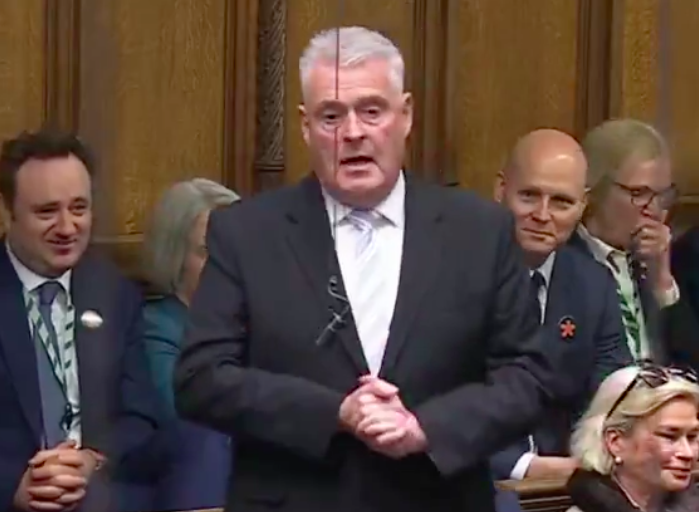
Anderson Issues Direct Challenge to Prime Minister
The Ashfield MP’s intervention comes amid controversy over local elections that were postponed earlier this year, with nine council elections delayed to allow for local government restructuring.
Anderson used his time at the despatch box to demand assurances from the Prime Minister that both the rescheduled ballots and those due to take place next May would go ahead without further delays.
The Reform UK Chief Whip’s confrontational approach has become a hallmark of his parliamentary style since defecting from the Conservative Party in March 2024. Anderson became Reform UK’s first MP after having the Conservative whip suspended in February 2024 for refusing to apologize for controversial comments about London Mayor Sadiq Khan.

The Local Elections Controversy
The 2025 local elections, held on May 1, saw significant disruption as elections to nine councils did not take place to allow restructuring, with elections to reformed or newly created replacement authorities taking place in 2026. This decision has sparked accusations from opposition parties that the Labour government is manipulating the electoral calendar for political advantage.
The postponements affected several county councils, including Norfolk, Suffolk, Essex, Surrey, East Sussex, West Sussex, and Hampshire, all of which had their elections delayed due to local government reorganization plans.
Anderson’s demand for guarantees reflects growing concern among opposition MPs that further delays could be on the horizon.
Reform UK’s Rising Parliamentary Presence
Anderson’s aggressive questioning style reflects the increasingly confrontational approach adopted by Reform UK MPs in Parliament. Following the 2024 general election, Anderson was re-elected to Parliament as MP for Ashfield with an increased vote share of 42.8% and became Chief Whip of Reform UK.
Related Post: £40 Billion Tax Shock: Britain’s Economy Under Unprecedented Pressure as Starmer Government Faces Mounting Crisis
The party has established itself as a vocal opposition force in the Commons, consistently challenging the government on issues ranging from immigration policy to net zero targets.
However, Reform UK MPs have faced criticism over their limited opportunities to question the Prime Minister, with Anderson, Richard Tice, and Sarah Pochin having only asked a combined total of six questions between them at various PMQs sessions.
A History of Confrontation
This latest clash is far from the first time Anderson has locked horns with the Prime Minister. In a previous PMQs session in March, Anderson questioned Starmer about net zero policies, prompting the Prime Minister to deliver a zinger about Reform UK leader Nigel Farage.
The Ashfield MP’s confrontational style has made him one of the most recognizable faces in the Reform UK parliamentary team.
Anderson’s parliamentary career has been marked by controversy and headline-grabbing statements. In August 2023, Anderson commented that asylum seekers who disliked being housed in barges should leave the country, drawing criticism from opposition politicians and advocacy groups.
His outspoken nature has made him a darling of grassroots Reform UK supporters while drawing condemnation from political opponents.
Labour’s Electoral Performance Under Scrutiny
The timing of Anderson’s challenge is particularly pointed given Labour’s declining poll numbers since taking office. Keir Starmer won a landslide victory at the general election with the smallest share of the electoral vote of any majority government since record-keeping began in 1830. Since then, the government has faced numerous controversies that have eroded public support.
By the end of 2024, opinion polling for the Labour Party and Starmer’s personal approval ratings had dropped significantly following controversies including the abolition of Winter Fuel Payments and alleged trading of gifts for political influence.
These challenges have emboldened opposition parties, with Reform UK positioning itself as the most aggressive critic of the government’s agenda.
The May 2025 Local Elections Results
The May 2025 local elections proved historic, with Reform UK winning 677 seats and increasing their total councillor count to 804, described by the BBC as a “sweeping victory”.
This remarkable performance has given the party significant leverage in local government across England and bolstered their confidence in challenging the government at Westminster.
The results represented a seismic shift in British local politics. Labour and the Conservatives lost councillors, ending with 6,177 and 4,403 councillors respectively, while Reform UK held overall control in 10 local authorities. This was Labour’s worst performance in local elections, finishing fourth for the first time in party history.
Anderson’s Parliamentary Record and Controversies
Lee Anderson’s political journey has been anything but conventional. Born on January 6, 1967, Anderson started as a Labour councillor before defecting to the Conservative Party in 2018, serving as a Conservative councillor in Mansfield from 2019 to 2021 concurrently with his term as an MP.
His time in Parliament has been marked by several controversies beyond his political defections. Following an investigation by the parliamentary Independent Expert Panel in November 2024, Anderson apologized for swearing at a parliamentary security officer and behaving in a way that “constituted bullying, and also harassment” on November 23, 2023.
Despite these controversies, Anderson remains a popular figure among Reform UK supporters and continues to serve as the party’s Chief Whip, coordinating parliamentary strategy and ensuring party discipline among Reform UK’s small but vocal group of MPs.
The Broader Political Context
Anderson’s challenge to Starmer over local elections comes as part of Reform UK’s broader strategy to position itself as the true opposition to Labour’s government. Reform UK Chief Whip Anderson has stated that “Labour’s obsession with Reform UK during PMQs is proof that just four MPs are the official opposition in the country”, highlighting the party’s ambition to supplant the Conservatives as the main alternative to Labour.
The party’s success in local elections has validated this approach. With Reform UK regularly polling above 10% nationally and showing strength in former Labour heartlands across the North and Midlands, the party represents a genuine threat to both major parties’ traditional voter coalitions.
Implications for Future Elections
The question of local election timing carries significant implications for all parties. Postponements can affect party momentum, campaign planning, and the political narrative heading into more consequential contests.
Anderson’s demand for guarantees reflects concerns that the government might seek to manipulate electoral schedules to its advantage.
The government’s English Devolution White Paper, published in December 2024, set out plans for local government reorganization that resulted in some elections scheduled for May 2025 being delayed by up to a year.
Critics argue these delays serve Labour’s political interests by postponing accountability at a time when the party’s poll numbers have declined sharply.
The “Be a Man” Challenge
Anderson’s direct challenge to Starmer to “be a man” and provide guarantees about election dates represents the confrontational style that has become Reform UK’s trademark in Parliament.
This approach resonates with voters who feel disillusioned with what they perceive as political evasiveness and lack of straight talking from establishment politicians.
The phrase encapsulates Reform UK’s broader messaging strategy: presenting themselves as politicians who speak plainly and challenge the political establishment without fear of consequences.
Whether this approach translates into further electoral success remains to be seen, but it has undoubtedly raised the party’s profile and energized its base.
What Happens Next?
The government faces increasing pressure to provide clarity on electoral schedules as reorganization plans progress. With Reform UK’s strong performance in May’s local elections, the party has earned the credibility to demand answers on behalf of voters in affected areas.
Prime Minister Starmer will need to navigate these challenges carefully. Dismissing Anderson’s concerns risks appearing evasive and feeding narratives about Labour attempting to avoid accountability. However, committing to specific timelines may prove difficult given the complexity of local government reorganization.
As Parliament continues its work, expect further confrontations between the combative Reform UK MPs and a Labour government grappling with declining poll numbers and mounting criticism. Anderson’s challenge over local elections is unlikely to be the last time he demands the Prime Minister “be a man” and provide straight answers to difficult questions.
Conclusion
The clash between Lee Anderson and Sir Keir Starmer over delayed local elections highlights the increasingly fractious nature of British parliamentary politics. With Reform UK establishing itself as an aggressive opposition force and Labour struggling to maintain public support, exchanges like this one are likely to become more common.
Anderson’s demand for guarantees about election dates raises legitimate questions about transparency and democratic accountability. Whether the Prime Minister provides the assurances sought remains to be seen, but the confrontation has once again demonstrated Reform UK’s determination to hold the government to account and challenge political conventions in Westminster.
SEO Keywords: Lee Anderson, Prime Minister’s Questions, PMQs, Keir Starmer, Reform UK, local elections, House of Commons, British politics, UK Parliament, election delays
Internal Linking Opportunities: Link to articles about Reform UK’s electoral performance, previous PMQs clashes, local government reorganization, and UK political party profiles
External References:
- UK Parliament official records
- BBC political coverage
- Electoral Commission data
- Local government reorganization announcements