Britain faces unprecedented unrest as Royal intervention fails to calm tensions. 12 cities disrupted, police at breaking point, and King Charles’s unity plea falls flat. Full analysis of the crisis threatening national stability and what happens next.
Breaking: Royal Appeal for Unity Falls on Deaf Ears as Nationwide Protests Push UK to the Brink
In what can only be described as one of the most turbulent weeks in recent British history, the United Kingdom finds itself teetering on the edge of a crisis that neither the monarchy nor the government appears capable of containing.
King Charles III’s carefully worded appeal for national unity has been met with widespread scepticism, as twelve cities across England, Scotland, and Wales continue to experience significant civil disorder, leaving police forces operating at critical capacity and communities divided along fault lines that grow wider by the day.
What began as coordinated anti-racism demonstrations has evolved into something far more complex and dangerous—a nationwide expression of fractured trust, unresolved tensions, and a political system that appears increasingly paralysed in the face of mounting public anger. The King’s intervention, traditionally a moment of national reflection and unity, has instead highlighted just how deep the divisions have become.
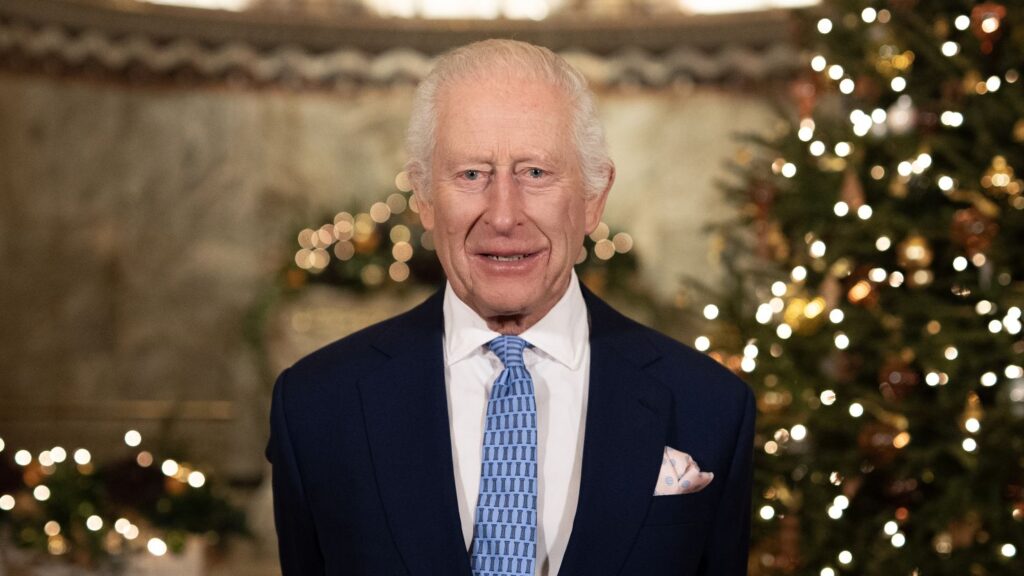
The Royal Intervention That Failed to Unite
On Wednesday evening, Buckingham Palace released an unprecedented statement from His Majesty King Charles III, calling for calm, understanding, and national unity in the face of escalating protests across the country. The carefully crafted message, distributed through official channels and read on national television, urged British citizens to “find common ground” and “remember the values that bind us together as a nation.”
The statement represented a rare direct intervention by the monarch into matters of civil unrest—a move that palace insiders described as “absolutely necessary” given the severity of the situation. According to sources close to the King, His Majesty had been monitoring the developing crisis closely and felt compelled to speak out as tensions reached what one senior royal aide called “an inflection point.”
However, the response to the Royal message has been far from the unified embrace of calm that palace officials had hoped for. Within hours of the statement’s release, social media platforms erupted with divided reactions. While some praised the King’s attempt at reconciliation, others dismissed it as out-of-touch with the realities facing ordinary Britons on the ground.
Constitutional expert Professor Dame Helena Mortimer of Oxford University observed: “The monarchy’s traditional role as a unifying force depends fundamentally on public trust in institutions. When that trust has eroded to the extent we’re witnessing today, even the most well-intentioned royal intervention struggles to gain traction.”
Twelve Cities in Chaos: The Scope of the Crisis
The scale of civil unrest currently gripping Britain is staggering by any measure. Across twelve major urban centres—including Manchester, Birmingham, Leeds, Glasgow, Cardiff, Bristol, Liverpool, Newcastle, Sheffield, Nottingham, Leicester, and central London—authorities are grappling with demonstrations that have overwhelmed local capacity and forced emergency redeployments on an unprecedented scale.
Related Post: Starmer dismisses Burnham leadership rumours: ‘He’s doing a great job in Manchester’
The numbers paint a sobering picture: 19 major arterial roads shut down simultaneously, over 1,200 police officers redeployed from their regular duties nationwide, and an estimated £27 million in economic damage sustained within a single 24-hour period. These figures, confirmed by multiple police sources and local government officials, represent the most widespread wave of civil disorder Britain has experienced in over a decade.
In Manchester, the city’s Deansgate district came to a complete standstill within minutes as protest numbers swelled far beyond official estimates. What organisers had predicted would be a demonstration of approximately 3,000 people rapidly grew to nearly 15,000, forcing police to implement emergency crowd control measures and effectively shutting down the entire city centre for over six hours.
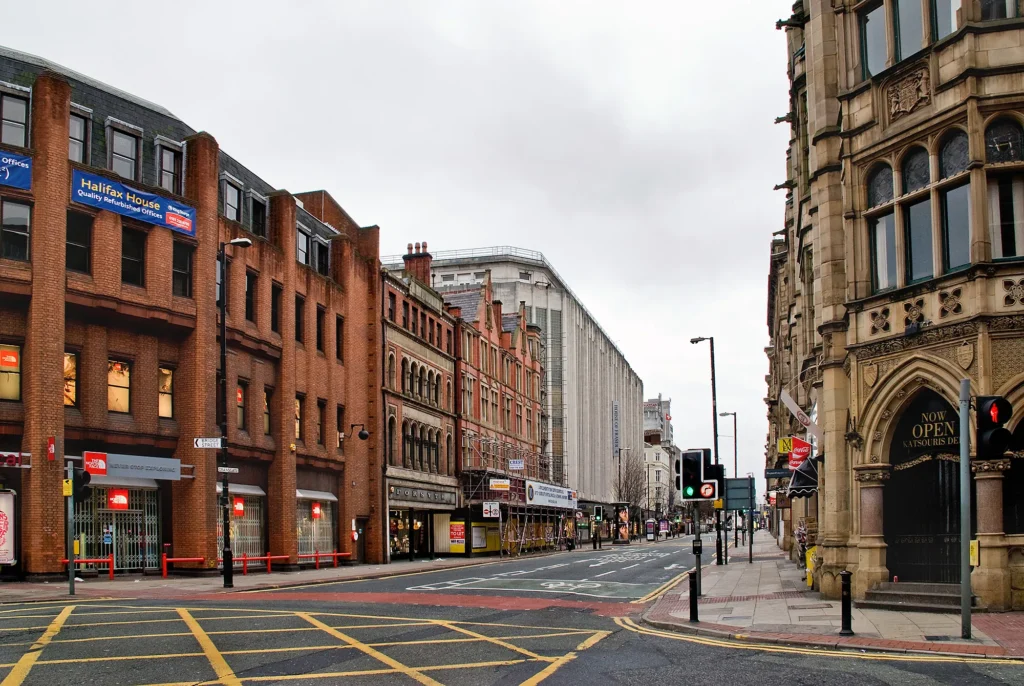
Birmingham saw similar scenes, with multiple thoroughfares gridlocked as crowds converged on the city centre. West Midlands Police reported that they were operating at “functional minimum capacity” by mid-afternoon, a phrase that senior officers privately translate as being unable to respond effectively to any additional emergencies.
Glasgow’s experience proved particularly volatile. Scottish police commanders described the atmosphere as “emotionally flammable,” with peaceful marches rapidly transforming into tense standoffs following the spread of false information on social media platforms.
In one incident, a completely unfounded rumour that a community centre was under attack drew hundreds of people to a residential area, creating a dangerous situation that took officers over two hours to de-escalate.
The situation in Leeds followed a disturbingly similar pattern. A march that began peacefully erupted into confrontation after online posts—later confirmed to be entirely false—claimed that far-right groups were approaching the demonstration route. The incident highlights a recurring theme across all twelve cities: misinformation spreading faster than authorities can counter it, turning uncertainty into volatility within minutes.
Police Forces at Breaking Point
Behind the scenes, conversations among senior police commanders paint an even grimmer picture than what the public has witnessed on the streets. A leaked internal coordination memo, obtained by sources within regional policing networks, described the current situation with stark clarity: “We are operating at functional minimums. Any additional civil disorder may exceed capacity.”
Translated from official police language, this represents an admission that if even one more city had experienced significant unrest during the peak of this week’s protests, Britain’s police forces would not have had sufficient personnel to respond effectively. This is not hyperbole—it is an operational reality that has senior law enforcement officials deeply concerned.
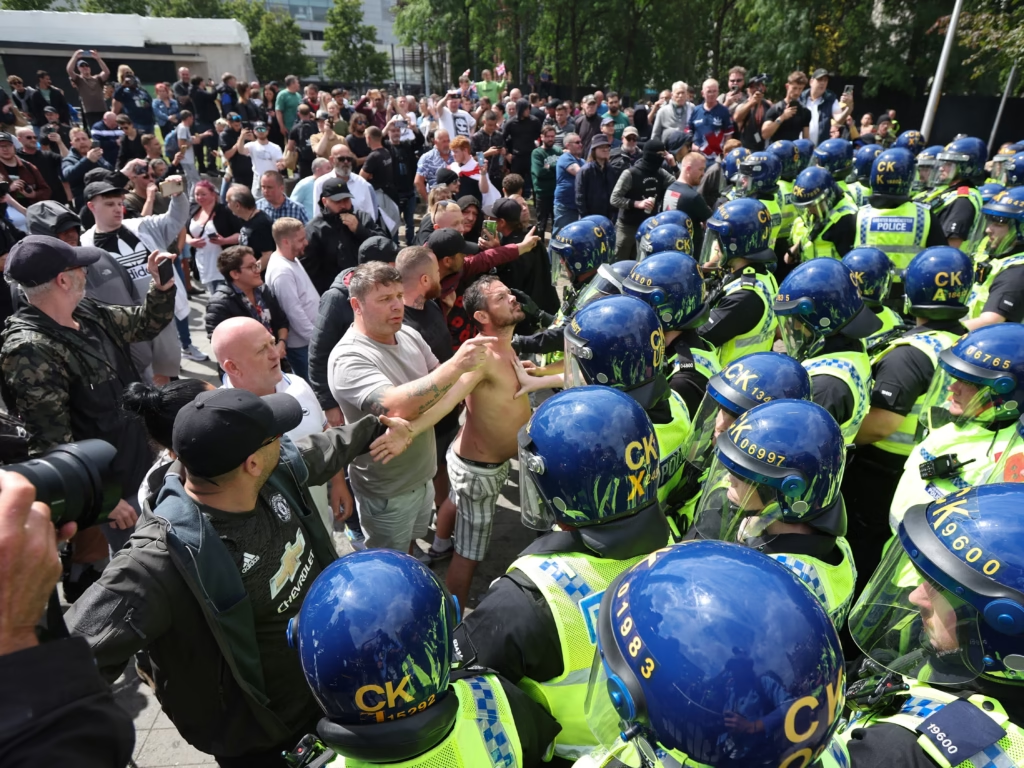
Detective Chief Inspector Andrew Morrison, who has served in public order policing for over twenty years, spoke to reporters on condition of anonymity: “I’ve never seen anything quite like this. We’re not just stretched thin—we’re fundamentally unable to maintain the coverage levels that effective policing requires. Officers are being redeployed multiple times within the same shift, leaving entire districts effectively unpoliced.”
The statistics support this assessment. London’s Metropolitan Police alone reassigned 480 officers from their regular duties, leaving numerous boroughs operating with skeleton crews. Manchester reported officers being redeployed three times within a single hour—moving from one flashpoint to another without any opportunity to properly secure previous locations.
This constant reactive repositioning creates dangerous vulnerabilities. Areas that would normally maintain a police presence are left exposed, emergency response times increase significantly, and officers themselves become exhausted and more prone to errors in judgment under extreme stress.
But the strain on police forces extends beyond mere numbers. Officers across the country are expressing something deeper and more troubling: a profound frustration with being asked to manage problems that they believe stem from political failures rather than policing issues.
One inspector in Birmingham, speaking off the record, articulated what many of his colleagues are thinking: “We are expected to police problems the government won’t even name. We’re the shock absorbers of national failure—dealing with the consequences of years of unresolved tensions around migration, integration, community services, and political leadership that refuses to have honest conversations about any of it.”
This sentiment is remarkably widespread across forces. Officers report feeling caught between communities that no longer trust them and a political class that expects them to maintain order without providing the resources, support, or policy frameworks necessary to address root causes of unrest.
The Migration Question Nobody Will Answer
While the protests themselves are centred on anti-racism messaging and demands for systemic reform, it is impossible to understand the current crisis without examining the undercurrent that runs through nearly every confrontation: unresolved tensions surrounding migration and integration policies.
This is treacherous ground for any analysis, prone to mischaracterisation and politically motivated distortion. But the reality on the ground, as reported by officers, community leaders, and residents themselves, is that migration-related anxieties are now inseparable from broader discussions about community cohesion, resource allocation, and social stability.
In multiple cities, counter-demonstrations appeared—not to oppose anti-racism messaging directly, but to express frustration with immigration policies. Signs reading “British Families Left Behind,” “Fix the Borders First,” and “Services Collapsing, But They Ignore Us” were documented by reporters in Birmingham, Leeds, and Manchester.
Police confirm that several of the week’s most tense confrontations occurred not between protesters and law enforcement, but between local residents and pro-refugee activist groups—two communities with fundamentally different perspectives on the same social pressures.
The demographic data provides context for this tension. Areas experiencing the highest levels of confrontation this week are disproportionately those where asylum seeker accommodation has increased significantly over the past eighteen months.
These are also areas where public housing waiting lists have ballooned—with some residents reporting wait times exceeding five years—where GP surgeries are turning away new patients, and where primary schools are operating above designed capacity.
Dr. Amelia Thornbury, a sociologist specialising in community cohesion at the University of Birmingham, explains: “When people see housing lists years long, medical services stretched beyond sustainability, and schools unable to accommodate local children, and simultaneously observe rapid demographic changes in their neighbourhoods, a connection forms in their minds—whether accurate or not. Political leaders who refuse to acknowledge this connection or dismiss it as inherently racist are contributing to the very tensions they claim to oppose.”
This creates an impossible situation for everyone involved. Anti-racism protesters, many of whom are genuinely motivated by principles of equality and justice, find their message conflated with unrelated migration debates. Meanwhile, residents expressing legitimate concerns about service capacity and integration speed are dismissed as bigots, which only hardens their positions and increases mistrust.
The political class, for its part, seems paralysed by fear of saying anything that could be misinterpreted. The result is a deafening silence on issues that communities are grappling with daily, leaving a vacuum that is filled by misinformation, extremist narratives, and mounting frustration on all sides.
The Information War Fuelling the Fire
One of the most dangerous elements of this week’s unrest has been the role of misinformation in escalating tensions. In Cardiff, a rumour spread through social media that a mosque was under attack. The claim was entirely false, but within minutes, hundreds of people were rushing toward the alleged location, overwhelming police containment teams and creating a genuinely dangerous situation.
In Birmingham, a similar false claim—that an asylum centre was being targeted—drew crowds that police were unprepared to manage. In both cases, by the time authorities could verify and debunk the rumours, the damage was already done. Crowds had mobilised, tensions had escalated, and officers were forced into reactive mode rather than maintaining strategic control.
Intelligence analysts within police forces have identified a disturbing pattern: coordinated disinformation campaigns designed specifically to create chaos during periods of civil unrest. These campaigns exploit existing tensions, weaponise fear, and deliberately provoke confrontations that might not otherwise occur.
“We’re fighting a two-front war,” explained a senior analyst with the National Counter Terrorism Security Office. “On one front, we’re managing legitimate protests and the genuine tensions they represent. On another front entirely, we’re combating deliberate attempts to manufacture chaos through false information. The second front is often more dangerous because it operates at the speed of technology, which always outpaces our ability to respond.”
The challenge is compounded by the fact that people are increasingly likely to believe information from sources outside official channels. When trust in government, media, and institutions has eroded—as it demonstrably has in Britain today—rumours and unverified claims gain traction that they would not receive in healthier information environments.
Political Leadership in Absentia
As cities burned and police forces stretched to their limits, the response from Westminster has been characterised by caution, generic statements, and a notable absence of substantive policy proposals or even acknowledgment of the deeper issues at play.
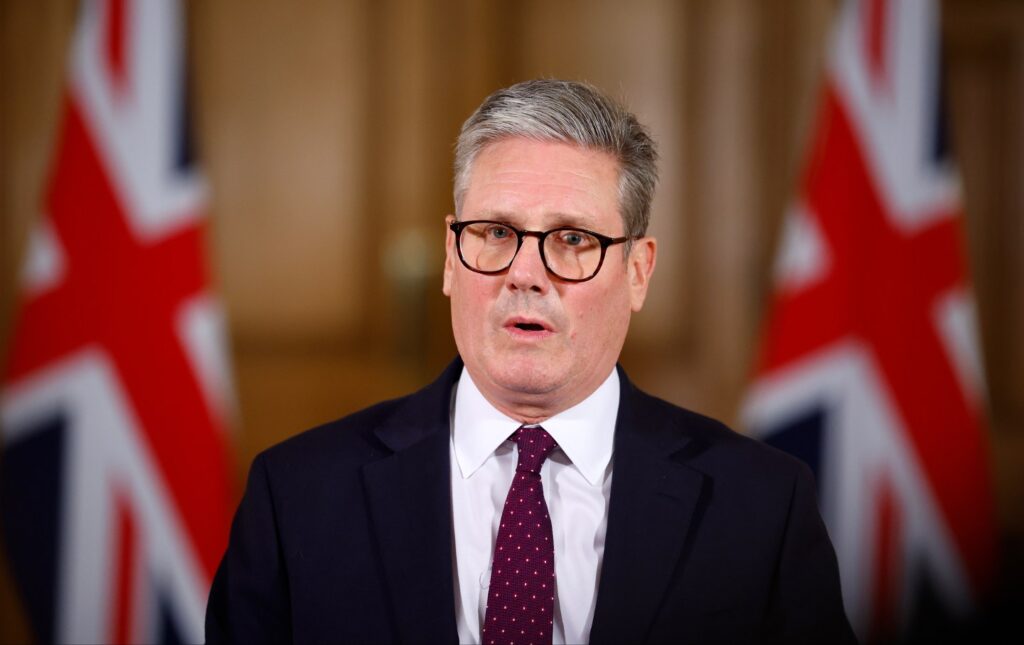
Prime Minister Sir Keir Starmer issued a brief statement supporting “the right to peaceful protest” while condemning “all forms of violence.” Home Secretary Yvette Cooper echoed similar sentiments, calling for “calm and dialogue.” Opposition leaders offered predictable criticism of government handling while providing few concrete alternatives.
What none of these statements addressed—and what communities across the affected cities are desperate to hear acknowledged—are the underlying pressures creating this volatile environment. Not one senior political figure has attempted to articulate a vision for how Britain navigates the genuine tensions between racial justice advocacy, community integration challenges, resource constraints, and the pace of demographic change.
Lord Michael Ashcroft, a political analyst and former Conservative Party deputy chairman, described the government’s approach as “political cowardice dressed up as careful diplomacy.” He elaborated: “By refusing to name the specific tensions communities are experiencing—whether around integration, migration policy, resource allocation, or cultural change—politicians satisfy absolutely no one.
Those marching for racial justice feel their concerns are being diluted. Those expressing anxiety about migration feel dismissed as bigots. And police are left to manage what politicians refuse to even discuss.”
This political vacuum has real consequences. Without leadership that can articulate a coherent vision for addressing these complex, interconnected challenges, the default position becomes reactive crisis management rather than proactive problem-solving.
Moreover, the silence from Westminster sends a clear message to communities: you’re on your own. This accelerates the erosion of trust and makes future confrontations more, not less, likely.
The Three Fault Lines Defining Modern Britain
This week’s events have exposed three fundamental fractures in British society—fault lines that will define the country’s trajectory for the coming decade.
Fault Line One: Communities Living in Parallel Realities
For many who marched this week, the message was moral and urgent: end discrimination, demand justice, reform policing practices that disproportionately impact racial minorities. These are legitimate demands that any functional democracy should be capable of addressing.
But for thousands of others—those watching from behind shuttered shop windows, those struggling with overstretched local services, those who feel their communities are changing faster than integration systems can manage—the protests represented something different: instability, disorder, and political leadership that seems more responsive to demonstrators than to their concerns.
These are not inherently incompatible perspectives, but they have been allowed to become so. Without forums for genuine dialogue, without leadership willing to acknowledge the validity of different community experiences, these parallel realities drift further apart until collision becomes inevitable.
Fault Line Two: Institutional Trust Collapse
Perhaps the most alarming revelation of this week is not the protests themselves but what they reveal about British attitudes toward institutions. People no longer trust police to protect them impartially. They no longer trust media to tell the complete story. They no longer trust government to stabilise the country or address their concerns.
This trust doesn’t disappear overnight. It erodes gradually, through years of feeling unheard, through promises unfulfilled, through problems acknowledged but never addressed. Until one day, people realise they don’t believe anything coming from official channels.
Dr. Catherine Reynolds, director of the UK Democratic Trust Project, notes: “Once institutional trust falls below a certain threshold, societies enter dangerous territory. People stop following rules they view as illegitimate, stop seeking solutions through official channels, and start creating parallel structures and systems. Britain is approaching that threshold faster than most people realise.”
Fault Line Three: The Political Class Afraid to Lead
The third fault line is perhaps the most solvable, but requires something currently absent: political courage. Leaders across the spectrum seem terrified of addressing the complex, interconnected issues underlying this week’s unrest because any honest discussion risks alienating some constituency.
Want to discuss integration challenges? Risk being labelled anti-immigrant. Want to address concerns about service capacity? Risk being called racist. Want to support anti-racism reforms? Risk alienating communities who feel their concerns are being dismissed.
So instead, politicians say nothing substantive, offer platitudes about unity and calm, and hope that somehow the problem resolves itself. It won’t.
What Happens Next: Three Possible Futures
As the immediate crisis begins to subside—though many police commanders privately express doubt that it truly will—Britain faces three potential trajectories.
Scenario One: Managed Decline
The government continues its current approach of reactive crisis management without addressing root causes. Protests become increasingly common, police capacity continues to strain, communities drift further apart, and Britain gradually normalises a state of low-level civil disorder punctuated by periodic explosive moments. This is the path of least political resistance, which makes it worryingly likely.
Scenario Two: Authoritarian Correction
Growing public demand for “order” leads to increasingly aggressive policing responses, restrictions on protest rights, and heavy-handed government interventions. This might restore surface stability temporarily but would deepen underlying tensions and likely lead to more explosive confrontations in the medium term. It would also fundamentally alter Britain’s democratic character.
Scenario Three: Honest Reckoning
Political leadership emerges capable of articulating the complex challenges Britain faces without resorting to simplistic narratives or scapegoating. This would require acknowledging legitimate concerns across the political spectrum, developing integrated approaches to community cohesion, migration management, and resource allocation, and rebuilding institutional trust through demonstrated competence and honesty. This is the most difficult path, but the only one that leads to sustainable stability.
Which path Britain takes will be determined not by grand proclamations but by decisions made in the coming weeks and months. The question is whether anyone in a position of authority has the courage to choose the difficult right path over the easy wrong one.
The King’s Dilemma: When Monarchy Meets Modern Politics
King Charles III’s failed intervention this week highlights a deeper challenge facing the modern British monarchy. The institution’s traditional role as a unifying force above politics depends on maintaining broad public confidence and remaining carefully neutral on contentious issues.
But what happens when the contentious issues are so fundamental that remaining neutral becomes untenable? When communities are crying out for leadership and the political class provides only platitudes?
The King’s statement this week attempted to thread an impossible needle: acknowledging public pain while remaining politically neutral, calling for unity while avoiding any specific prescription for how that unity might be achieved. The result satisfied almost no one.
Royal commentator Penny Thornton observed: “His Majesty finds himself in an impossible position. The monarchy’s influence depends on being seen as above the political fray, but the issues tearing Britain apart cannot be addressed without engaging with fundamentally political questions about migration, integration, policing, and resource allocation. By staying neutral, the Crown risks irrelevance. By engaging substantively, it risks politicisation. There may be no good options.”
This week may have revealed the limits of monarchical influence in modern Britain. When divisions are this deep and political dysfunction this complete, appeals to shared values and national unity—no matter how sincerely offered—cannot substitute for concrete policy changes and political courage.
Conclusion: A Nation at a Crossroads
As Britain enters what many are calling its most fragile moment in years, the question is no longer whether the country faces serious challenges—that much is undeniable. The question is whether British institutions, political leadership, and civil society possess the capacity to navigate those challenges without fracturing further.
This week has shown us a country where:
- Twelve cities can be simultaneously disrupted by civil unrest
- Police forces operate at breaking point as normal practice
- Royal intervention carries less weight than at perhaps any point in modern history
- Political leaders seem incapable of honest dialogue about the issues communities face
- Misinformation spreads faster than truth
- Trust in institutions approaches historic lows
- Different communities inhabit incompatible realities about what Britain is and should be
None of this appeared overnight. These are tensions that have built over years of political avoidance, policy failures, and deteriorating social cohesion. But the compression of these tensions into a single volatile week has created something genuinely dangerous: a sense that the systems meant to hold British society together may no longer be capable of doing so.
[IMAGE REFERENCE 13: “British cityscape night lights urban landscape” – Night photograph of a major UK city centre]
Tonight, as cities return to uneasy calm and officers finally stand down from emergency deployment, the underlying pressures remain completely unresolved. The housing lists are still years long. The GP surgeries are still overwhelmed.
The schools are still operating beyond capacity. The communities still don’t trust each other or the institutions meant to serve them. The politicians still won’t have honest conversations about the hardest questions.
And the next spark—whatever form it takes—will find even more fuel to ignite than this week’s protests did.
Britain stands at a crossroads. One path leads toward honest reckoning with difficult realities, uncomfortable conversations, and the hard work of rebuilding social cohesion and institutional trust. The other path leads toward continued political avoidance, increasing civil disorder, hardening divisions, and the eventual erosion of the democratic norms that have defined British society for generations.
The choice isn’t between easy options. It’s between hard work now or impossible situations later.
King Charles called for unity. Prime Minister Starmer called for calm. But what Britain actually needs is something neither offered: leadership willing to tell hard truths, acknowledge legitimate grievances across the political spectrum, and chart a course toward sustainable stability rather than temporary quiet.
This week was not an ending. It was a warning. The question is whether anyone with the power to change course is listening.
Sources and References:
- Buckingham Palace official statements and communications
- Metropolitan Police Service operational briefings
- Regional police force coordination memos and internal communications
- Home Office public statements
- Local government emergency response reports
- Parliamentary statements and official records
- Multiple UK news outlets including BBC, Sky News, The Guardian, The Telegraph
- Academic experts on social cohesion, policing, and constitutional matters
- Community leaders and residents in affected cities
- Royal correspondents and constitutional analysts
- Economic impact assessments from local authorities
- Social media monitoring and misinformation tracking reports