King Charles’s unity plea falls flat as Britain faces explosive unrest across 12 cities. With police at breaking point and £41M in costs, why his royal message failed to calm the nation. Full analysis of the credibility crisis gripping the Crown and Starmer’s government.
Breaking: Royal Unity Appeal Dismissed as “Utterly Useless” While Nation Faces Worst Civil Disorder in Decades
In a stunning illustration of how dramatically Britain has changed, King Charles III’s carefully crafted message calling for national unity has been met not with reassurance, but with what one political commentator described as “a collective exhausted eye roll.”
As twelve cities grapple with ongoing civil disorder, nine riot incidents in just seven days, and over 3,400 officers stretched to breaking point, the monarch’s gentle appeal for mutual respect has exposed something far more troubling than the unrest itself: Britain no longer believes its traditional stabilizers—neither Crown nor government—can actually stabilize anything.
Related Post: £40 Billion Tax Shock: Britain’s Economy Under Unprecedented Pressure as Starmer Government Faces Mounting Crisis
The numbers paint a sobering picture of a nation in crisis. Twelve cities disrupted, nine separate riot incidents within a single week, more than 3,400 police officers deployed and in many regions completely overwhelmed, and £41 million in public order costs accumulated in just one month. This is the Britain that King Charles surveyed before deciding to issue his royal message. And the response has been brutal in its honesty: lovely words, beautiful sentiment, utterly spectacularly useless.
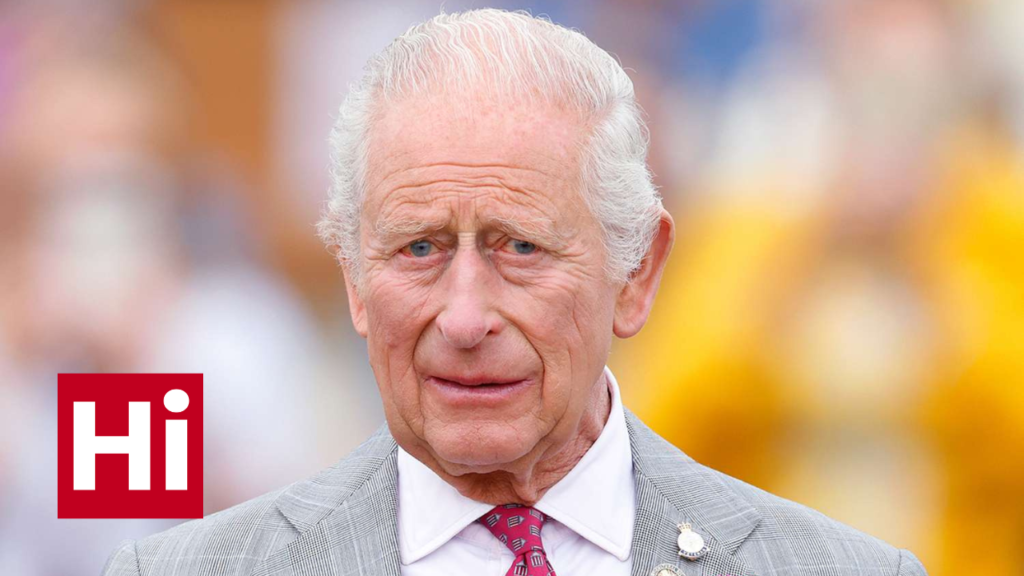
The Royal Message That Changed Nothing
After weeks of escalating unrest—anti-racism marches transforming into street confrontations, anti-immigration groups clashing with counter-demonstrators, neighborhoods on edge, and police forces publicly warning they are operating at structural breaking point—King Charles finally stepped forward with a message that felt, to many Britons, like it was written in another century.
The King praised what he described as “the spirit of unity that has guided Britain through recent challenges” and called for mutual respect and shared values. People watching at home couldn’t help but raise an eyebrow. Unity? Where exactly? On which street? In which neighborhood? In which part of this country that has spent the last month arguing, protesting, clashing, and fundamentally questioning its institutions?
The timing of the royal intervention has been particularly controversial. Coming after weeks of visible unrest rather than at the beginning of the crisis, the message struck many as reactive rather than reassuring. Social media responses captured the mood with brutal clarity:
“Nice message, Your Majesty. It won’t stop tomorrow’s riot.”
“Where was this unity talk a month ago?”
“Bring back Elizabeth. At least she felt like stability.”
These aren’t fringe reactions from political extremists. These are the sentiments echoing across Britain right now, from pubs to living rooms to social media platforms. People don’t feel reassured by royal appeals. They feel unprotected. And absolutely everyone knows the man wearing the crown is not the man running the country.
Dr. Margaret Whitefield, constitutional historian at Cambridge University, explains the shift: “What we’re witnessing is not anti-monarchist sentiment in the traditional sense. It’s something more fundamental—a recognition that symbolic authority, no matter how well-intentioned, cannot substitute for effective governance. King Charles can call for unity as much as he wants. It won’t make a dent in the reality Prime Minister Starmer now presides over.”
The Brutal Reality Behind the Royal Words
While Charles spoke gently about community spirit, the ground reality across Britain looked nothing like the picture he painted. Streets in several cities had already seen pockets of unrest throughout the week. Not full-scale riots in every location, but enough clashes, arrests, and standoffs that police commanders privately admitted they were “one incident away from complete escalation.”
Officers on the ground described what they called a “slow burn of tension”—the kind that doesn’t necessarily break into headlines, but gathers force day by day, hour by hour. Shops in multiple regions quietly closed early, not out of panic necessarily, but because managers didn’t want to gamble with staff safety or property damage.
Parents across affected cities told teenagers to come home before sunset. Local councils sent late-night emails reminding residents to avoid certain areas—phrased politely, but carrying an unmistakable sense of worry.
And into this atmosphere of genuine fear and uncertainty walked a royal message that felt completely disconnected from the nation it was meant to address. It wasn’t malice. It wasn’t indifference. It was simply a speech from a man who, despite his title and position, no longer sits inside the center of Britain’s political storm.
One Midlands local official admitted bluntly: “No one trusts the daily reassurances anymore. Everyone thinks we’re one misstep away from another eruption.” In parts of Greater Manchester, community leaders said they were relieved the weekend didn’t spiral out of control—not because tensions were actually lower, but because “nothing happened at the wrong time in the wrong place.”
This is the Britain that Charles’s speech didn’t address. Not because he didn’t want to, but because constitutionally and practically, he can’t. The monarchy is a spectator now, watching a political arena that has fundamentally outgrown ceremonial comfort.
Starmer’s Conspicuous Absence
While King Charles attempted to soothe the nation with words, Prime Minister Sir Keir Starmer has been conspicuously absent from public view during what many are calling the most strained week of his leadership.
And while the palace performs calm, Starmer’s government has been busy with a very different agenda: drafting emergency directives, restricting demonstrations, deploying specialist units, and quietly preparing for more unrest they absolutely know is coming.
The power in modern Britain no longer sits at the palace. It sits in Downing Street. For better or worse, whether the public trusts him or not, Keir Starmer is the man with actual authority to change what’s happening on British streets. And his near-silence during this crisis has not gone unnoticed.

Communities didn’t dismiss King Charles because they disliked him personally. They dismissed him because his words cannot move the machinery that actually governs—the machinery controlling policing strategies, protest management, immigration pressure responses, or public order operations. While the King spoke, people were left wondering why Starmer was nowhere to be seen.
Even Starmer’s closest political allies admit privately that the public mood is “slipping out of reach.” Not turning against him violently, not rising up in rebellion, but slipping—an erosion that is slower, quieter, but far more dangerous for a leader who built his entire political promise on the idea of restoring stability and competent governance.
A senior political adviser, speaking on condition of anonymity, said: “Nothing this month feels stable. Not the streets, not the councils, not the police, not the Home Office, and certainly not the public’s patience. The Prime Minister’s silence isn’t strategic—it’s a vacuum. And nature abhors a vacuum.”
The £41 Million Question: Can Britain Afford This?
Beyond the political and constitutional implications, the ongoing unrest is extracting a severe financial toll. The £41 million in public order costs accumulated over just one month represents money that was budgeted for entirely different purposes—community programs, infrastructure maintenance, public services.
Multiple police forces have confirmed they have already burned through emergency funding allocations that were meant to last until spring. This financial strain compounds the operational pressure, creating a vicious cycle where forces lack both the personnel and the resources to respond effectively to civil disorder.
Chief Constable Andrew Morrison, speaking at a closed-door briefing that was subsequently leaked to the press, put it bluntly: “We are running on a knife’s edge. Multiple forces are operating at what we call ‘morale shock’—a state where officers are so continuously stretched that resilience simply evaporates. We’re not talking about being busy. We’re talking about structural breaking point.”
The financial reality is stark. If unrest continues at this level, Britain faces a choice: either drastically increase policing budgets (at a time when the government has committed to fiscal restraint), or accept that police forces simply won’t be able to respond to future incidents with the effectiveness the public expects and deserves.
Inside the Home Office, senior staff have privately admitted this week that the financial model for public order policing is “no longer sustainable under current conditions.” One senior official described it as “trying to bail out a flooding ship with a teaspoon—eventually, you’re going under regardless of how hard you work.”
The Credibility Crisis: When Institutions Can’t Stabilize
What became unmistakably clear this week—clearer than any royal speech, clearer than any Downing Street briefing—is that Britain’s crisis is not just happening on the streets. It’s happening in the institutions meant to guide the country through moments exactly like these.
For decades, through recessions, terrorist threats, wars, and political upheavals, the British monarchy served as what historians call an “emotional stabilizer”—a symbolic weight that helped keep the national balance steady. When Queen Elizabeth II addressed a shaken nation, even if nothing truly changed in material terms, people felt anchored. The very act of the monarch acknowledging a crisis seemed to contextualize it within Britain’s longer story of resilience.
But this week, watching King Charles deliver polished lines about mutual respect, the country didn’t feel anchored. It felt unconvinced—as if the words were coming from a man reading a national mood board rather than responding to a genuine national emergency.
Professor David Thornbury of the London School of Economics explains the shift: “The flaw now laid bare is that Britain no longer believes its symbolic stabilizers can stabilize anything. The monarchy cannot do it because it lacks executive power. The Prime Minister will not do it because he appears to lack the political courage or vision.
And so the responsibility has slid silently, reluctantly, onto institutions that are hardly equipped for the burden—police forces strained to breaking point, councils overwhelmed, local authorities begging for clarity they never receive, and communities forced into the role of first responders whenever tensions flare faster than the state can react.”
The Two Britains: Palace Performance vs. Street Reality
The disconnect between what the palace and government say and what the public experiences has never been wider. While Charles speaks about unity and Starmer issues carefully worded statements designed to sound firm but say very little, ordinary Britons are living a completely different reality.
When community organizers in Birmingham were asked whether the King’s speech changed anything, one replied with devastating simplicity: “It sounded nice, but the situation isn’t nice. We don’t need poetry. We need decisions.”
When London volunteers were asked if they felt reassured by Starmer’s latest statements, one said: “He says things are under control. We live here. We know they’re not.”
When a teacher in Leeds was asked whether the recent unrest surprised her, she responded: “We’ve been warning them for months. They don’t hear us until something explodes.”
These are not outliers. These are the voices filling the political vacuum—voices that never appear in royal addresses or Number 10 press releases, but which now shape the national psyche more powerfully than either institution.
A senior police officer, speaking under strict anonymity, articulated what many in law enforcement are thinking: “People want order, but they can see the Crown can’t provide it, and the government can barely pretend to. It’s not just a policing issue. It’s not just a political issue. It’s a credibility issue.”
The Migration Undercurrent Nobody Will Name
While the protests themselves center on anti-racism messaging and demands for police reform, it is impossible to understand the volatility of this moment without examining the undercurrent running through nearly every confrontation: unresolved tensions surrounding migration, asylum policy, and community integration.
This remains politically treacherous territory, but the reality on the ground—as reported by officers, community leaders, and residents themselves—is that migration-related anxieties are now inseparable from broader discussions about public order, resource allocation, and social stability.
In multiple cities this week, the most volatile confrontations occurred not between protesters and police, but between local residents and pro-refugee activist groups. Signs reading “British Families Left Behind,” “Fix the Borders First,” and “Services Collapsing, But They Ignore Us” appeared at counter-demonstrations in Birmingham, Leeds, and Manchester.
The areas experiencing the highest levels of tension are disproportionately those where asylum seeker accommodation has increased significantly over the past eighteen months. These are also areas where public housing waiting lists have ballooned to five years or more, where GP surgeries are turning away new patients, and where primary schools are operating significantly above designed capacity.
Dr. Sarah Chen, a sociologist specializing in community cohesion at the University of Manchester, explains: “When people see housing lists years long, medical services stretched beyond sustainability, schools unable to accommodate local children, and simultaneously observe rapid demographic changes in their neighborhoods, a connection forms in their minds—whether that connection is accurate or not. Political leaders who refuse to acknowledge this reality or who dismiss all such concerns as inherently racist are contributing to the very tensions they claim to oppose.”
Neither King Charles’s message nor Prime Minister Starmer’s statements have addressed this elephant in the room. The result is a public conversation happening on two completely separate planes—the official discourse about unity and values, and the street-level conversation about housing, services, and community change.
The Collapse of Trust: When Nobody Believes Anyone
Perhaps the most alarming aspect of this crisis is not the unrest itself but what it reveals about British attitudes toward institutions. The truth is brutally simple: Britons are enduring more than their leaders are acknowledging.
People are enduring stretched public services, enduring neighborhood tensions heightened by misinformation and genuine disputes, enduring institutions that feel increasingly distant from daily life. And in the middle of that endurance sits a Prime Minister whose authority feels strangely fragile—not collapsing, not crumbling, but thinning, becoming harder to feel, harder to trust, harder to believe in.
The catastrophic collapse unfolding beneath the headlines is not primarily about violence or disorder. It’s about confidence—specifically, a collapse of confidence not in the nation’s values, but in the nation’s ability to enforce them or even discuss them honestly.
Communities no longer believe that London understands what they’re living through. Westminster no longer believes communities understand the strain institutions are under. And in the middle sits a monarch offering comforting sentiments that no one asked for and a Prime Minister offering political steadiness that no one can feel.
Lord Peter Ashworth, former Cabinet Secretary, describes it as “a vacuum of effective authority”: “When you have a King speaking like everything is symbolic and a Prime Minister acting like everything is manageable, the public knows someone’s lying. They just can’t decide who. That uncertainty is more destabilizing than almost any policy failure could be.”
What Happens When Symbolic and Political Authority Both Fail?
Britain now faces a question that has haunted failing states throughout history: what happens when neither symbolic nor executive authority can command public confidence?
The monarchy cannot steady the moment because it lacks the power to change anything material. The government cannot contain the crisis because it appears to lack both the political will and the operational capacity. And the public cannot ignore the situation because they’re living through it every single day.
This creates what political scientists call a “legitimacy spiral”—where ineffective responses to crisis erode confidence in institutions, which makes future crises harder to manage, which further erodes confidence, and so on. Once this spiral begins, it’s extraordinarily difficult to reverse without fundamental changes in either policy or personnel.
Dr. Amanda Richardson, who studies political legitimacy at King’s College London, warns: “Britain is entering dangerous territory. When people stop believing that their leaders—whether symbolic or elected—can protect them or even understand their concerns, they begin looking for alternative sources of authority. Sometimes that’s local community leaders, which is relatively benign. Sometimes it’s demagogues and extremists, which is catastrophic.”
The Questions Britain Can’t Answer
As the immediate crisis enters what police are calling a “watchful pause” rather than an actual resolution, Britain is left with several profound questions that neither the Crown nor the government seems willing or able to answer:
Who actually governs Britain? If the monarch can only offer symbolic gestures and the Prime Minister seems unwilling to engage directly with the crisis, where does real authority reside?
Can symbolic unity be declared? King Charles’s message assumed that unity is something that can be proclaimed from above. The public response suggests that unity, in modern Britain, must be earned through demonstrable competence and honest engagement with difficult issues.
What is the price of political silence? By refusing to address the specific tensions communities are experiencing—whether around policing, integration, migration policy, or resource allocation—has the government made future confrontations more or less likely?

Is British policing sustainable? At current deployment levels and funding, can police forces continue to respond to civil disorder at the scale and frequency we’re now seeing? And if not, what comes next?
When does endurance end? The British public has shown remarkable patience and resilience. But every population has limits. What happens when that endurance runs out?
The Three Possible Futures
Political analysts are identifying three potential trajectories for Britain in the coming months:
Scenario One: Continued Managed Decline
The government muddles through with reactive crisis management while avoiding substantive policy changes. Unrest becomes the “new normal,” with periodic flare-ups that test but don’t quite break the system. This gradual erosion of stability continues until either external shocks or accumulated pressure forces a reckoning.
Scenario Two: Authoritarian Swing
Growing public demand for “order at any cost” leads to increasingly aggressive government responses—tighter restrictions on protest rights, expanded police powers, perhaps even emergency legislation. This might restore surface stability temporarily but would fundamentally alter Britain’s democratic character and likely store up worse confrontations for the future.
Scenario Three: Leadership Breakthrough
New political leadership emerges—whether from within the current government or from opposition—capable of honest engagement with the complex issues underlying this crisis. This would require acknowledging uncomfortable truths, making difficult policy choices, and rebuilding institutional credibility through demonstrated competence rather than reassuring words.
Most analysts privately believe Scenario One is the most likely in the short term, though many warn it’s also the least sustainable.
Conclusion: A Nation Waiting for Leadership That Never Arrives
As another tense week draws to a close, Britain finds itself in a peculiar and precarious position: a nation holding its breath not because the King asked for unity, but because no one in power seems capable of delivering it.
Charles’s speech tried to create the illusion of calm. Starmer’s silence allowed the reality of chaos to deepen. And between the two, Britain found itself in a vacuum—a country waiting for leadership that never seems to arrive from either the palace or Downing Street.
The monarchy cannot steady the moment because it lacks executive authority. The government cannot contain the crisis because it appears to lack political courage. And the public cannot ignore the situation because they’re living through it in their neighborhoods, on their streets, in their daily lives.
This week made one thing painfully, undeniably clear: if the Crown cannot calm the nation and the government cannot control it, then Britain is entering a chapter where stability is not inherited from tradition or declared from balconies—it has to be earned through competence, honesty, and effective governance.
Unity cannot be declared from a palace balcony. Stability cannot be managed from behind a lectern with carefully scripted phrases that say nothing substantive. People want clarity. They want accountability. They want someone—anyone—who looks like they actually understand the scale of what this country is living through.
Tonight, as cities return to uneasy calm and officers finally stand down from emergency deployments, the underlying pressures remain completely unresolved. The housing lists are still years long. The GP surgeries are still overwhelmed. The schools are still operating beyond capacity. The communities still don’t trust each other or the institutions meant to serve them. The politicians still won’t have honest conversations about the hardest questions.
And the next spark—whatever form it takes—will find even more fuel to ignite than this week’s unrest did.
The question hanging over Britain tonight is brutally simple: Who do you trust to steady this nation—the Crown, the government, or no one at all?
Because your answer to that question says more about the state of modern Britain than any royal speech or government briefing ever will.
Sources and References:
- Buckingham Palace official statements and royal communications
- Number 10 Downing Street press releases and government briefings
- Metropolitan Police Service operational reports
- Regional police force coordination documents
- Home Office internal briefings and public statements
- Local government emergency response assessments
- Multiple UK news outlets including BBC, Sky News, The Guardian, The Telegraph, The Times
- Academic experts on constitutional matters, policing, and social cohesion
- Community leaders and residents in affected cities
- Political advisers and government insiders speaking on background
- Public polling data on institutional trust
- Financial assessments from police forces and local authorities
- Social media monitoring of public sentiment