Massive protests erupt outside Prime Minister’s residence as public fury reaches boiling point over government policies
London, UK — October 24, 2025
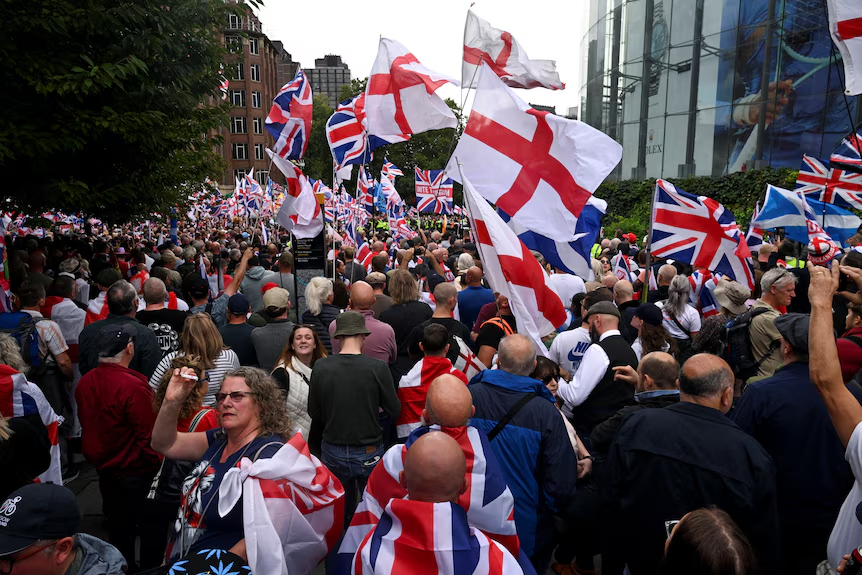
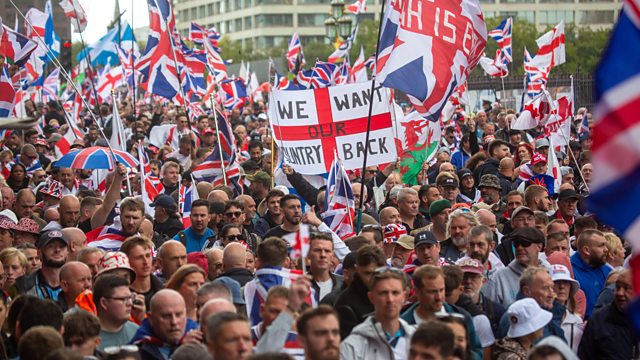
In scenes reminiscent of the most turbulent periods in British political history, thousands of demonstrators have descended upon Downing Street today, calling for Prime Minister Sir Keir Starmer to step down immediately. The unprecedented gathering, which began early this morning, has grown exponentially throughout the day, with protesters blocking surrounding streets and chanting demands for the Labour leader’s resignation.
Mass Mobilisation Rocks Westminster
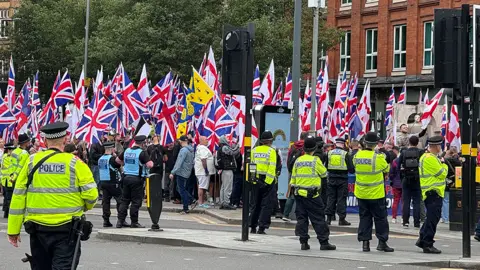
The demonstration, which organisers claim is one of the largest anti-government protests in recent years, has brought central London to a virtual standstill. Metropolitan Police have deployed additional officers to manage the swelling crowds, with barriers hastily erected around the iconic black door of Number 10 as tensions escalate.
Eyewitnesses report that the atmosphere outside the Prime Minister’s official residence is charged with emotion, as British citizens from across the country have travelled to London to make their voices heard. Protesters are holding banners with messages ranging from “Starmer Must Go” to “Britain Deserves Better,” while union flags wave alongside homemade placards expressing dissatisfaction with the current government’s direction.
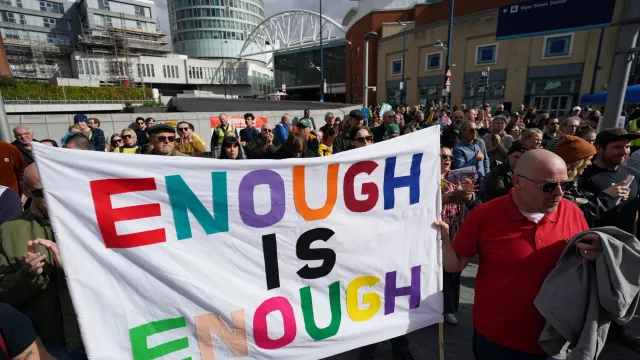
“We’ve had enough,” declared Sarah Thompson, 42, a teacher from Manchester who made the journey to London specifically for today’s protest. “The Prime Minister has lost touch with ordinary working people. We’re struggling with the cost of living, our public services are crumbling, and it feels like nobody in Westminster is listening to us anymore.”
The Breaking Point: What Sparked This Uprising?
While public discontent has been simmering for months, today’s mass mobilisation appears to be the culmination of several controversial decisions and policy failures that have eroded public confidence in Starmer’s leadership. Political analysts suggest multiple factors have converged to create this perfect storm of public anger.
The government’s handling of the ongoing economic challenges has been a primary source of frustration. Despite promises of economic growth and improved living standards, many Britons report feeling worse off than they did a year ago. Rising energy bills, increased taxation, and stagnant wages have created a cost-of-living pressure cooker that appears to have finally exploded onto the streets of Westminster.
Additionally, recent policy U-turns and broken manifesto promises have fueled accusations that the Prime Minister lacks the conviction and competence required to lead the nation through these challenging times. Critics point to inconsistencies between Labour’s pre-election commitments and their actions in government as evidence of what they characterise as systematic betrayal of voters’ trust.
Dr. Patricia Morrison, a political scientist at King’s College London, explained the significance of today’s events: “What we’re witnessing is a fundamental breakdown in the social contract between government and governed. When large numbers of citizens feel compelled to take to the streets like this, it indicates a crisis of legitimacy that no Prime Minister can afford to ignore.”
Inside Number 10: Reports of Crisis Meetings
Sources close to Downing Street suggest that emergency meetings have been convened throughout the day as senior government officials scramble to respond to the escalating situation. While official statements from Number 10 have been limited, insiders describe an atmosphere of genuine concern about the scale and intensity of public opposition.
According to political correspondents familiar with Westminster operations, the Prime Minister has been in continuous discussions with his closest advisers, including the Chancellor, Home Secretary, and Labour Party strategists. The question dominating these closed-door sessions, sources indicate, is not whether to respond to the protests, but how to respond in a way that doesn’t further inflame an already volatile situation.
One government insider, speaking on condition of anonymity, revealed: “There’s no question that this has caught everyone off guard. The scale of today’s demonstration has exceeded even the most pessimistic internal projections. People are genuinely worried about what this means for the government’s ability to govern effectively.”
The Metropolitan Police have confirmed they are monitoring the situation closely and are prepared to maintain order, though senior officers have emphasised their commitment to facilitating peaceful protest—a fundamental democratic right in the United Kingdom.
Opposition Seizes the Moment
Unsurprisingly, opposition parties have wasted no time capitalising on the Prime Minister’s discomfort. Conservative Party leaders have issued statements calling for Starmer to “listen to the British people” and consider whether he still commands the confidence necessary to continue in office.
Former Cabinet minister Robert Jenrick told reporters: “These scenes outside Downing Street are extraordinary and deeply concerning. They reflect the widespread frustration felt by millions of Britons who believe this government has failed them. The Prime Minister needs to take a long, hard look at his position and ask himself whether he can truly lead this country forward.”
The Liberal Democrats and smaller parties have similarly amplified the protesters’ demands, with calls for an early general election gaining traction across the political spectrum. Some backbench Labour MPs have reportedly expressed private concerns about the optics of such widespread public discontent, though none have yet broken ranks publicly.
Political commentator James Anderson noted: “The real danger for Starmer isn’t just the size of today’s protest—it’s the potential for this to become a sustained movement. If demonstrations of this scale continue or grow, the political pressure on him could become insurmountable, regardless of his parliamentary majority.”
Social Media Amplifies the Message
The demonstrations have generated massive engagement across social media platforms, with hashtags such as #StarmerOut, #ResignNow, and #BritainDeservesBetter trending nationally throughout the day. Video footage of the protests has been widely shared, with some clips receiving millions of views within hours of being posted.
This digital dimension of the protest movement has significantly amplified its reach and impact, allowing those unable to attend in person to participate virtually and share their grievances with a global audience. The viral nature of the content has also attracted international media attention, with major news outlets worldwide covering the dramatic scenes in the heart of London.
Citizen journalists equipped with smartphones have provided real-time updates from ground level, offering perspectives that complement traditional media coverage. This grassroots documentation has proven particularly effective in conveying the scale and diversity of the demonstration, with protesters ranging from young students to elderly pensioners united in their dissatisfaction with the current government.
Historical Context: How Does This Compare?
To understand the significance of today’s events, it’s worth placing them within the broader context of British protest movements. While the UK has a long tradition of peaceful demonstration, mass gatherings specifically calling for a sitting Prime Minister’s resignation are relatively rare and historically significant.
The last comparable scenes at Downing Street occurred during periods of intense political crisis, making today’s demonstration a notable moment in contemporary British political history. Political historians have drawn parallels to protests during the poll tax riots of 1990, which preceded Margaret Thatcher’s eventual resignation, and the massive demonstrations against the Iraq War in 2003.
Professor David Williams, a historian specialising in British political movements, provided context: “Large-scale protests like this don’t emerge from nowhere. They represent the visible manifestation of deep-seated public discontent that has been building over time. Whether this marks a turning point for the Starmer government will depend on how both the government and the broader public respond in the coming days and weeks.”
The Economic Dimension: Cost of Living Crisis Fuels Anger
At the heart of much of the public anger is the persistent cost of living crisis that continues to squeeze household budgets across Britain. Despite government assurances that economic conditions are improving, many families report struggling to make ends meet as prices for essential goods and services remain stubbornly high.
Recent economic data has painted a mixed picture, with some indicators showing modest improvement while others suggest continued stagnation. For protesters gathered outside Downing Street, however, statistical abstractions matter far less than lived reality—and that reality, for many, involves difficult choices between heating and eating, mounting debts, and diminishing hope for financial security.
“I’m working full-time and still can’t afford basic necessities,” explained Marcus Johnson, 35, a retail worker from Birmingham who attended the protest. “My energy bills have tripled, my rent keeps going up, and wages haven’t kept pace. When the Prime Minister talks about economic recovery, it feels like he’s living in a different country from the rest of us.”
This disconnect between government messaging and public experience has proven particularly damaging to Starmer’s credibility, with critics arguing that Labour has failed to deliver on its core promise of improving living standards for working people.
What Happens Next? Political Ramifications and Possible Outcomes
As evening approaches and the protest shows no signs of dispersing, attention turns to what comes next. Political strategists across Westminster are gaming out various scenarios, from a defiant Prime Minister doubling down on his agenda to the possibility of a major cabinet reshuffle or even resignation.
Constitutional experts note that while public protests can create significant political pressure, the UK’s parliamentary system means that a Prime Minister with a working majority in the House of Commons cannot be easily removed without either losing the confidence of their own MPs or choosing to resign voluntarily. Nevertheless, the court of public opinion cannot be dismissed indefinitely, particularly with local and regional elections on the horizon.
The coming days will likely prove crucial. If the government can effectively address public concerns and demonstrate responsiveness to protesters’ grievances, the crisis might be contained. However, if demonstrations continue or escalate, and if the movement gains further momentum, Starmer’s position could become increasingly untenable.
Senior political correspondent Emma Richardson observed: “The Prime Minister faces a critical choice. He can either acknowledge the depth of public concern and announce concrete measures to address it, or he can attempt to ride out the storm. History suggests that ignoring protests of this magnitude rarely ends well for political leaders.”
Public Safety and Democratic Expression: Balancing Act
Throughout the day, both protesters and police have generally maintained a peaceful atmosphere, despite the charged emotions on display. The Metropolitan Police have praised demonstrators for exercising their democratic rights responsibly, while organisers have emphasised their commitment to non-violence and lawful assembly.
Related Post: 1 MIN AGO: Starmer EXPLODES at Richard Tice LIVE — UK Politics in CRISIS Over Migrant Hotels!
This peaceful conduct has been crucial in maintaining the protest’s legitimacy and moral authority. Political observers note that peaceful, well-organized demonstrations tend to be more effective in achieving their objectives than those marred by violence or disorder, as they focus attention on the message rather than the methods.
Civil liberties advocates have defended the protesters’ right to assemble and express dissent, characterising such demonstrations as essential to healthy democratic function. “The right to protest is fundamental to British democracy,” stated Liberty spokesperson Jennifer Davies. “Today’s events demonstrate that this right remains alive and that citizens are willing to exercise it when they feel their voices aren’t being heard through conventional political channels.”
The International Perspective: Global Attention on British Politics
News of the demonstrations has reverberated internationally, with foreign media outlets covering the dramatic scenes in London extensively. The spectacle of thousands of Britons demanding their Prime Minister’s resignation has raised questions abroad about political stability in the United Kingdom and what it might mean for Britain’s international relationships and commitments.
Allied governments have largely refrained from public comment, maintaining diplomatic protocol of non-interference in domestic political matters. However, diplomatic sources suggest that foreign capitals are monitoring the situation closely, particularly given the UK’s significant role in international affairs, NATO, and global economic markets.
Conclusion: A Government at the Crossroads
As darkness falls over London and the crowds at Downing Street remain steadfast in their demands, one thing is abundantly clear: the Starmer government faces its most serious crisis since taking office. Whether today’s extraordinary scenes mark the beginning of the end for the Prime Minister or prove to be a moment he can successfully navigate remains to be seen.
What cannot be disputed is that thousands of British citizens felt compelled to take to the streets to make their voices heard—a powerful reminder that in a democracy, ultimate authority rests not with politicians or parliaments, but with the people themselves.
The Prime Minister now faces perhaps the most consequential decision of his political career: how to respond to this unprecedented expression of public dissatisfaction. His answer will likely determine not just his own political future, but the trajectory of British politics for years to come.
This article will be updated as the situation develops. For the latest updates on this developing story, stay tuned to our live coverage.
Related Articles:
- UK Political Crisis: Timeline of Events Leading to Today’s Protests
- Economic Anxiety in Britain: Why Are People So Angry?
- Constitutional Questions: Can a Prime Minister Be Forced to Resign?
Sources: Metropolitan Police statements, eyewitness accounts, political analysts’ commentary, social media documentation, historical political records.