In a momentous display of interfaith dialogue and diplomatic unity, the British monarch and his consort have embarked on a groundbreaking papal visit that marks a new chapter in relations between the British Crown and the Holy See.
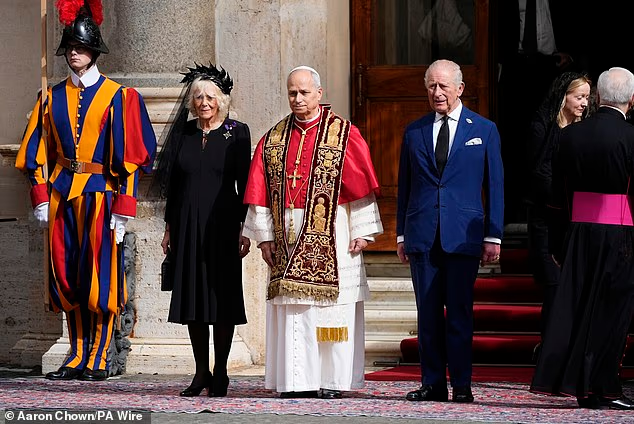
King Charles III and Queen Camilla arrived at the Vatican on Thursday morning for what has been described as one of the most significant religious and diplomatic encounters in recent British history. The royal couple’s visit to meet Pope Leo marks the first time a reigning British monarch has engaged in formal prayer alongside a pontiff at the Vatican, signaling a historic shift in the centuries-old relationship between the Church of England and the Roman Catholic Church.
The visit, which comes amid growing calls for greater interfaith cooperation and unity in an increasingly divided world, has captured the attention of royal watchers, religious scholars, and diplomatic observers across the globe. As the Supreme Governor of the Church of England, King Charles’s decision to pray with the Catholic pontiff represents a powerful symbolic gesture that transcends centuries of religious division and conflict.
A Royal Welcome in the Eternal City
The British monarch and his wife were greeted with full ceremonial honors as they entered Vatican City through the iconic Porta Sant’Anna shortly after 10:00 AM local time. Vatican Swiss Guards, resplendent in their traditional Renaissance-era uniforms of blue, red, yellow, and orange, stood at attention as the royal motorcade made its way through the cobblestone streets toward the Apostolic Palace.
According to Vatican sources, Pope Leo personally welcomed the royal couple in the private library of the Apostolic Palace, a gesture typically reserved for the most distinguished heads of state. The meeting, which lasted approximately 45 minutes, was characterized by what insiders described as “warmth, mutual respect, and genuine spiritual connection.”
“This is not merely a diplomatic courtesy call,” explained Dr. Catherine Morrison, a professor of religious studies at Oxford University and expert on Vatican-British relations. “This represents a profound acknowledgment of the shared Christian heritage between the Anglican and Catholic traditions, and a recognition that what unites us is far greater than what divides us.”
Breaking Centuries of Tradition
The significance of this papal audience cannot be understated when viewed through the lens of history. The relationship between the British monarchy and the papacy has been fraught with tension since King Henry VIII’s dramatic break from Rome in 1534, which led to the establishment of the Church of England and centuries of religious conflict across the British Isles.
Related Post: ROYALS SCANDLE! Prince Andrew Told to Pay Up as Royal Box Becomes Latest Status Symbol
While Queen Elizabeth II met with several popes during her 70-year reign, including memorable encounters with Pope John Paul II, Pope Benedict XVI, and Pope Francis, these meetings were primarily diplomatic in nature. The late Queen never participated in joint prayer services with a Catholic pontiff, largely due to the constitutional complexities of her position as Supreme Governor of the Church of England.
King Charles’s decision to engage in joint prayer with Pope Leo therefore represents a departure from royal protocol and a bold statement about his vision for a more inclusive and ecumenical approach to faith leadership. Royal commentators suggest this move aligns with Charles’s long-documented interest in interfaith dialogue and his expressed desire to be viewed as “Defender of Faiths” rather than merely “Defender of the Faith.”
“Charles has always been deeply spiritual and genuinely interested in building bridges between different religious communities,” noted royal biographer Jonathan Hartley. “This visit to the Vatican is the culmination of decades of personal conviction about the importance of religious unity and mutual understanding.”
The Historic Prayer Service
Following their private audience, King Charles and Queen Camilla accompanied Pope Leo to the Sistine Chapel, where they participated in a specially arranged prayer service focused on themes of peace, unity, and environmental stewardship—causes close to both the King’s and the Pope’s hearts.
The intimate ceremony, attended by only a small group of senior clergy from both the Catholic Church and the Church of England, included readings from Scripture, moments of silent contemplation, and prayers offered in both English and Latin. Sources present at the service described it as “deeply moving” and “spiritually powerful.”
The Archbishop of Canterbury, who was invited to attend the historic occasion, offered a prayer for Christian unity, while a senior Vatican cardinal prayed for the British royal family and the people of the United Kingdom. Pope Leo himself delivered a brief meditation on the Gospel message of love, reconciliation, and service to others.
“It was extraordinary to witness,” said an Anglican priest who was present. “Here were the two most significant figures in Western Christianity, kneeling side by side, united in prayer and common purpose. It felt like a truly historic moment.”
Shared Values and Common Causes
The meeting between King Charles and Pope Leo comes at a time when both leaders have been vocal advocates for several shared concerns, particularly climate change and environmental conservation. King Charles has been a passionate environmentalist for over five decades, while Pope Leo has continued the Catholic Church’s strong commitment to ecological responsibility and care for creation.
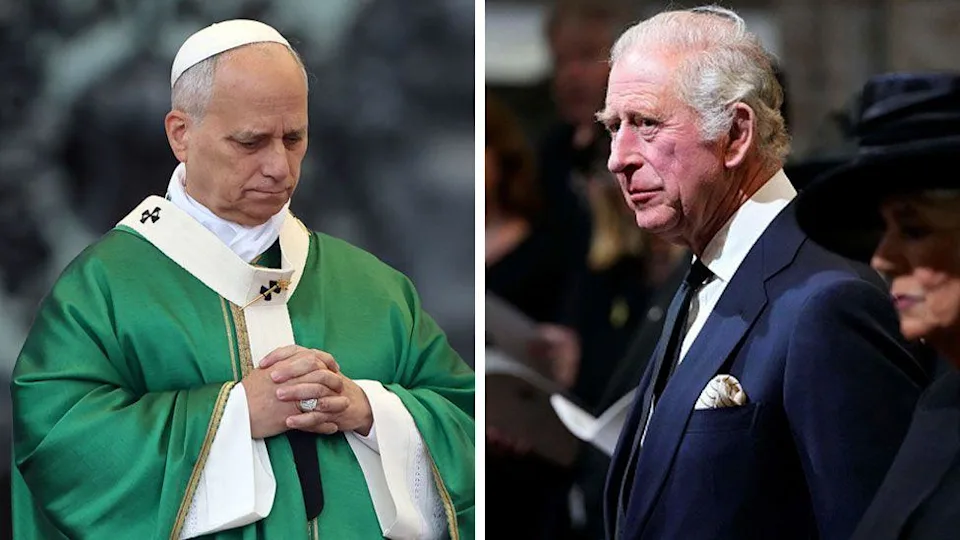
During their private discussions, the two leaders reportedly spent considerable time discussing the urgent need for global action on climate change, the protection of vulnerable communities, and the moral imperative of intergenerational justice. Vatican sources indicated that both men expressed frustration with the slow pace of international climate action and pledged to use their respective platforms to advocate more forcefully for environmental protection.
“Both His Majesty and His Holiness recognize that religious leaders have a unique moral authority to speak on behalf of creation and future generations,” explained Father Michael O’Brien, a Vatican spokesman. “They see themselves as stewards of God’s creation and feel a profound responsibility to sound the alarm about ecological degradation.”
The two leaders also discussed the ongoing humanitarian crises around the world, including conflicts in the Middle East and Africa, the global refugee situation, and rising economic inequality. According to diplomatic sources, there was substantial agreement on the need for wealthy nations to do more to support displaced populations and to address the root causes of forced migration.
Queen Camilla’s Role in the Historic Visit
While much attention has focused on King Charles’s meeting with Pope Leo, Queen Camilla’s participation in the visit has also been noteworthy. The Queen Consort, who was raised in the Church of England tradition, has increasingly taken on a more visible role in matters of faith and spirituality since her husband’s accession to the throne.
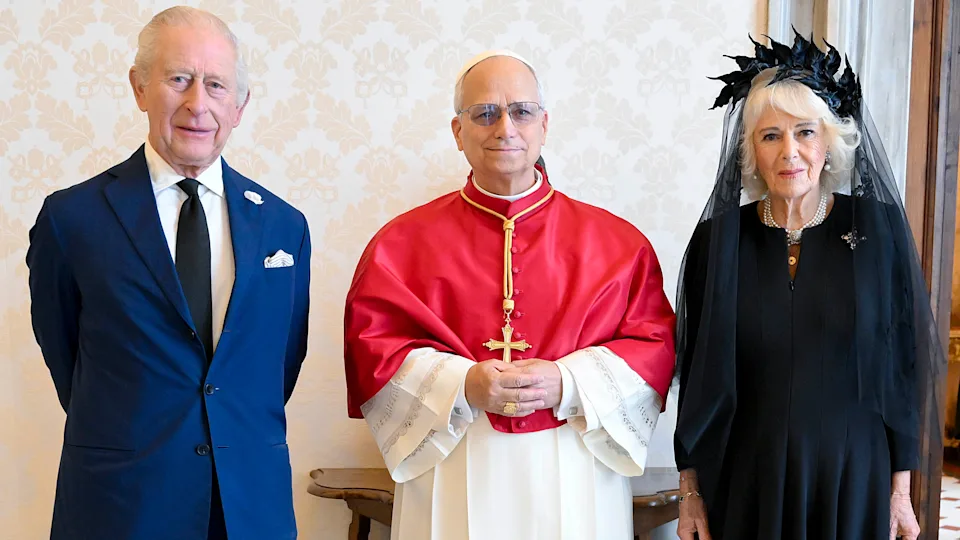
During the visit, Camilla met separately with several Vatican officials working on issues close to her heart, including domestic violence prevention and literacy programs. She also visited a Catholic charity in Rome that provides services to vulnerable women and children, highlighting her ongoing commitment to these causes.
“The Queen Consort has shown genuine interest in understanding Catholic social teaching and the Church’s charitable work,” noted a source close to the royal household. “She recognizes that faith communities of all traditions have a vital role to play in addressing social problems and supporting those in need.”
Reactions from Religious Leaders and the Public
News of the historic papal audience has generated widespread reaction from religious leaders, politicians, and the general public across the United Kingdom and beyond. The Archbishop of Canterbury issued a statement praising the visit as “a beautiful example of Christian unity and cooperation in action.”
The Catholic Bishops’ Conference of England and Wales also welcomed the royal visit, describing it as “a moment of great significance for Catholic-Anglican relations and a sign of hope for all who pray for Christian unity.” Cardinal Vincent Nichols, Archbishop of Westminster, noted that the meeting demonstrated “the possibility of overcoming historical divisions through dialogue, respect, and shared commitment to Gospel values.”
However, some traditionalist voices within both the Church of England and conservative Catholic circles have expressed reservations about the symbolism of the joint prayer service. Critics argue that theological differences between the two traditions remain significant and should not be minimized for the sake of diplomatic niceties.
“While we can certainly appreciate the spirit of goodwill, we must be careful not to suggest that the differences between Catholic and Anglican theology are unimportant,” cautioned Reverend Thomas Ashford, a conservative Anglican theologian. “True unity must be built on truth, not just pleasant photo opportunities.”
Despite these criticisms, polling suggests that the vast majority of British citizens view the papal visit positively, with many expressing hope that it signals a new era of cooperation between Christian denominations.
Historical Context and Future Implications
The meeting between King Charles and Pope Leo takes place against the backdrop of decades of gradually improving relations between the Vatican and the British Crown. Pope John Paul II’s historic visit to Britain in 1982 was a watershed moment, marking the first time a reigning pope had visited the United Kingdom. That visit helped to thaw centuries of suspicion and laid the groundwork for more regular and cordial exchanges.
Pope Benedict XVI’s state visit in 2010 further normalized relations, and Pope Francis met with Queen Elizabeth II at both the Vatican and Windsor Castle, building personal rapport with the late monarch. King Charles’s decision to take these relationships to a new level through joint prayer represents the latest evolution in this warming trend.
Looking ahead, religious scholars believe this papal audience could have far-reaching implications for ecumenical relations. The symbolism of the British monarch praying alongside the Catholic pontiff may encourage greater cooperation between Anglican and Catholic communities at the parish level and could inspire similar gestures of unity from other Christian leaders around the world.
“What happens at the level of symbolic leadership eventually filters down to ordinary believers,” explained Dr. Sarah Jenkins, a theologian at Cambridge University. “When people see their religious leaders treating one another with respect and praying together, it gives permission for ordinary Christians to build bridges across denominational lines.”
The Vatican as a Stage for Royal Diplomacy
Beyond its religious significance, the visit to the Vatican also serves important diplomatic purposes for the United Kingdom. The Holy See maintains diplomatic relations with 183 countries and plays a unique role in international affairs as both a religious authority and a sovereign state.
By meeting with Pope Leo, King Charles strengthens the UK’s relationship with an influential global institution that has considerable moral authority, particularly in the developing world. The Vatican’s extensive network of nuncios (papal ambassadors) and its active engagement in international organizations give it unique influence on issues ranging from peace negotiations to development aid.
“The Vatican punch above its weight in terms of diplomatic influence,” noted Sir Christopher Harding, a former British ambassador. “A strong relationship with the Holy See can open doors and facilitate dialogue in regions where the UK might otherwise struggle to gain traction.”
The timing of the visit is also significant, coming as Britain continues to navigate its post-Brexit role on the world stage. Strengthening ties with major international institutions and demonstrating the UK’s commitment to multilateral cooperation and shared values has become increasingly important for British foreign policy.
Conclusion: A New Chapter in Church-Crown Relations
As King Charles and Queen Camilla departed the Vatican following their historic visit, both the British royal family and the Holy See expressed satisfaction with what had been accomplished. In a joint statement, the two institutions emphasized their commitment to continued dialogue, cooperation on issues of mutual concern, and prayers for one another.
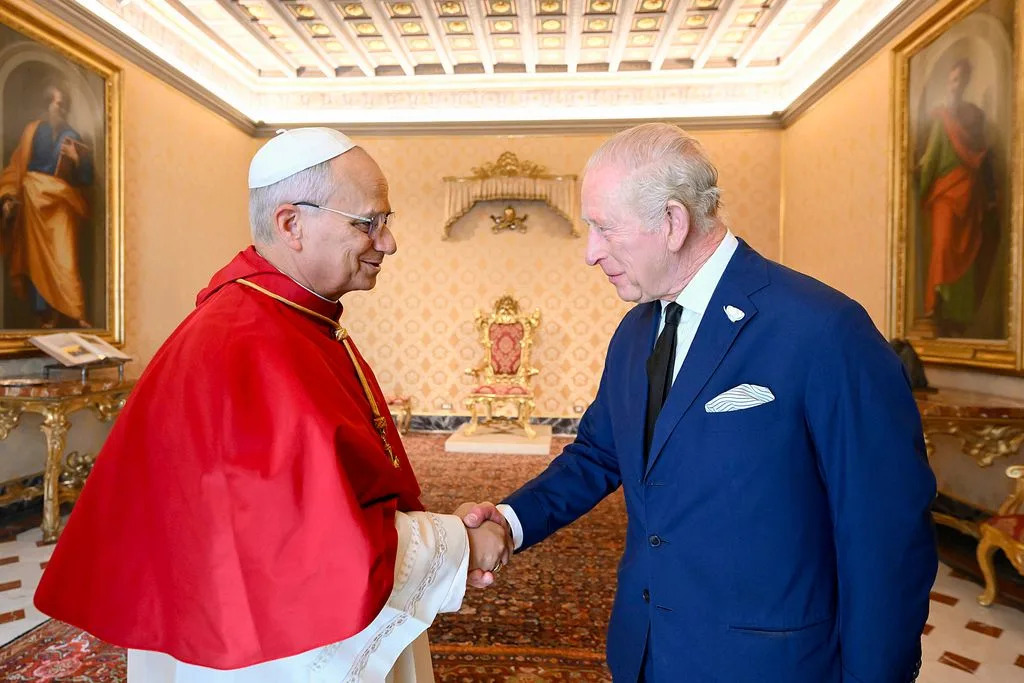
For King Charles, the visit represents the fulfillment of a long-held personal conviction about the importance of interfaith dialogue and Christian unity. For Pope Leo, it offers an opportunity to strengthen bonds with one of Western Christianity’s most important traditions and to find common cause with a influential advocate for many of the Church’s social and environmental priorities.
As the world faces unprecedented challenges—from climate change to rising authoritarianism, from economic inequality to refugee crises—the sight of the British monarch and the Catholic pontiff praying together offers a powerful reminder that cooperation, mutual respect, and shared values remain possible even across centuries of historical division.
Whether this historic first meeting will mark the beginning of a new era in Catholic-Anglican relations or simply be remembered as a beautiful but isolated gesture remains to be seen. What is clear, however, is that on this day in Rome, two of the world’s most recognizable religious figures demonstrated that the ties that bind Christians together can be stronger than the forces that drive them apart.