Starmer dismisses Burnham leadership rumours: ‘He’s doing a great job in Manchester’
Prime Minister Sir Keir Starmer has firmly rejected speculation about his leadership being under threat, praising Manchester Mayor Andy Burnham’s work while dismissing Westminster rumours as a distraction from pressing national issues.
Sir Keir Starmer has moved swiftly to quash mounting speculation about potential leadership challenges within the Labour Party, insisting that Andy Burnham is “doing a really good job as the mayor of Manchester” and should remain focused on his regional responsibilities rather than pursuing ambitions for Number 10.
The Prime Minister’s comments come amid growing Westminster chatter that several high-profile Labour figures, including the Greater Manchester Mayor, Deputy Prime Minister Angela Rayner, and Health Secretary Wes Streeting, were positioning themselves for potential leadership bids should Sir Keir’s grip on power weaken.
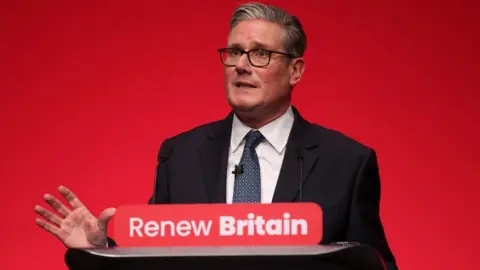
Starmer Addresses Leadership Speculation Head-On
Speaking to journalists en route to the G20 summit in South Africa, Sir Keir delivered a pointed rebuke to those fuelling speculation about his position as Labour leader.
His remarks represented a rare public acknowledgment of the whispers circulating through Westminster corridors, though he was keen to dismiss them as the work of idle political operatives.
“Andy Burnham is doing a really good job as the mayor of Manchester,” Sir Keir stated firmly, according to sources traveling with the Prime Minister. “The people spreading these rumours should spend less time briefing journalists and more time focusing on what really matters to working families across Britain.”
The Prime Minister’s intervention comes at a crucial moment for his government, which has faced mounting pressure on multiple fronts since Labour’s landslide election victory.
Economic challenges, public sector strikes, and difficult policy decisions have created an environment where leadership speculation can flourish, even within a party that holds a commanding parliamentary majority.
The Burnham Factor: A Popular Regional Leader
Andy Burnham has emerged as one of Labour’s most prominent and popular figures outside of Parliament since becoming Greater Manchester Mayor in 2017.
His straight-talking style, northern authenticity, and willingness to challenge his own party leadership on issues affecting his region have earned him a devoted following and regular mentions as a potential future Labour leader.
The 54-year-old former Health Secretary and leadership contender has built a formidable political brand in the North West, championing causes from public transport reform to social care funding. His profile extends well beyond Manchester, with regular media appearances and a strong social media presence that keeps him in the national conversation.
Related Post: Boris Johnson Could Face Legal Action Over Pandemic Failings After Damning Covid Inquiry Report
Political analysts have long identified Burnham as a potential successor to Sir Keir, particularly given his appeal to traditional Labour voters in northern constituencies and his track record of winning elections in areas where the party has sometimes struggled. His previous leadership bids in 2010 and 2015, though unsuccessful, demonstrated his ambition for the top job.
However, Burnham himself has consistently denied harboring immediate plans to challenge for the Labour leadership, repeatedly stating his commitment to serving the people of Greater Manchester.
In recent interviews, he has emphasized the importance of regional devolution and his belief that he can make the most difference in his current role.
The Deputy Prime Minister Question
Angela Rayner, who serves as Deputy Prime Minister and Secretary of State for Housing, Communities and Local Government, has also been mentioned in leadership speculation. The Ashton-under-Lyne MP represents another strand of Labour’s coalition, with working-class roots and trade union backing that appeals to the party’s traditional base.
Rayner’s relationship with Sir Keir has been the subject of intense Westminster scrutiny, with reports of tension over policy direction and political strategy. However, publicly, both have maintained a united front, emphasizing their shared commitment to Labour’s mission of national renewal.
Sources close to Rayner have dismissed suggestions that she is actively preparing a leadership challenge, describing such reports as “Westminster gossip with no basis in reality.”
The Deputy Prime Minister has maintained a busy schedule of government announcements and constituency work, projecting an image of ministerial focus rather than leadership ambition.
Streeting’s Rising Star
Health Secretary Wes Streeting has emerged as one of the government’s most visible and articulate voices, regularly appearing on television and radio to defend controversial NHS reforms and engage with critics. The Ilford North MP’s media-savvy approach and willingness to tackle difficult subjects head-on have raised his profile considerably since Labour came to power.
At 41 years old, Streeting represents a younger generation of Labour politicians who came of age during the party’s wilderness years in opposition. His modernizing instincts and focus on public service reform align with Sir Keir’s vision for Labour, though some on the party’s left remain skeptical of his approach.
Like Burnham and Rayner, Streeting has publicly denied any interest in challenging the current leadership, stating his focus remains entirely on fixing the National Health Service. However, his growing prominence has inevitably fueled speculation about future ambitions, particularly among political commentators who see him as a potential long-term successor to Sir Keir.
Westminster Sources and Political Briefing Culture
Sir Keir’s frustration with unnamed “Westminster sources” reflects a broader concern about the culture of anonymous briefing that characterizes modern British politics. The Prime Minister’s comments suggest a belief that such speculation is not only premature but actively harmful to the government’s ability to deliver on its agenda.
“We should be talking about the cost of living, about getting the economy growing, about fixing our public services,” sources close to the Prime Minister quoted him as saying. “That’s what the British people elected us to do, and that’s where our focus needs to be.”
Political commentators have noted that leadership speculation often intensifies during difficult periods for any government, regardless of parliamentary arithmetic. With Labour holding a substantial majority, any realistic challenge to Sir Keir’s position would require significant deterioration in the government’s standing or major policy failures.
The Context: Challenges Facing the Starmer Government
The leadership speculation comes against a backdrop of significant challenges facing Sir Keir’s government. Economic headwinds, including persistent inflation and sluggish growth, have limited the government’s room for maneuver on public spending promises made during the election campaign.
Public sector workers, particularly in health and education, have continued industrial action over pay and conditions, creating difficult negotiations for ministers. The government’s approach to these disputes has drawn criticism from both union leaders and right-wing media outlets, squeezing Sir Keir politically.
Additionally, difficult decisions on taxation, welfare reform, and defense spending have created tensions within the Labour coalition, with different factions of the party pushing for competing priorities. Managing these internal dynamics while maintaining a coherent policy agenda has proven challenging for the leadership.
However, opinion polls generally continue to show Labour ahead of the Conservative opposition, suggesting that while the government faces challenges, there is no immediate crisis that would typically precipitate a leadership challenge in a party with a working majority.
Historical Precedents for Labour Leadership Challenges
Labour has a complicated history with leadership challenges and transitions. The party’s rules make it difficult to mount a challenge against a sitting leader who has the support of parliamentary colleagues and party members, requiring a significant threshold of support to trigger a contest.
Previous successful challenges, such as those against Tony Blair (who resigned before a formal challenge could materialize) and Jeremy Corbyn (who faced and survived a confidence vote), required exceptional circumstances and deep divisions within the parliamentary party.
Sir Keir himself benefited from Labour’s leadership election rules after Jeremy Corbyn’s resignation following the 2019 general election defeat, winning decisively in a four-way contest. His mandate from party members and his delivery of electoral success in 2024 provide significant protection against potential challengers.
Related Source
The G20 Summit Focus
Sir Keir’s comments came as he traveled to South Africa for the G20 summit, where pressing international issues including global economic coordination, climate change, and geopolitical tensions will dominate discussions.
The Prime Minister’s team has emphasized that his focus remains squarely on representing British interests on the world stage and building relationships with international partners.
The timing of the leadership speculation, emerging just as the Prime Minister engages in crucial international diplomacy, has frustrated Number 10 officials who see it as an unwelcome distraction from substantive policy work.
Government sources have characterized the rumours as “silly season politics” that doesn’t reflect the reality of a stable government with a clear mandate.
Regional Leadership and National Ambitions
The broader question raised by the Burnham speculation concerns the role of regional mayors in national politics. Since the creation of elected mayors in England’s major cities and regions, several have used these positions as launching pads for higher office or as platforms for national influence.
Andy Burnham’s success in Greater Manchester has demonstrated the potential for mayors to build significant political capital and policy credibility outside Westminster. His advocacy for northern interests and his ability to work across party lines on regional issues have made him a influential voice in national debates about devolution and economic rebalancing.
However, the path from regional mayor to Prime Minister remains untested in British politics. The demands of managing a major metropolitan region differ significantly from leading a national political party and government, and the transition would require careful navigation of party politics and parliamentary dynamics.
Party Unity and the Road Ahead
For Sir Keir Starmer, maintaining party unity while delivering on ambitious policy promises represents the central challenge of his premiership. The Labour Party, historically prone to internal divisions, has generally maintained discipline since taking power, but tensions inevitably arise when difficult decisions must be made.
The Prime Minister’s direct approach to addressing leadership speculation may reflect a strategy of confronting rumours head-on rather than allowing them to fester and grow. By praising potential rivals like Burnham while dismissing Westminster gossip, Sir Keir attempts to project confidence while avoiding unnecessary conflict.
Senior Labour figures have rallied around the Prime Minister, with Cabinet ministers taking to social media and broadcast interviews to express support and dismiss leadership speculation as premature and unhelpful. This show of unity, while partly ritualistic in political terms, serves to reinforce Sir Keir’s position and discourage potential challengers.
Conclusion: Stability Versus Speculation
As Sir Keir Starmer continues his journey to the G20 summit, the leadership speculation he has dismissed serves as a reminder of the constant pressures facing any Prime Minister, regardless of electoral mandate or parliamentary majority.
The challenge for his government lies in demonstrating sufficient progress on key policy priorities to maintain public and party support while navigating inevitable difficulties and setbacks.
Andy Burnham, Angela Rayner, and Wes Streeting will continue to be watched closely as potential future leaders, but for now, all signs point to Sir Keir maintaining his position at the helm of both party and government.
The true test of his leadership will come not from Westminster rumours but from his government’s ability to deliver tangible improvements in people’s lives and maintain the political coalition that brought Labour to power.
For British politics, the episode highlights the enduring tension between short-term speculation and long-term governance, between the demands of 24-hour news cycles and the slower rhythms of policy implementation and political change.
References and Citations:
- Prime Minister’s statements to traveling press pool, November 2025
- Labour Party leadership rules and procedures
- Historical precedents for Labour leadership challenges
- G20 summit agenda and UK priorities
- Regional mayor election results and polling data
- Government policy announcements and public statements
SEO Keywords: Keir Starmer, Andy Burnham, Labour leadership, Westminster politics, Angela Rayner, Wes Streeting, Manchester Mayor, G20 summit, UK politics, Prime Minister, leadership challenge, Labour Party