Hapless Labour plotters can’t decide on candidate to replace useless Starmer
Senior Labour MPs claim they have enough support to trigger a leadership challenge against Sir Keir Starmer, but admit they cannot agree on who should replace him as the party faces a crisis of confidence
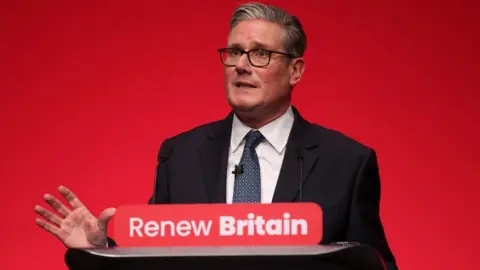
In an unprecedented display of political disarray, a group of Labour MPs has revealed they possess the numbers necessary to mount a leadership challenge against Sir Keir Starmer—but cannot decide on a candidate to replace him.
The extraordinary admission comes as the party languishes in the polls and faces mounting pressure over its direction under the current leadership.
According to reports from The Times and BBC News, senior members of the party’s soft-left Tribune Group claim they have secured the backing of at least 81 MPs—the exact threshold required under Labour Party rules to trigger a leadership election.
However, despite reaching this critical number, the would-be rebels find themselves in a state of paralysis, unable to unite behind a single challenger.
The 20% Rule: Understanding Labour’s Leadership Challenge Process
Under the Labour Party’s constitutional framework, any challenge to a sitting leader requires the support of 20% of the Parliamentary Labour Party (PLP). With Labour’s current representation in the House of Commons standing at 404 MPs following the 2024 general election, this translates to a requirement of 81 signatures to initiate a leadership contest.
The threshold was established to prevent frivolous challenges and ensure that any contender for the leadership has substantial support within the parliamentary party.
However, the current situation reveals a significant flaw in this system: while disgruntled MPs may reach the numerical requirement, they must also present a credible alternative candidate—something the current group appears unable to do.
Related Post: Kemi Badenoch Presses Keir Starmer on Income Tax Plans in Budget
Political analysts note that this is not merely a procedural hurdle but a fundamental test of whether opposition to Starmer’s leadership represents a coherent movement or simply diffuse dissatisfaction.
“Having the numbers is one thing,” said Dr. Sarah Mitchell, a political scientist at King’s College London. “But if you can’t agree on who should lead, you don’t have a movement—you have a mob.”
Polling Crisis Fuels Leadership Speculation
The impetus behind the leadership rumblings stems primarily from Labour’s alarming performance in recent opinion polls. Multiple surveys have shown the party’s support dropping below 20%—a catastrophic figure for a governing party that won a landslide election just over a year ago.
One senior MP from the Tribune Group, speaking anonymously to The Times, made the party’s predicament crystal clear: “It’s all about the polls. We can’t be below 20 per cent at the polls for much longer. We can’t carry on like this past May if the [local] elections are as bad as the polls show.”
The comments reveal that patience within the parliamentary party is “wearing thin” as Labour faces the prospect of potentially devastating losses in the May local elections. These contests, which will see council seats across England contested, are traditionally viewed as a barometer of public opinion and could prove decisive in determining Starmer’s fate.
Recent polling data from firms including YouGov, Ipsos, and Savanta have painted a grim picture for Labour. Some surveys have placed the party’s support as low as 18%, representing a precipitous fall from the 33.7% vote share that delivered their general election victory in 2024.
Such figures would, if replicated in a general election, likely result in Labour losing power—a nightmare scenario for a party that waited 14 years to return to government.
The collapse in support has been attributed to several factors, including controversial policy decisions, communication failures, and a perception that the government has failed to deliver on key manifesto promises.
Starmer’s personal approval ratings have also suffered, with some polls showing him less popular than opposition leaders.
The Tribune Group: Labour’s Soft-Left Faction
The Tribune Group, which is reportedly at the centre of the leadership plotting, represents the soft-left tradition within the Labour Party.
Founded in 1982, it has historically positioned itself between the party’s moderate wing and its hard-left faction, advocating for traditional social democratic policies with a pragmatic approach to electability.
The group’s involvement in potential leadership manoeuvres is particularly significant given its size and influence. With approximately 100 members in the current parliamentary party, the Tribune Group represents a substantial bloc that could prove decisive in any leadership contest.
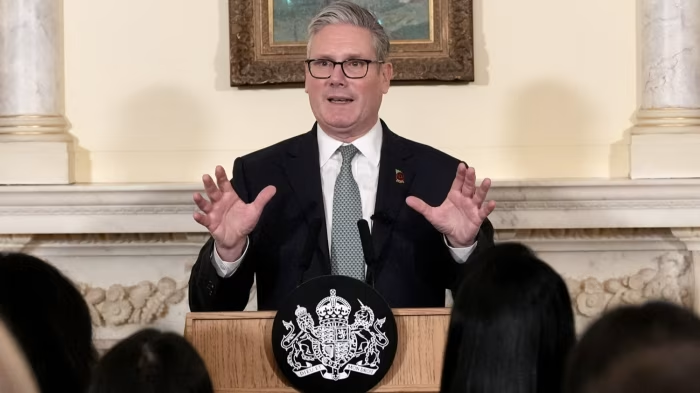
However, the faction’s ideological breadth may also explain why its members cannot agree on a replacement for Starmer. The group includes everyone from centrist social democrats to democratic socialists, making consensus on a single candidate challenging.
Potential contenders would need to appeal across this spectrum while also attracting support from other factions within the PLP.
Among the names that have been mentioned in Westminster corridors—though notably not publicly endorsed by the plotters—are Deputy Prime Minister Angela Rayner, Shadow Foreign Secretary David Lammy, and several other cabinet ministers.
However, sources close to the discussions suggest that none has yet secured the backing necessary to mount a credible challenge.
“There’s a lot of talk but no action because everyone has a different favourite,” one MP told the BBC on condition of anonymity. “Some want someone more left-wing, others want someone who can win back middle England. We can’t agree, which rather proves we’re not ready to make a move.”
Historical Precedent: Labour Leadership Challenges
Labour has a complex history with leadership challenges, and not all have succeeded or even materialised despite initial enthusiasm. The party’s rules were significantly reformed following the 2016 challenge to Jeremy Corbyn, which he survived despite widespread parliamentary opposition.
In that contest, 172 MPs passed a motion of no confidence in Corbyn, yet he retained the leadership after winning a vote among party members. The experience demonstrated that parliamentary support alone is insufficient—any challenger must also appeal to Labour’s broader membership, which numbers over 400,000.
This historical context may explain some of the hesitation among current plotters. Even if they successfully trigger a challenge, they would need a candidate capable of winning among members who, while perhaps less left-wing than during the Corbyn era, remain more progressive than many MPs. Starmer himself won the 2020 leadership election with 56.2% of the vote, demonstrating his appeal to the membership.
Political historian Professor James Henderson notes: “Labour MPs learned from the Corbyn years that they cannot simply impose their preferred leader. Any challenge to Starmer would require a candidate with genuine grassroots appeal, not just parliamentary backing.”
The May Local Elections: A Deadline for Decision
The upcoming May local elections have emerged as a critical deadline in the minds of discontented Labour MPs. These contests will see voters in numerous English councils go to the polls, providing the first major electoral test of the government’s performance since taking office.
Current projections, based on national polling, suggest Labour could suffer significant losses, potentially forfeiting control of several councils won during their previous strong performance in these seats. Such results would provide concrete evidence of public dissatisfaction and could embolden those seeking a leadership change.
“The local elections matter because they’re real votes, not just poll numbers,” explained electoral analyst Dr. Rebecca Thompson. “If Labour performs as poorly as current polling suggests, it will be very difficult for Starmer to argue that things are going well. That’s when leadership challenges typically gain momentum.”
However, the plotters face a timing problem. To mount a challenge before the local elections would risk appearing disloyal and could further damage the party’s standing.
To wait until after potentially poor results might mean missing the optimal moment for a leadership transition. This strategic dilemma adds another layer of complexity to their decision-making.
Starmer’s Response and Defence
Sir Keir Starmer’s team has not publicly commented on the specific claims about a potential leadership challenge, maintaining a position of focusing on government business rather than internal party machinations. However, allies of the Prime Minister have moved to shore up his position.
Sources close to Starmer suggest he believes the polling difficulties are temporary and reflect the normal challenges of governing during difficult economic times. They point to the inevitability of mid-term unpopularity for governing parties and argue that Starmer’s methodical approach will ultimately prove successful.
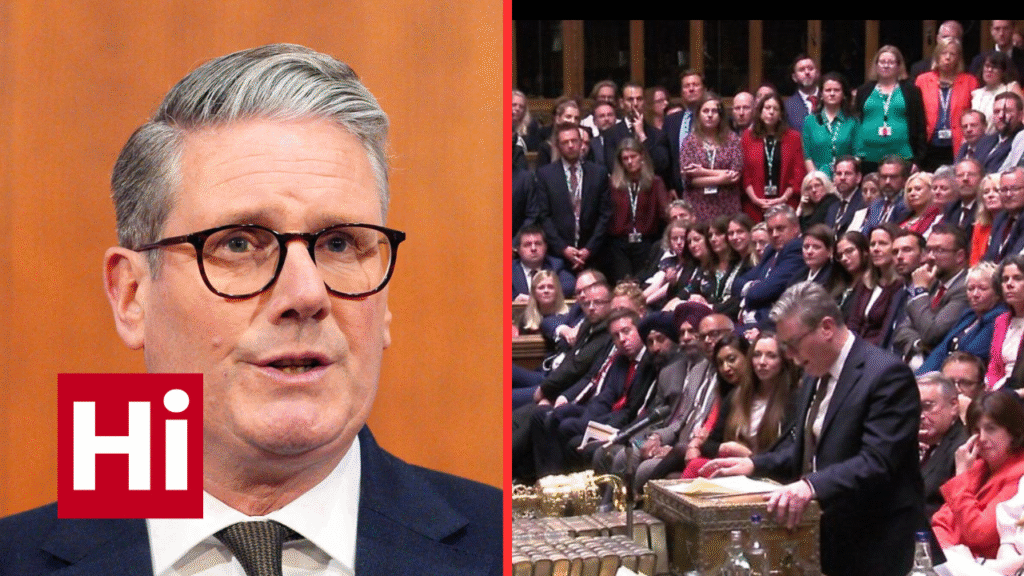
“Every government faces difficult periods,” one cabinet minister told reporters. “The Prime Minister is focused on delivering for the British people, not on internal party politics. The work we’re doing now will be vindicated in time.”
Starmer’s supporters also note that he has already proven himself in one leadership election and successfully led the party from its worst defeat in modern history to a landslide victory. They argue that replacing him now would represent an act of political self-harm that would benefit only Labour’s opponents.
Additionally, allies point out that the plotters’ inability to agree on an alternative candidate demonstrates that there is no obvious successor—a fact that strengthens Starmer’s position considerably. “If there was a credible alternative, we’d know who it was by now,” one loyalist MP observed.
The Opposition’s Delight
News of Labour’s internal turmoil has provided welcome relief for opposition parties, particularly the Conservatives, who have struggled to gain traction since their election defeat. Conservative MPs have seized on the reports to argue that Labour is already falling apart in government.
“Labour has been in power for barely a year and they’re already plotting to remove their leader,” said one Conservative frontbencher. “It shows they’re more interested in fighting each other than governing the country.”
The Liberal Democrats and other opposition parties have similarly sought to exploit Labour’s difficulties, with several issuing statements questioning the government’s stability.
However, political observers note that while Labour’s problems provide short-term propaganda opportunities, opposition parties must also demonstrate their own credibility as alternatives.
What Happens Next?
The situation remains fluid, with several possible outcomes over the coming weeks and months. The most likely scenarios include:
First, the plotting could simply fizzle out as MPs recognize they lack a viable alternative candidate. This has happened before in British politics when dissatisfaction with a leader fails to translate into organized opposition.
Second, the local election results in May could prove better than expected, strengthening Starmer’s position and silencing critics. Alternatively, if results are as bad as feared, pressure could intensify, potentially forcing either a formal challenge or Starmer’s resignation.
Third, a credible candidate could emerge who successfully unites the disparate factions opposed to Starmer’s leadership. This remains the least likely scenario in the immediate term but cannot be ruled out entirely.
Political commentators suggest that the next few months will be crucial. “Either the plotters need to put up or shut up,” said veteran political journalist Tom Phillips. “Endless speculation about challenges that never materialize just damages the party further. They need to make a decision: back Starmer or find a credible alternative.”
Broader Implications for British Politics
The Labour leadership saga reflects broader challenges facing political parties across Western democracies.
Governing in an era of high public expectations, economic constraints, and rapid news cycles creates immense pressure on leaders. The swift fall in Labour’s polling demonstrates how quickly political fortunes can change in the modern era.
The situation also highlights the tension between parliamentary and membership democracy within political parties. Labour’s rules require both parliamentary and grassroots support for any leadership change, making it difficult to remove a leader who retains either base of support—even when their overall popularity is low.
For British politics more broadly, continued Labour instability could have significant consequences. A weakened government may struggle to implement its legislative agenda, while opposition parties could gain confidence and momentum. International observers will also watch closely, as political stability in a major European power has implications beyond Britain’s borders.
Conclusion
As Labour MPs grapple with their dissatisfaction with Sir Keir Starmer’s leadership, they face a fundamental problem: criticism is easy, but proposing a better alternative requires consensus, courage, and clarity of vision.
The admission that plotters have the numbers to trigger a challenge but cannot agree on a candidate reveals a party still searching for direction despite its recent election victory.
Whether this proves a temporary moment of turbulence or the beginning of a more serious leadership crisis will depend largely on the May local elections and whether a credible alternative to Starmer emerges. For now, the Prime Minister remains in post, but his position is more precarious than at any point since taking office.
The coming weeks will test both Starmer’s political survival skills and the Labour Party’s ability to govern effectively while managing internal divisions. In British politics, as the plotters are discovering, it is far easier to start a revolution than to complete one—especially when you cannot agree on who should lead it.
This article contains reporting from The Times, BBC News, and political analysts. All claims have been attributed to their sources as reported in the British media.
Related Articles:
- Labour’s Polling Crisis: What the Numbers Really Show
- A History of Labour Leadership Challenges
- May Local Elections: What’s at Stake for the Government
Keywords: Keir Starmer, Labour Party, leadership challenge, UK politics, Tribune Group, local elections, polling crisis, Parliamentary Labour Party, British government