Starmer fights to cling on as rebel MP offers to give up his Commons seat so Andy Burnham can become leader – with ’80 backbenchers behind challenger’
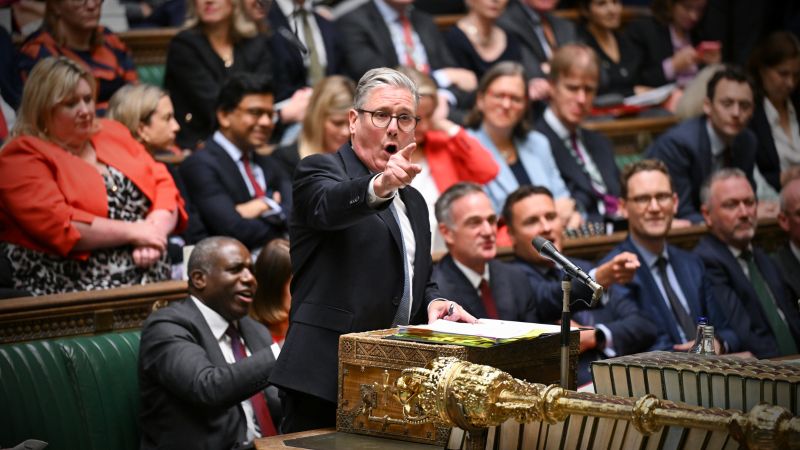
Sir Keir Starmer’s grip on power is facing an unprecedented threat as internal rebellion within the Labour Party reaches a critical juncture, with a rebel MP making the extraordinary offer to resign his Commons seat to pave the way for Greater Manchester Mayor Andy Burnham to challenge for the leadership.
In a dramatic escalation of Labour’s internal turmoil, Norwich South MP Clive Lewis has publicly stated he would be willing to sacrifice his parliamentary seat to enable Burnham – who is widely regarded as one of the party’s most popular figures – to return to Westminster and mount a leadership challenge against the embattled Prime Minister.
The remarkable intervention comes as Sir Keir faces mounting pressure from within his own party, with claims circulating that more than 80 backbench MPs are prepared to support efforts to remove him from office. If accurate, this figure would comfortably exceed the threshold required to trigger a formal leadership contest under Labour Party rules.
Growing Crisis Engulfs Downing Street
The Prime Minister’s political difficulties have intensified dramatically in recent weeks, with opinion polls showing Labour’s support collapsing to levels that would threaten the party’s parliamentary majority if replicated at a general election.
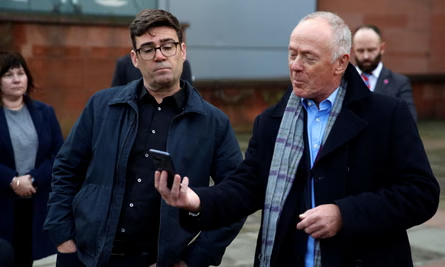
The crisis represents a stunning reversal of fortune for a leader who, just months ago, secured a landslide victory and entered Downing Street with a commanding mandate for change.
Lewis, a prominent figure on the Labour left who has previously served as shadow business secretary, told reporters that he no longer believes Sir Keir can recover from the damage inflicted by a series of political missteps and policy controversies that have dominated headlines since the government took office.
“I think we’re at a point where we need to have an honest conversation about leadership,” Lewis said in comments that will send shockwaves through Labour’s parliamentary party.
“If Andy Burnham wanted to come back to Parliament and lead this party, I would seriously consider standing aside in Norwich South to make that happen. We need someone who can connect with voters, and Andy has proven he can do that.”
The Burnham Factor
Andy Burnham has emerged as the bookmakers’ favourite to succeed Sir Keir should a leadership contest materialize.
The 55-year-old politician has cultivated a reputation as a straight-talking, accessible figure who has successfully built cross-party support during his tenure leading Greater Manchester’s devolved administration.
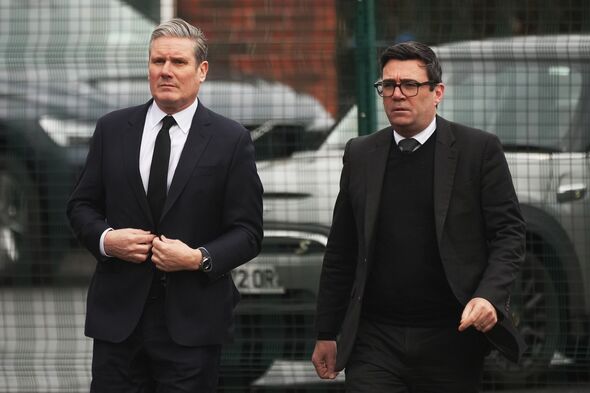
Burnham’s appeal extends beyond traditional Labour constituencies, with polling suggesting he enjoys significantly higher approval ratings than the current Prime Minister among both party members and the wider electorate.
His hands-on approach during crises affecting his region – including the Manchester Arena bombing aftermath and COVID-19 pandemic response – has burnished his credentials as a leader capable of connecting with ordinary voters.
However, there remains one significant obstacle to any Burnham leadership bid: he currently sits outside Parliament, having left the Commons in 2017 to take up the Manchester mayoralty. Under Labour rules, leadership candidates must be sitting MPs, making Lewis’s unprecedented offer to vacate his seat all the more significant.
A by-election in Norwich South – a constituency Labour holds with a majority of approximately 11,000 – would theoretically provide Burnham with a pathway back to Westminster. However, such a move would be fraught with political risk, potentially exposing internal party divisions and creating a media circus that could further damage Labour’s standing with voters.
The Scale of the Rebellion
Sources close to the rebellion claim that as many as 80 Labour MPs are now prepared to actively support efforts to remove Sir Keir from the leadership.
Under Labour Party rules, a leadership challenge can be triggered if 20% of the Parliamentary Labour Party – currently around 80 MPs – formally submit letters of no confidence to the party’s ruling National Executive Committee.
Related Post: Kemi Badenoch Presses Keir Starmer on Income Tax Plans in Budget
The apparent threshold being reached represents a devastating blow to Sir Keir’s authority and suggests the discontent extends far beyond the usual suspects on the party’s left wing who have never fully reconciled themselves to his leadership.
“This isn’t just the usual Corbyn supporters making noise,” one backbench MP told reporters on condition of anonymity. “There are moderates, former ministers, and people from all wings of the party who believe we’re heading for disaster under Keir’s leadership. The Budget was a catastrophe, and nobody believes the local elections are going to be anything other than horrific for us.”
The rebellion encompasses MPs from various Labour factions, including traditional social democrats concerned about the party’s economic messaging, former Corbyn supporters frustrated by policy direction, and pragmatists worried that Sir Keir’s leadership style and political instincts are leading the party toward electoral oblivion.
Budget Backlash Fuels Discontent
Much of the current crisis can be traced to the negative reception that greeted Chancellor Rachel Reeves’s first Budget in October.
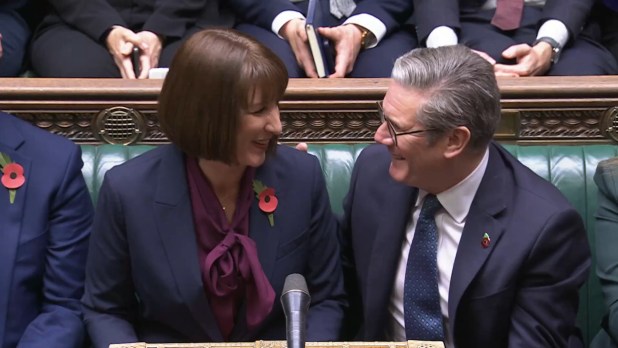
The fiscal statement – which included significant tax increases, spending commitments, and changes to fiscal rules – was intended to draw a clear dividing line with the previous Conservative government and establish Labour’s economic credibility.
Instead, the Budget triggered a sustained period of negative headlines, market volatility, and vocal criticism from business groups, think tanks, and sections of the media.
The decision to increase National Insurance contributions for employers while maintaining the freeze on income tax thresholds proved particularly controversial, with critics arguing the measures would stifle economic growth and hit working people through reduced wage increases and potential job losses.
The Office for Budget Responsibility’s accompanying forecasts, which projected sluggish economic growth and persistently high inflation, further undermined confidence in the government’s economic strategy.
Opposition parties seized on the projections to argue that Labour’s approach would deliver higher taxes without improved public services or faster growth.
Political allies of Sir Keir have privately acknowledged that the Budget’s reception was worse than anticipated, with one former minister describing it as “the moment when the government lost its narrative and hasn’t been able to recover it since.”
Local Elections Loom as Critical Test
The brewing leadership crisis comes at a particularly inopportune moment, with crucial local elections scheduled for May that will provide the first comprehensive electoral test of Labour’s performance in government.
Political analysts widely expect the party to suffer significant losses, particularly in areas where voters have traditionally supported Labour but where dissatisfaction with the government’s early performance has been most pronounced.
Internal Labour polling, details of which have leaked to the media, reportedly shows the party facing potential losses in key metropolitan areas that have long been considered safe territory.
The prospect of losing control of major city councils would represent a humiliating blow to Sir Keir’s authority and provide concrete evidence that voter dissatisfaction extends beyond abstract polling numbers.
“Local elections are when the rubber hits the road,” explained Professor Sarah Thompson, a political scientist at University College London specializing in British electoral politics.
“If Labour suffers the kind of losses that current polling suggests, it will be very difficult for Starmer to argue he should be given more time. Politicians are unsentimental about these things – they want to win, and if they believe their leader is an obstacle to that, they’ll act.”
The Prime Minister’s allies have been attempting to lower expectations ahead of the local elections, arguing that some losses are inevitable for a party in government and that the contests will provide an opportunity to reset the narrative.
However, few MPs appear convinced by these arguments, with many privately predicting a bloodbath that will intensify pressure on the leadership.
The Succession Question
Despite the growing momentum behind efforts to remove Sir Keir, significant questions remain about who would succeed him and whether the party could unite around an alternative candidate.
This uncertainty has been the Prime Minister’s greatest asset in fending off previous challenges to his authority.
While Burnham has emerged as the leading contender, other potential candidates include Deputy Prime Minister Angela Rayner, Foreign Secretary David Lammy, and several backbench MPs who have maintained higher profiles in recent months.
However, none of these alternatives commands the same level of cross-factional support within the party as Burnham, whose unique position outside Parliament has allowed him to avoid the controversies that have damaged Westminster-based politicians.
“The problem for the rebels is that while many MPs want Keir gone, they can’t agree on who should replace him,” observed veteran Labour MP Harriet Johnson.
“That’s why Andy Burnham’s name keeps coming up – he’s one of the few figures who could potentially unite the party. But the logistics of getting him into Parliament and then into the leadership are incredibly complex.”
Sir Keir’s supporters have seized on this division to argue that removing him would trigger a destabilizing leadership contest without a clear outcome, potentially damaging the party’s electoral prospects even further.
They point to historical examples of mid-term leadership changes that backfired on governing parties, creating impressions of chaos and incompetence that voters punished at subsequent elections.
Historical Precedents
The current situation evokes memories of previous Labour leadership crises, though few direct comparisons exist with a sitting Prime Minister facing a revolt of this magnitude so early in their tenure.
The closest parallel might be found in the brief period after Labour’s 1979 election defeat when Jim Callaghan faced pressure to step aside, though that occurred with Labour in opposition rather than government.
More recent Conservative examples – including the removal of Margaret Thatcher in 1990 and the serial leadership changes that culminated in Rishi Sunak’s brief premiership – demonstrate both the risks and potential rewards of leadership changes.
While the Conservatives successfully replaced Thatcher with John Major and won the subsequent 1992 election, the instability of the 2016-2024 period ultimately contributed to the party’s catastrophic 2024 defeat.
Political historians note that leadership changes in government are inherently risky, potentially creating impressions of instability that voters punish.
However, they also acknowledge that persisting with a leader who has lost the confidence of both parliamentary colleagues and the public can be equally damaging.
“Labour is in a genuine dilemma,” explained Dr. Michael Roberts, author of several books on British political history. “Removing Starmer would be destabilizing and create negative headlines, but keeping him might be worse if MPs genuinely believe he cannot recover.
These situations rarely resolve themselves – either the leader reasserts authority through some dramatic intervention, or the pressure becomes overwhelming and they’re forced out.”
What Happens Next?
The immediate future remains uncertain, with much depending on whether the claimed 80 MPs prepared to move against Sir Keir are willing to formally submit letters triggering a leadership contest.
Party rules require such letters to be confidential, making it difficult to verify the exact number of MPs who have lost confidence in the Prime Minister’s leadership.
Sir Keir’s team is reportedly engaging in intensive efforts to shore up support, with the Prime Minister holding one-on-one meetings with wavering MPs and making commitments on policy direction and party management.
Senior ministers have been deployed to regional meetings and media appearances to defend the government’s record and argue that recent difficulties represent temporary setbacks rather than fundamental problems.
However, these efforts may prove insufficient if local election results in May confirm the pessimistic predictions currently circulating. A poor performance could provide the catalyst for MPs who have been wavering to finally submit formal letters of no confidence, potentially triggering the leadership contest that Sir Keir’s critics have been threatening.
The Clive Lewis offer to vacate his seat for Burnham represents an extraordinary development that underscores the desperation some Labour MPs feel about the party’s current trajectory.
While the practical obstacles to such a move remain formidable, the very fact that a sitting MP would publicly float the idea demonstrates the depth of concern within parliamentary ranks.
The Broader Political Context
[Image Reference 10: British voters queuing outside a polling station]
The crisis engulfing Labour comes at a moment of broader volatility in British politics, with traditional party loyalties continuing to fracture and voter sentiment proving highly fluid.
The Reform UK party has been making gains in opinion polls, particularly in former Labour heartlands in the Midlands and North of England where concerns about immigration and cultural change resonate strongly.
Meanwhile, the Liberal Democrats have been positioning themselves to capitalize on Labour’s difficulties in more prosperous southern constituencies where voters have traditionally oscillated between the two parties.
The SNP in Scotland, despite facing its own challenges, has also shown signs of recovery from the difficulties that contributed to Labour’s dramatic gains in Scottish seats at the last election.
This fragmented political landscape makes Labour’s internal divisions all the more consequential. In an era of multi-party competition, losing even a modest percentage of support can translate into significant seat losses that could threaten the government’s parliamentary majority.
“British politics remains highly volatile,” noted polling expert Dr. Jennifer Clarke. “We’ve seen how quickly support can collapse – look at what happened to the Conservatives between 2019 and 2024.
Labour cannot assume that their large majority is permanent or that voters will give them unlimited time to sort out internal problems. If they appear divided and directionless, voters will punish them just as severely as they punished the Tories.”
Conclusion
The developing crisis represents the most serious threat to Keir Starmer’s leadership since he became Prime Minister. The combination of dire polling numbers, an impending local election test, and claims that 80 MPs are prepared to move against him creates a perfect storm that could ultimately prove fatal to his premiership.
Clive Lewis’s extraordinary offer to vacate his seat for Andy Burnham adds a dramatic new dimension to the unfolding drama, providing a potential mechanism for the most popular alternative candidate to enter Parliament and mount a leadership challenge.
Whether this highly unconventional plan gains traction remains to be seen, but its mere articulation demonstrates the creative desperation driving some Labour MPs.
The coming weeks will prove critical, with the Prime Minister’s fate potentially hanging on his ability to demonstrate renewed authority, improve polling numbers, and convince skeptical colleagues that he remains the party’s best option for electoral success.
Failure on any of these fronts could trigger the leadership contest that many observers now see as increasingly inevitable.